Architecture

In search of possible cities: the new challenge of the Triennales in Flanders

'Spaces of Possibility' in Bruges and 'Fabric of Life' on the coast: how 29 works by architects and designers try to reinvent public spaces

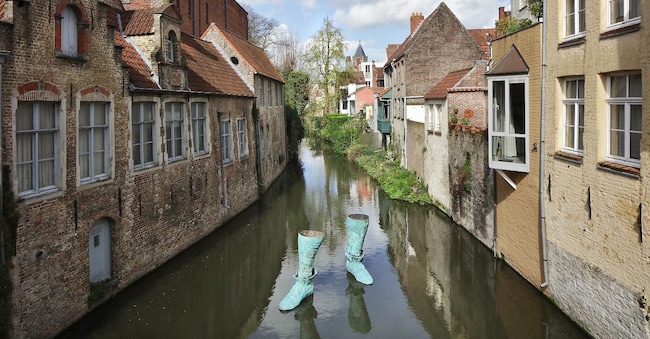
“Who?”, l’opera surrealista del colombiano Ivàn Argote che spunta tra i canali di Bruges (foto di Filip Dujardin).

8' min read

8' min read

What is the hidden potential of the public spaces we live in? What is the fabric of our cities made of? How can we interpret it? Reinvent it? Assign it new roles? In the name of the keyword "transformation", these are some of the questions that the International open-air design, architecture and art triennials taking place these weeks in Flanders, amidst the fairytale views of medieval cities of art and the breathtaking panoramas of Belgian beaches, have tried to answer.
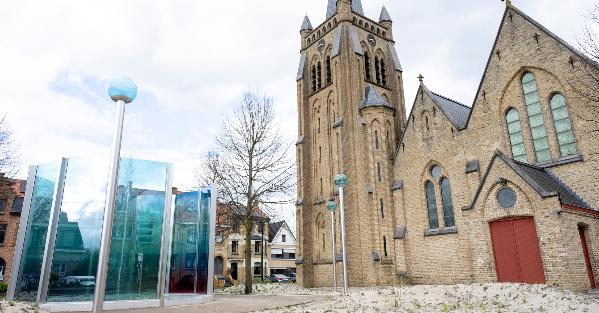
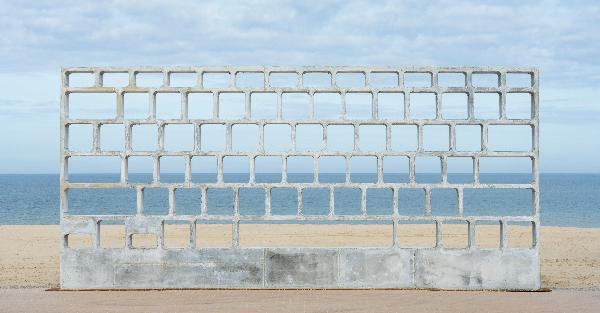
“Staging Sea”, una delle opere di Beaufort 2024 ideata da Filip Vervaet di fronte alla chiesa di San Pietro (ora diventata biblioteca) a De Panne, sulla costa belga.

They are "Spaces of Possibility" in Bruges and "Fabric of Life" along the 68 kilometres of coastline stretching from the French to the Dutch border, via Ostend, the city of James Ensor, which this year celebrates the 75th anniversary of the death of the eclectic and irreverent painter. All in all 29 works scattered in the open spaces between medieval towns, immense beaches, public parks and ancient hidden courtyards. Always open and always free.
Loading...

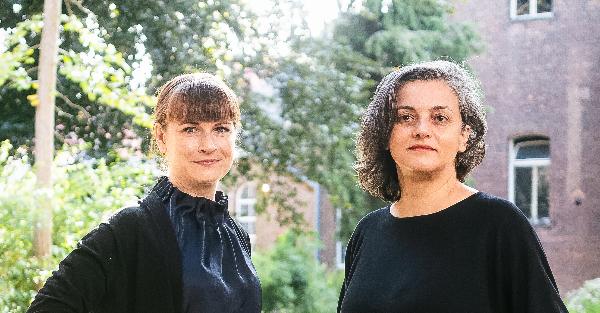
Shendy Gardin e Sevie Tsampalla, curatrici di “Spaces of Possibility”, la Triennale di Bruges (foto di Matthias Desmet).

Spaces of Possibility in Bruges

.

We begin with the Bruges Triennial, which will close on 1 September. After the last editions focused on the 'fictional' idea of the city as a megalopolis (2015), on the metaphor of the liquid city (2018) and on Bruges between dream and trauma (2021), this year with 'Spaces of Possibility' we openly talk about the future. And here the challenge becomes demanding, because we are playing on the field of a medieval centre that is a prisoner of a great past (with which it has a love-hate relationship). The search for new roles of public spaces - of meeting, movement, creativity and freedom - is not so obvious in a place that over the centuries has gone "from medieval metropolis to neo-Gothic dream to destination on the run from mass tourism", as Shendy Gardin and Sevie Tsampalla, curators of the exhibition, explain.
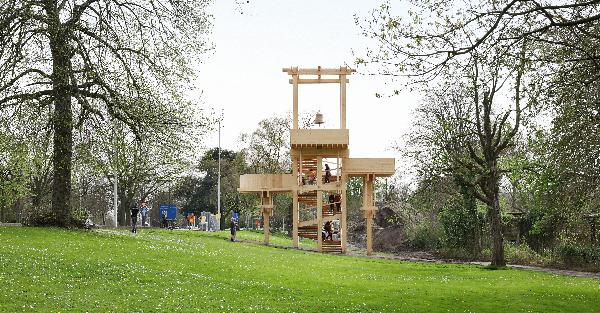
“The Tower of Balance”, la torre con campana costruita in un parco di Bruges dallo studio di architettura thailandese “Bangkok Project Studio”. Alta 18 metri, è ispirata al Belfort, la torre civica medievale nel cuore della città (foto di Filip Dujardin).

Laboratory town west of the centre

Each Bruges Triennial is hosted in a different place in the city. This year the focus is on the 'egg-shaped' area to the west of the centre, with the iconic Market Square that goes from being the heart of the city to its boundary: it is the rediscovery of lesser-known areas, once cut in two by the railway and recently undergoing major transformations (think of the t'Zand square that once housed the station, or the modern Concert Hall).

"We started working on this exhibition back in 2021," explains Shendy Gardin, "the 50 pre-selected architects, artists and designers visited the city, choosing the places that impressed them most. We then selected the 12 most stimulating and engaging projects, in order to give the city acommon ground for imagination, surprise, the search for new horizons for our public spaces. Spaces of Possibility, indeed'.
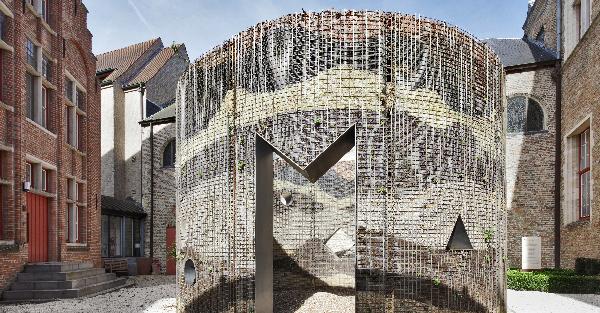
“Earthsea Pavillion”, l’opera di Alessandra Covini e Giovanni Bellotti di Studio Ossidiana ospitata nel cortile del Quattrocentesco Palazzo Bladelin, appartenuto ai Medici (foto di Filip Dujardin).

Earthsea Pavilion and the Medici Palace

.

Among the twelve performers of 'Spaces of Possibility' (seven architect-designers and four artists) we have chosen six to talk about. We begin with the Italians Alessandra Covini and Giovanni Bellotti of Studio Ossidiana, now based in Rotterdam, with their intriguing Earthsea Pavillion. It is a large cylindrical installation housed in the courtyard of the 15th-century Hof Bladelin, the landmark palace of the commercial prowess of Bruges, which also belonged to the Medicis. Studio Ossidiana's pavilion is 'filled' with terrestrial and aquatic plants (even shells) but also flowers in seed form, kept alive by an ingenious automatic irrigation system. A work full of life, attracting birds and insects as well as visitors. It combines land and water, history and nature, and is destined to change its face with the changing seasons.

“Empty Drop”, l’opera dello studio giapponese Shingo Masuda e Katsuhisa Otsubo Architects davanti all’Ospedale di San Giovanni, il più antico d’Europa appena riaperto al pubblico (foto di Filip Dujardin).

Japanese hollow drop

.

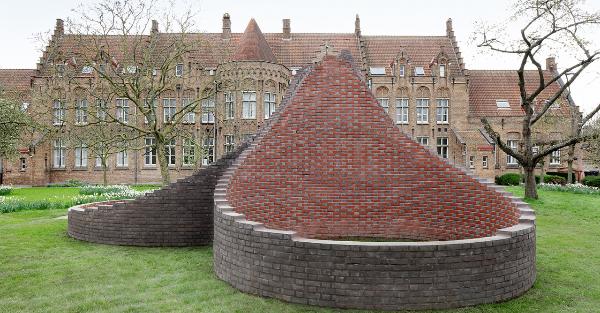
For their 'Empty Drop' (first project outside Japan), Shingo Masuda and Katsuhisa Otsubo Architects chose instead a 'non-space' in the park of the St. John's Hospital, the oldest in Europe. The project is related to Japanese culture but also to the urban density of medieval Bruges. And it translates intoan open, geometric work made of bricks, a celebration of the void to be filled. "A provocation that has been successful, because their 'empty drop' has become a new meeting point where people take possession of space," as Shendy Gardin points out. The function is to create connections, playing with the concept of the free, the empty, the space to be invented'.

“Under the Carpet”, una parte dell’opera dell’archietto belga Adrien Tirtiaux che parte da una costruzione neogotica per mostrare il tragitto di una strada scomparsa (foto di Filip Dujardin).

The Road Found

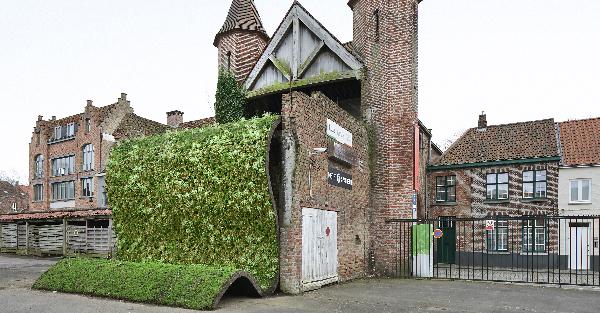
With 'Under the Carpet', the Belgian Adrien Tirtiaux, architect and engineer, takes us to rediscover the connecting road (now disappeared) between St John's Hospital and the Minnewater Clinic in the city. As a true 'urban archaeologist' Tirtiaux has unearthed the old artery, crucial for centuries and then closed in the 1970s, revealing its connections. The work begins at the entrance of the disappeared road with a vegetal tongue rising between neo-Gothic architecture and ends on the other side where we find an undulating platform.

“Grains of Paradise”, le 14 piroghe costruite dalla sudafricana Sumayya Vally per celebrare l’età d’oro commerciale di Bruges nel Medioevo e l’importazione di spezie dall’Africa (foto di Filip Dujardin).

Grani di Paradiso near Lago dell'Amore

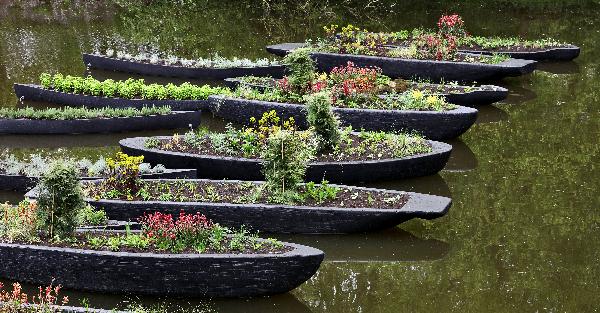
Near Bruges' famous Lake of Love, the South African Sumayya Vally then created the incredible 'Grains of Paradise': 14 pirogues anchored at the Minnewater Bridge to celebrate the commercial splendour of Bruges in its medieval golden age, with imports of goods also from Africa. Boats were filled with plants and herbs, including the spices then arriving from the Gulf of Guinea, in particular melegueta pepper (Afromomum legueta), which in Flanders they called paradijskorrel, 'grains of paradise', because of its medicinal properties and unmistakable taste. The invitation is to transcend Western culture to think critically about the urban fabric. And without boundaries.

“Who?” del colombiano Ivàn Argote esplora con ironia la visibilità negli spazi pubblici e il tradizionale storytelling urbano, fatto di monumenti con re, papi e imperatori (foto di Filip Dujardin).

Surrealist boots

.

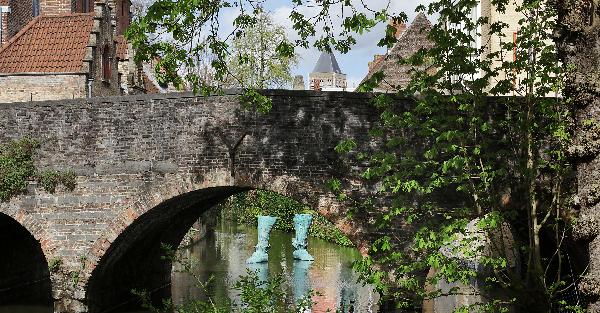
Ivàn Argote, a Colombian living in Paris, proposes the surrealist "Who?": a pair of bronze boots from the 15th century (the Golden Age of Bruges) emerge from the canals of the Speelmanrei like a fairy tale. Who was the historical figure whose footwear remains? Was he a famous figure? What happened to him? Argote's is a reflection centred on visibility in public spaces, on the unfinished. And on the search for identity. But there is also a lot of irony about traditional urban storytelling, made up of monuments of kings, popes and emperors.

“Common Thread”, la labirintica opera dello statunitense SO-IL creata con bottiglie di plastica riciclata grazie a speciali stampanti 3D dell’Università di Delft. Omaggio alla tradizione locale dei merletti, si trova nel giardino di un ex convento (foto di Filip Dujardin).

The 3D printed maze

.

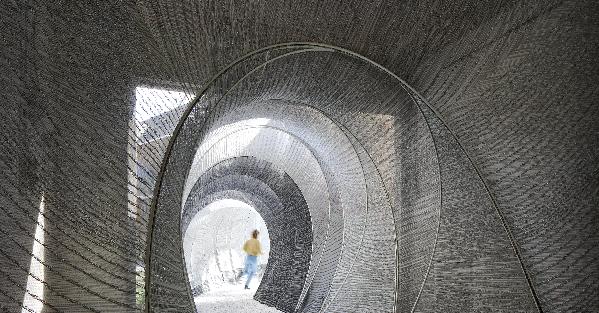
The American SO-IL instead chose the garden of a former Capuchin monastery (opened to the public for the first time with the Triennale) for its "Common Thread". It is a work inspired by the local tradition of lace-making, with a series of tunnels and labyrinthine pathways created thanks to a new type of hi-tech membrane. It was produced from recycled PET bottles using special 3D printers, a technology developed by Mariana Popescu of the University of Delft. The result is a 'hi-tech skin' that plays with light, transparency and the Spaces of Possibility.

We forgot: what will happen to the Bruges works once the triennial is over? "Some will be dismantled, others will be moved or purchased by the municipality, which will make them permanent," Gardin explains.

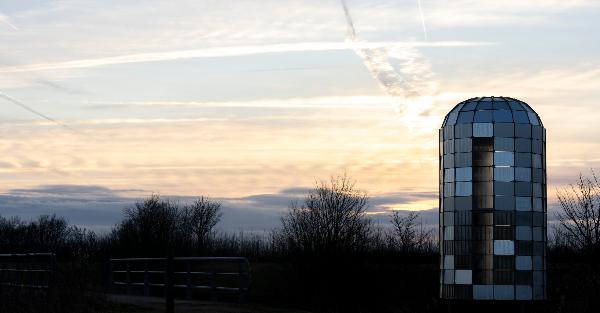
“Capsule”, l’opera a forma di silo (o bioreattore) di Maëlle Dufour, omaggio a Le Corbusier. Si trova sulle colline di De Panne, sulla costa belga al confine francese.

Fabric of Life (on 68 km of coastline)

.

And on to the neighbouring Beaufort Triennial, now in its eighth year, with its 18 works (eight of which are to be permanent, the others will be moved or dismantled from 4 November). Here the thread running through an exciting 68-kilometre-long coastal route is the Fabric of Life, united by Europe's longest tram line.

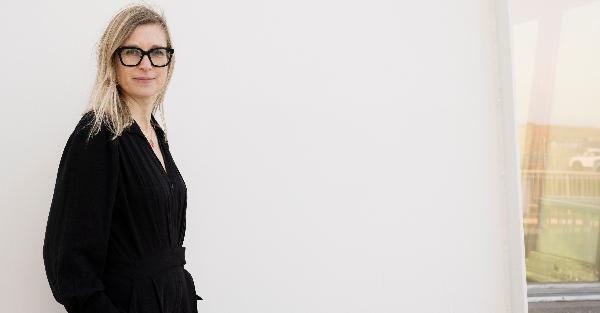
Els Wuyts, curatrice della Triennale Beaufort 2024.

"We selected the architects, designers and artists on the basis of their international standing and their aptitude for creating in open spaces," explains the curator Els Wuyts, "but also on their ability to study the context and dialogue with the community. No videos or performances, but tangible works and, above all, always accessible to the five senses: not only sight and touch, but also sounds and scents".

“All the Words in the World”, opera dell’argentino Jorge Macchi sul lungomare di Koksijde: una carcassa di tastiera che mostra i limiti della cultura digitale.

The result is a compelling narrative path linked to individual places, their legends, collective memories, winding through dunes, squares, courtyards, churches. A pattern of "possible worlds" capable of touching universal emotional chords, intertwining with the permanent works inherited from past triennials (with those of "Fabric of Life", the number of works scattered along the Belgian coast rises to fifty).

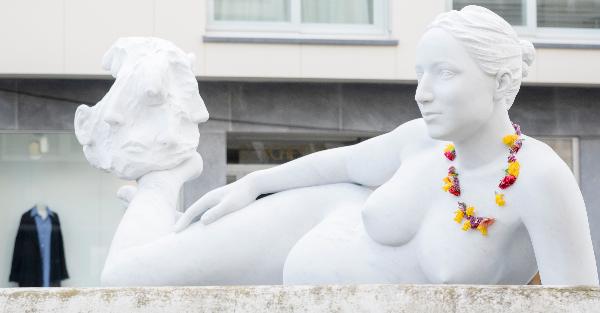
“Moeder”, la scultura in marmo di Pietrasanta dell’olandese Femmy Otten nel centro di Ostenda. Raffigura una donna durante la gravidanza, in delicato equilibrio tra forza e fragilità (foto di Ann Sophie Del Dycke).

A mother in marble from Pietrasanta

.

Also for the Beaufort Triennial, we chose six works, five of which will remain permanent. The first is in the very centre of Ostend, squatting in a fountain a stone's throw from the Casino and the waterfront: "Moeder" (Mother) by the Dutch Femmy Otten. A sculpture with a classical flavour, "in Pietrasanta marble," explains Els Wuyts, "inspired by the local tradition of water births". It depicts a woman during pregnancy, a genre little represented in the history of art. She grazes with one hand the surface of a water that becomes the pedestal of a figure delicately balanced between the primordial force of giving life and her vulnerability.

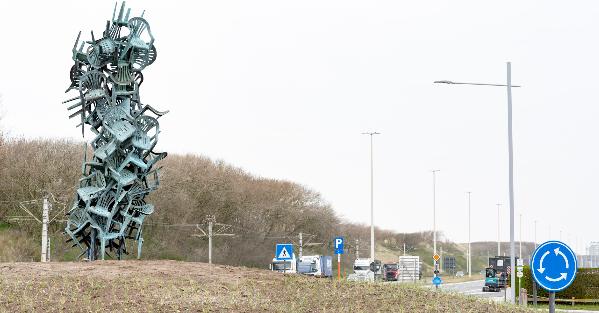
“Monobloc Moments”, il caotico monumento in bronzo alle sedie di plastica impilabili della finlandese Sara Bjarland. Alta sei metri, l’opera si trova in una rotonda stradale della località di villeggiatura di Wenduine.

Chairs stacked in chaos

.

Moving by tram a dozen kilometres eastwards, in Wenduine, we find "Monobloc Moments" by Sara Bjarland, "an artist who easily rose to the challenge of creating in a seemingly uninviting location," says Els Wuyts.

The Helsinki-based artist (now based in Amsterdam) was not unaware of the ubiquitous presence at Wenduine of stackable plastic chairs, a classic of seaside resorts. Hence his work, a chaotic and seemingly unstable tower of chairs six metres high, made of a noble and rare material such as bronze as a contrast to the overblown and cheap plastic. "At first the local population was very sceptical," smiles Els, "some were afraid it was rubbish, while Sara wanted a taller and taller tower. Then the dialogue between the artist and the citizens overcame perplexity and mistrust'.

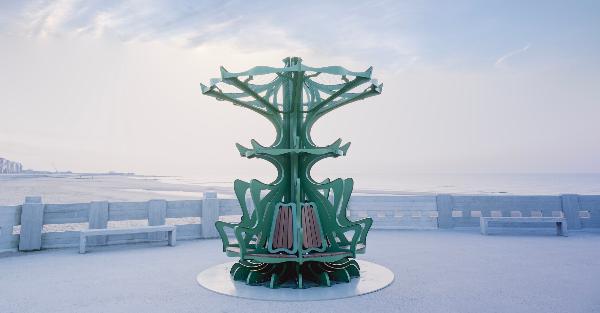
“Attentifs Ensemble”, omaggio del francese Romain Weintzem all’Art Nouveau che caratterizza la costiera belga. Si trova in tre punti diversi di Blankenberge e ricorda sia le giostre che il Panopticon, il “carcere perfetto” metafora di un potere invisibile.

Homage to Art Nouveau

In neighbouring Blankenberge we find 'Attentifs Ensemble', a tribute by the Parisian Romain Weintzem to the Art Nouveau that characterises the Belgian coast (by the way: in Ostend, lovers of the Belle Époque should not miss the Brasserie Albert on the waterfront). Thesteel and wood structure, built by the French artist at three different locations in Blankenberge including the ancient and imposing Pier, is three and a half metres high. Reminiscent of ancient merry-go-rounds, it consists of eight chairs arranged in a circle, separated by steel dividers. But Weintzem's seating also recalls the Panopticon, the 'perfect prison' designed in 1791 by Jeremy Bentham, a metaphor for invisible power that inspired Michel Foucault, Noam Chomsky, Zygmunt Bauman and George Orwell, among others.

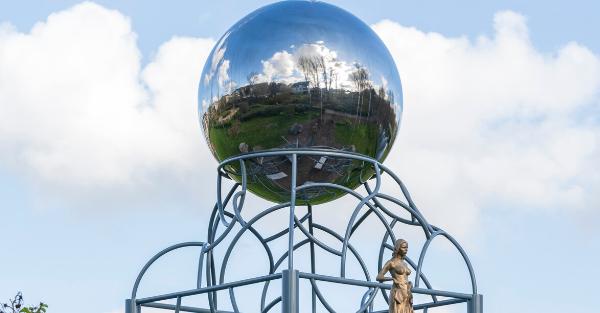
“Gazing Ball: Reflective Dialogues”, opera di Lucy + Jorge Orta ospitata in uno splendido parco floreale di Middelkerke. Una struttura dominata da un’enorme sfera riflettente che cattura luci, ombre e l’attenzione dei visitatori.

The magic of the reflecting sphere

.

Moving instead on the tram west of Ostend, we find the coastal town of Middelkerke with its futuristic Silt, the award-winning complex just opened to protect the city from high tides. And in a corner of a delightful city floral park stands "Gazing Ball: Reflective Dialogues", by Lucy + Jorge Orta. It is a structure surrounded by greenery and dominated by an enormous reflective sphere that captures light, shadows and the attention of visitors. Offering those who contemplate it new perspectives but above all a few minutes of contemplation, reflection (in every sense) and perhaps conversation with strangers. A symbol of connection between past and present, between earth and sky but also between different people, a tribute among other things to Radio Oostende, which had a broadcasting station nearby.

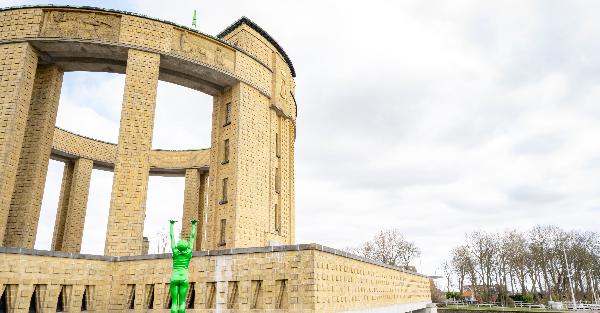
“Top Down Bottom Up” della tedesca Alexandra Bircken: sospese sul colossale monumento ad Alberto I ecco due figure verde smeraldo identiche e perfettamente speculari. La ragazza in alto si regge sulle braccia a testa in giù o è il nostro mondo a essere rovesciato?

Great War and Emerald Green Girls

A few more tram stops in the direction of the French border and in Nieuwpoort there is the colossal 20th-century monument to Albert I, on the spot wherethe German advance during the Great War was halted thanks to the opening of the locks on the Yser River and the flooding of the countryside. Suspended over the monument are two figures, two identical and perfectly mirror-image girls, one on the ground, the other on the roof: this is 'Top Down Bottom Up' by the German Alexandra Bircken, one of the most interesting works at Beaufort 2024 (unfortunately temporary). The two 1.69-metre-high emerald green aluminium figures dialogue with each other and with the Albert I monument, suggesting a daring reversal of reality: is the girl at the top standing on her arms upside down, or is it our world that is being reversed?

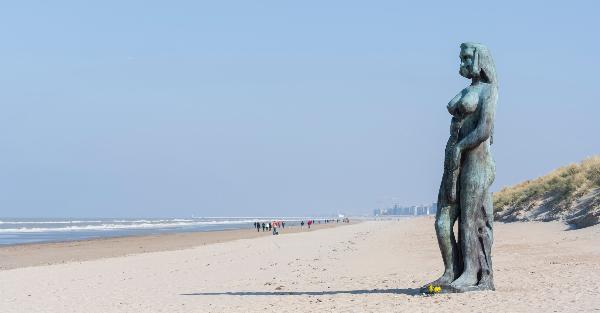
“The Herring”, opera del franco-belga Johan Creten che spunta tra le dune delle spiagge. Alta cinque metri, è un omaggio alle aringhe e in generale ai pesci, che in molte culture simboleggiano la vita e la fertilità.

Surprise in the dunes

Finally, in the dunes of the beaches between Koksijde and Oostduinkerke stands the imposing 'The Herring', a work by the Franco-Belgian Johan Creten. The five-metre-high bronze sculpture is a homage to herring, which has always been an essential part of life on the Belgian coast. During the Second World War they saved thousands of people from starvation. Moreover, in many cultures fish symbolise life and fertility: in China they are the emblem of abundance and health, but also of hope and happiness. "And it is nice to find that often, at the foot of the imposing sculpture, someone has left a few roses," sighs Els Wuyts. "This too, after all, is the fabric of life".

Copyright reserved ©
Loading...

Brand connect

Loading...

Newsletter RealEstate+

La newsletter premium dedicata al mondo del mercato immobiliare con inchieste esclusive, notizie, analisi ed approfondimenti

Abbonati