Cannes Film Festival

'The Secret Agent', an award-winning film about the Brazilian dictatorship

In competition, the new feature film by Kleber Mendonça Filho is a title that deserves the palmarès
Andrea Chimento

The Secret Agent

3' min read

3' min read


One of the most powerful films ever made on the subject of South American dictatorships, 'The Secret Agent' by Brazilian director Kleber Mendonça Filho is one of the most important titles seen so far in the Cannes Film Festival competition.

Loading...

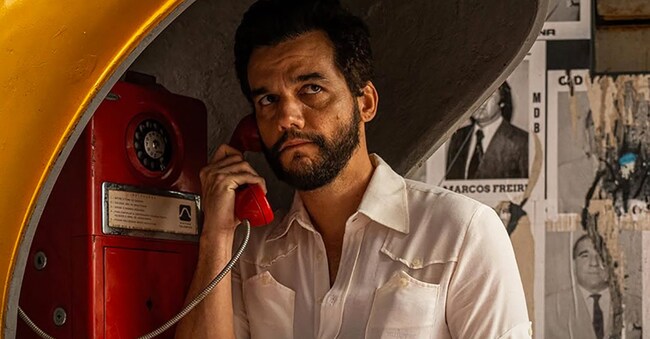
Set in Brazil in 1977, at the height of the military dictatorship, the film tells of Marcelo, a man on the run who returns to his Recife hoping to be reunited with his son. He arrives during carnival week and soon realises that the city is certainly not the safe, non-violent place he expected.

After the beautiful documentary 'Retratos fantasmas' (2023), Kleber Mendonça Filho returns to fictional cinema and does so by making Recife - his hometown - the real protagonist of the film again.

As in the previous 'Acquarius' (2016) and 'Bacurau' (2019), it is clear that Mendonça Filho's is a political cinema that, in this case, looks to the past in order to also reason about the present.
The strength of 'The Secret Agent', however, is not only in its content, but in a narrative structure that is always destabilising, capable of shaking and disorienting the spectator from beginning to end. Starting with the character of Marcelo, magnificently played by Wagner Moura, the film continually moves in the territory of ambiguity, managing, also for this reason, to remain engaging throughout its approximately two and a half hour duration.


A frame to remember

.


The first sequence is enough to grasp the dramaturgical force of this work, in which one immediately feels the presence of repression and the spectre of death as driving elements of a feature film that works on atmosphere and sensations, rather than on concreteness or didacticism that so many similar films carry.

If the beginning is dazzling, the concluding part is no less so - incisive to the right degree - in a product that is not forgotten after the end of the credits.

For some years now, Brazilian cinema has been one of the most interesting in the world and this film may be its highest point.

Eagles of the Republic


Eagles of the Republic

.


Another deeply political film in the Cannes competition is 'Eagles of the Republic' by Tarik Saleh.

Swedish-born director, son of an Egyptian father, Saleh concludes with this film his 'Cairo Trilogy', which began with 'Murder in Cairo' (2017) and continued with 'The Cairo Conspiracy' (2022).

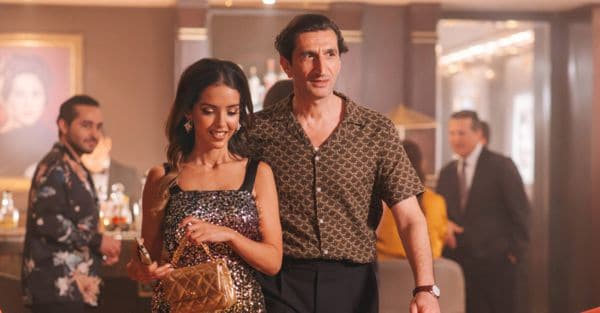
At the centre of the plot is George Fahmy, one of the most celebrated actors in Egyptian cinema. When he is under intense pressure to act in a film commissioned by the government, he ends up accepting and finds himself involved in a series of intrigues and betrayals that are not easy to handle.

While the basis of the narrative is similar to the two previous features, in this case, however, it is the world of cinema that is the great protagonist, through an argument that speaks of propaganda, nationalism, blacklists, but also of how the Seventh Art can be a key to countering political power and launching particularly urgent messages.

Saleh plays brilliantly on this territory, opting for several farcical passages close to the logic of black comedy that prove functional to the narrative, while the concluding stages are more cumbersome, where one struggles a little to pull the strings of a feature film that ends worse than it began.

On the whole, however, it is a significant work that, despite a few fluctuating passages, confirms the good overall performance of the entire trilogy: a triptych, certainly not memorable, but capable of leaving important food for thought and signed by an author who knows his stuff.

Copyright reserved ©
Loading...

Brand connect

Loading...

Newsletter

Notizie e approfondimenti sugli avvenimenti politici, economici e finanziari.

Iscriviti