
The secret of artificial intelligence lies in combining human and machine responsibility

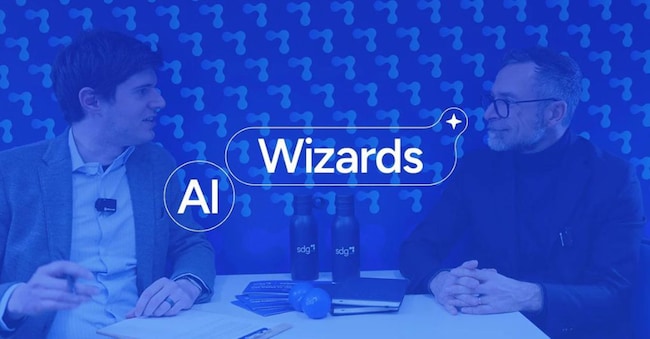
It is from this consideration that an increasingly central reflection in the innovation debate takes shape. Artificial intelligence has only just begun to show its potential, but there can be no truly effective strategy focused on this technology without a solid data base. According to Matteo Verdari, Italy's head of the Global AI Practice at SDG Group, it is crucial to bridge the gap between what is mere hype and what represents real operational transformation.
In recent years, a glaring paradox has emerged: while artificial intelligence has made extraordinary progress on the technological front, its concrete adoption in companies has not followed the same pace. This phenomenon, known as the 'adoption gap', describes the distance between available solutions and what is actually implemented. Various researches estimate that around 60 per cent of AI projects fail in the transition to the operational phase. Underlying these failures is almost always a lack of tangible value for the company, often generated by a misalignment between stakeholders on how to transform organisational models, processes and systems to integrate new solutions. Also weighing in are technical factors, such as the presence of legacy systems ill-suited to accommodate advanced technologies, and cultural factors, linked to people's difficulty in adopting new tools or changing their ways of working.
The fashion industry is a case in point. Although it is by definition oriented towards change and trends, it is not immune to these dynamics. The complex transitional phase it is currently going through, marked by geopolitical and economic uncertainties, drives many companies to seek an immediate return on investment. This approach, however, becomes a limitation: if a use case does not produce results in the very short term, it is shelved. This results in continuous cycles of evaluation and Proof of Concept that rarely translate into concrete value. Yet there is no shortage of positive examples. Artificial intelligence can support product development, accelerating the creation of sketches; it can refine assortment optimisation strategies, adapting stocks to customer preferences and shop specificities; finally, it can enhance after-sales service, reducing the time required to handle complaints and returns along the entire supply chain.
Thinking that AI can produce immediate results, like some sort of magic, is a common mistake. Building value requires a solid foundation, and in this case the foundation is data. There can be no AI Strategy without a Data Strategy: you need an infrastructure capable of collecting, organising and governing the data that will feed the models. Only after building this foundation is it possible to identify and develop truly strategic use cases. The approach (as in our case with Orbitae) must be end-to-end, from design to engineering, with constant attention to the lifecycle of the models, the training of people and the organisational evolution required for responsible adoption.
Today we are entering a new evolutionary phase. Whereas in the past automation was developed through tools such as Robotic Process Automation, based on predefined rules for repetitive tasks, AI Agents capable of 'thinking' and acting more autonomously are now emerging. With proper configuration and supervision, these agents can manage processes from start to finish: for instance, in purchasing they can analyse offers, participate in tenders or issue orders by assessing context, inventory and prices. It is no longer a matter of executing static instructions, but of understanding situations and making operational decisions. For this change to be sustainable, two elements are indispensable: clear governance, with protocols guaranteeing transparency and control, and human adaptation that enables people to work in synergy with these new digital actors.
In a scenario populated by intelligent agents, the role of the human being is not reduced, but transformed. Talent, experience and understanding of the business environment remain central. Human intelligence is capable of reading between the lines, grasping nuances and interpreting phenomena beyond existing patterns, while Large Language Models in a sense stay 'inside the lines', operating within the available information. AI must therefore become an additional voice in the decision-making process, as if an additional perspective, capable of offering alternative scenarios and complementary analyses, were also sitting at the table of strategic choices. The key lies in combining the responsibility of human decision-making with the knowledge provided by the machine: a human-in-the-loop model in which artificial intelligence does not replace, but reinforces and complements human intelligence.

