The secrets of the only Ferrari that wins. The Endurance racing prototype
Harmony, skills, good human relations. Coletta, team leader, tells how a cohesive team won two world titles and the 24 Hours of Le Mans

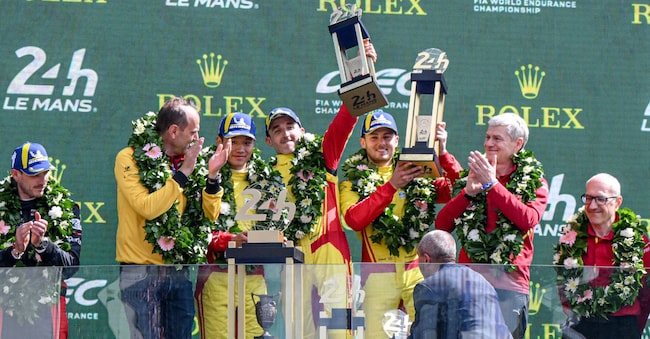
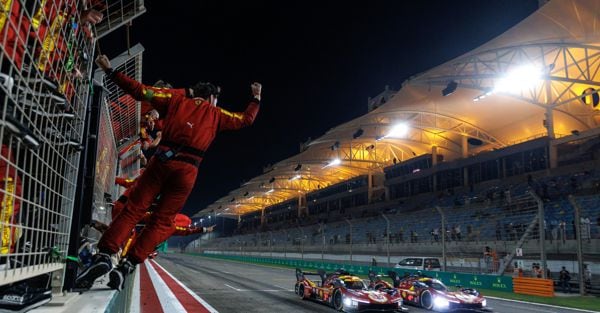
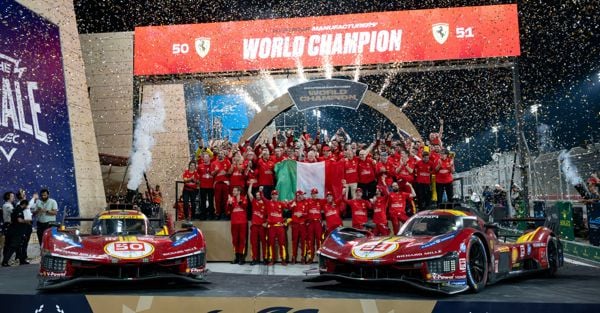
There is a Ferrari that loses and accumulates embarrassments. But there is also a Ferrari that dominates and wins. It is the Ferrari that races in the WEC, the World Endurance Championship, that of covered-wheel prototypes made famous by races such as the 24 Hours of Le Mans. In this category, which in terms of technological endeavour is equivalent to F1 but in comparison to which it does not have the great media notoriety, Ferrari has triumphed and amassed records. It won the Le Mans 24 Hours for the 3rd consecutive time and took the Constructors' World Championship title with the 499P 53 years after its last success (in 1972). In addition, the drivers of the No. 51 car became Endurance World Champions. Of the three, two are Italian: Antonio Giovinazzi (former Sauber and Alfa F1) and Alessandro Pier Guidi, a multiple GT champion in the past, always with Ferrari. The third is Englishman James Calado. An absolute domination that Ferrari has realised by winning four out of eight races in 2025 and taking all three of its crews to the top three places in the world Drivers' standings.
A comparison that strongly clashes with the F1 world where, on the other hand, Ferrari is having its worst year in recent seasons: no wins, many retirements and only fourth place in the Constructors' Championship. The difference, cars aside, what is it? The team and the organisation. But also the size.
The F1 world is four or five times the size and turnover of the Endurance world. Ferrari F1 has a structure of around 1,500 people including engineers, mechanics, logisticians, managers. That of the WEC is composed of less than 250 people: thirty designers, two hundred technicians and about thirty mechanics on the race track. F1's investment budget is around $150 million per year, limited by regulation. In the WEC, less than a fifth is spent: around thirty million in the starting season, but much less in subsequent years because the regulations are geared towards cost containment. For example, while in F1 the teams design and build a new single-seater every year, in the WEC the car with which the championship began (in 2023 in the case of Ferrari) is "frozen" until the current regulations expire in 2029. It is forbidden to completely redesign it as is done in F1. This is to keep costs down.
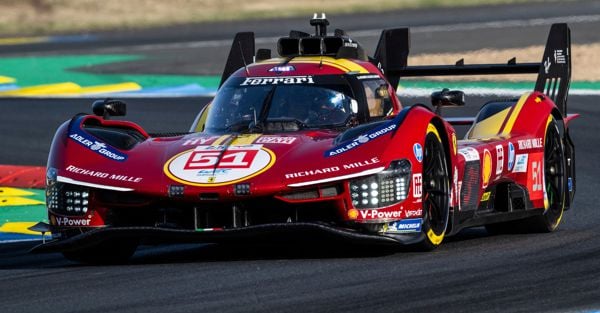
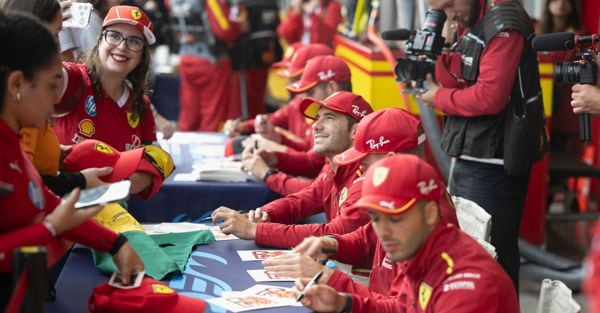
So is small size the secret of the Ferrari team's different performance in F1 and the WEC? Absolutely not! The answer lies in the men and the working methodology. The Ferrari Endurance-WEC team has nothing to do with the F1 team. It consists of a much smaller nucleus - almost all Italians - led by Antonello Coletta, head of the global Ferrari Corse Endurance and Clienti activities. Who is a bit like the Vasseur of Endurance. But with more style and sympathy. Coletta, a 58-year-old Roman, has put together a winning team in recent years with stubbornness and determination. And he has made good internal harmony the secret of success.
The two categories, Endurance and F1, are also very different from a technical point of view: WEC Hypercars are covered-wheel prototypes with hybrid engines, like F1 cars. But the principle behind the WEC regulations is very different: it does not have the same fixed-displacement engine for all, like the 1.6-litre V6 turbo hybrid used in F1. The WEC is based on endurance racing, from 8 hours up to the 24 hours of Le Mans. Therefore, the regulations emphasise overall car efficiency and endurance, not pure speed.