
The sense of pedalling towards eternity
Olivier Haralambon writes a hymn to cycling: from the first bike to loneliness

4' min read
4' min read
Pedalo, ergo sum. Devouring kilometres, dust, sweat, stares, defeats and victories and being a cyclist ad vitam. Meet Olivier Haralambon, a two-wheel professional for more than ten years, a philosophy degree from the Université Paris II and author of The Cyclist and his Shadow, a masterpiece that will never make you see races the same way again. He has written a hymn to cycling, a philosophical treatise on being an athlete, an autobiography that is also self-absolution, self-accusation. In short, a scathing self-analysis that surfs between words to get to the heart of being a cyclist. To the heart of walking on the edge between glory, darkness and shadows. Something very human and everyday. We are all cyclists: 'I have loved cycling and racing fiercely because they have given me this particular form of trust in the unfathomable immensity of existence, in the verticality of time. Without the bike, without racing, I would never have experienced the slightest feeling of eternity - and not just as a myth, but as a real experience'.
It starts with the first bicycle, it was a Mercier, and the memory is incandescent light and heartbeats: 'That bicycle still makes my throat dry today, it took my innocence one morning'. And as happens with what is dearest to us, young Olivier sleeps with the bicycle in his room, familiar profiles, like those of the beloved woman whose moles and shadows are known. The nocturnal courtship becomes love, a promise of speed, 'transforming the car in front into its own flesh'. The first outing is with his uncle, it is a new birth, as the son of the pedal. Haralambon discovers the depths of his body, made of weight, resistance and effort: 'my soul had split like a fruit whose overripe pulp was now a promise of infinity'.
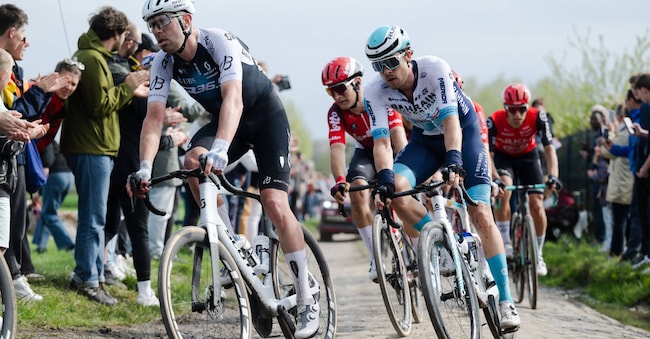
It is not only the landscape that is the backdrop for the cyclists, it is much more the loneliness: everyone, in the Boccioni-like whirlwind of wheels, is alone. Each peloton, the platoon, is the spectacle of 200 solitudes pushed to the limit. They are almost more to listen to than to watch. The athlete is in tune with his skin and his bike, and the body 'must be as mobile as water that spreads no matter what happens'. But cycling - for example, on the pavé of the Paris-Roubaix - also implies the delicacy of a dancer, combining culture and a very fine sensibility.
After his first races, Haralambon became a professional cyclist and shared with his colleagues 200 days a year and total dedication: 'the races don't just take one moment of the day, they take everything'. And all around there are fans, companions, physiotherapists, journalists, but nothing is distracting. It's just a matter of putting your elbows on the handlebars and going. With rhythm: 'The cyclist is a question of rhythm, indeed, of rhythms. The breath, the blood, the flesh, everything must be in tune with his goals and his desire for speed'. In this extreme focus on oneself, time and asphalt, rivals and fears remain behind. It is important to be able to ride alongside the pain but never to be overwhelmed by it. Those sharp faces, those grimaces of fatigue, that mud on your skin, that pallor. It could be the brink of defeat and, instead, to ascend to the sky of glory, 'what they chase with so much effort is their own death'. And the writer opens here the painful chapter of doping, the terrible shadow that has discredited the movement: 'Cyclists do not dop for calculation or to make a career: these reasons only come later. They dop completely gratuitously, they do it because it feels good. Because flying at that speed is such a wonderful experience that it makes one deaf to all caution; an experience so beautiful that one would give one's life to experience it one more time. That is why I forgive them, that is what makes them so pure in my eyes. They are just looking for another taste of such unique delights'. And he confesses: 'I, who have gained almost nothing, have known the terrible pleasure and strange muscular eloquence of amphetamines. I did it because I dreamed of reliving my best days'. As, in the end, happened to Lance Armstrong: 'The furious cyclist is a man already dead in power, who asks only to forget himself for the benefit of his feat, to dissolve his individual limitations in the process and realisation of his metamorphosis'. The American athlete, after beating cancer, changes his body, has a dazzling physical performance and wins seven consecutive Tours de France, from 1999 to 2005. He is a symbol for all sufferers, but the US Anti-Doping Agency in 2012 cancelled his sporting achievements after 1998.
What remains in Haralambon of the cyclist he was? Aches and pains everywhere, the inconstancy of training but also the surprise of getting back on the bike, after watching a race, and reliving certain thrills. Almost a spell even though 'physical decline leads to the pursuit of other goals, otherwise life would be unbearable'. But despite these physical creaks, the fascination of pedalling and being accompanied by one's own shadow, almost in a double life, otherwise impossible, survives. After thousands of kilometres and tantalising exertions, the mirage of the peaks remains: 'Climbing a mountain at full throttle relies on the body, of course, but it is fundamentally a spiritual exercise. A spiritual stunt'. Capable, at any age, of cushioning the pain and offering the foothold to cling to the eternity of an instant.


