
Short-term lettings: the sector is worth 51.7 billion; related economic activity exceeds 40 billion
In the first nine months of 2026, direct bookings rose to 10.1 billion, whilst investment in refurbishment and maintenance totalled 800 million. Salvini opposes the EU regulation, calling it ‘expropriation’

Key points
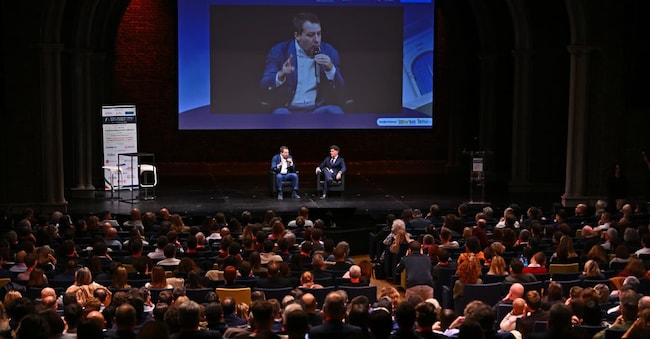
The impact of regulations, legislative and tax prospects, the relationship between property ownership and new housing needs, as well as the role of platforms, consolidation deals and market trends across short-, medium- and long-term lettings: these are the issues at stake today in the short-term lettings sector, whilst in Europe the debate over new regulations is becoming increasingly heated. Against this backdrop, the latest figures paint a picture of a growing sector, which in Italia is worth 51.7 billion euros. The data, compiled by the Research Centre of Aigab (Italian Association of Short-Term Rental Managers) and covering the first nine months of 2026, were presented at the opening of the second edition of the Stati Generali degli Affitti Brevi, which is taking place in Milan until tomorrow.
Salvini opposes the EU regulation
The Minister for Infrastructure and Transport, Matteo Salvini, opened the proceedings by speaking out strongly against the European regulation on short-term lettings, announcing his intention to oppose it ‘by any means necessary’. Salvini described the legislation as a measure that ‘essentially legitimises a form of expropriation’, whilst also criticising policies which, in his view, penalise property owners. The minister then defended the role of short-term lettings, arguing that they do not compete with the hotel sector: “They cater to two different market segments.” On the broader issue of housing, he emphasised the need to provide greater protection for landlords, particularly regarding evictions, and more favourable conditions for putting properties back on the market.
Rumours are rife
Compared with 2025, the outlook is positive across the board. Bookings made directly (gross book value) rise from 8.5 to 10.1 billion (approximately +19 per cent), the associated economic impact from 32.9 to 40.6 billion (approximately +23 per cent), and investment in renovations, furnishings and maintenance from 600 to 800 million. According to Marco Celani, president of Aigab, these figures show ‘how Italian households continue to believe in short-term rentals: demand is holding up and rates are rising, although not for all destinations’.
According to Aigab’s analysis of data from Istat and PriceLabs, there are approximately 35.6 million dwellings in Italia: 21.7 million occupied by residents, nearly 9.6 million unoccupied and 4.3 million let (Istat figures updated to 2019). Based on these figures, there were approximately 509,000 online listings in September 2026, accounting for 1.4 per cent of the total. As for their origin, 30.4 per cent of the properties entering the short-term rental market had been vacant for some time, 28.7 per cent came from an inheritance and 26.1 per cent had been occupied by the owners, who needed to let them out temporarily. 12.6 per cent came from long-term tenancies, whilst only 2.2 per cent were purchased as an investment.
Supply is on the rise, particularly in secondary towns
Following the decline between 2024 (538,000 properties online) and 2025 (502,000), the number of properties on offer rebounded in 2026 (510,000). On a monthly basis, year-on-year growth starts at +1.10 per cent in January (458,000 listings) and gradually accelerates: +4.98 per cent in March, +8 per cent in June (492,000), peaking at +13.45 per cent in August (510,000). In September, there were 509,000 listings, up 9.51 per cent on last year. According to AirDNA data at European level, the market is being driven by larger properties and moreestablished operators, those with at least 21 listings. The number of properties with multiple bedrooms is on the rise, and there is growing interest in villas and the luxury segment, driving the sector towards increasing professionalisation.
Brand connect


Newsletter RealEstate+
La newsletter premium dedicata al mondo del mercato immobiliare con inchieste esclusive, notizie, analisi ed approfondimenti
Abbonati