
Skin according to Inversa, the company that makes alien species ethical and sustainable
The company obtains valuable hides from python, lionfish and Asian carp that destroy ecosystems in North and Central America, protecting the fauna and economies of local communities

3' min read
3' min read
In search of alternatives to animal leather, start-ups and projects have multiplied in recent years, launching materials that they claim are more sustainable: MycoWorks, for example, which produces an alternative material to leather from mushroom mycelium, has also attracted investment from a major brand such as Hermès; Desserto is a project in Mexico that produces a vegan material from cactus leaves, while Italy is home to the patented Appleskin, which is now produced by the US group Vegatex together with Lemonskin, created from the food waste of lemons, and BarleySkin, derived from cereals used in the production of beer, designed in collaboration with Budweiser.
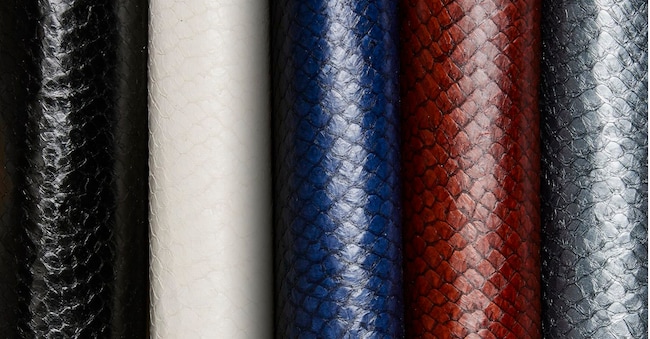
It should be remembered that the vast majority of animal skin is actually produced from the circular economy, and is therefore the result of the recovery of a waste product from the food industry. But what if, in the search for more sustainable alternatives, one of the most effective remained of animal origin? This is the solution proposed by Inversa, a company founded in 2020 and based in Sanibel, Florida, which produces leather by capturing alien animals that endanger the survival of delicate ecosystems, from the Greenlands of Florida to the coasts of the Caribbean, and the communities that live off them.

The idea came from the three co-founders, Aarav Chavda, who is now also the CEO, a Princeton graduate in aerospace engineering, Roland Salatino, a Harvard-educated economist and expert in Asian studies, and Kahan Chavda, a bio engineer. In collaboration with NGOs that also contributed to their funding, such as Conservation International, the National Oceanic and Atmospheric Administration, Ocean Risk and the Resilience Action Alliance, and using only species officially declared to local and national administrations as non-native and dangerous, and therefore already earmarked for eradication, they identified three species and three areas threatened by them, resulting in three very valuable and valuable skins: The first, the python that plagues the fauna of the Greater Everglades, the last fragile subtropical wild ecosystem in North America, Florida, a reptile that is responsible for the elimination of 90% of the local fauna. The second, the Asian carp, which causes serious damage in the Mississippi River basin and its more than 870 animal species, worsening water quality and consequently also the conditions of the communities living in those areas, some 1.5 million people. Lastly, the lionfish, an alien species that has invaded an area of about 7 million square kilometres of the coral reefs of the Caribbean Sea, capable of preying on 70,000 fish during its life cycle, and threatening the livelihoods of about 42 million people.

Moreover, Inversa's project directly involves local communities, with whom it collaborates to fish for alien species, and according to the first results of its Life Cycle Assessment, compared to cowhide, Asian carp skin production uses 99.9% less land, 95% less water and emits 89% less greenhouse gases. Among the first fashion brands to experiment with Inversa's leathers was Gabriela Hearst, which proposed 'ethical' python shoes in its S/S 2025 collection presented last September in Paris, but Inversa's list of collaborators also includes the Italian shoe brand P448. The Inversa team, for its part, points out that there are at least 17,000 species considered alien in ecosystems around the world (including the blue crab, here in Italy). And that therefore their adventure, both entrepreneurial and ethical, has only just begun.


