
The S.M.A.K museum celebrates the reinvention of painting
In Ghent, the works of 74 artists, many born in Belgium and others living there, present a creativity that embraces different sensitivities and aesthetics

5' min read
Key points
5' min read
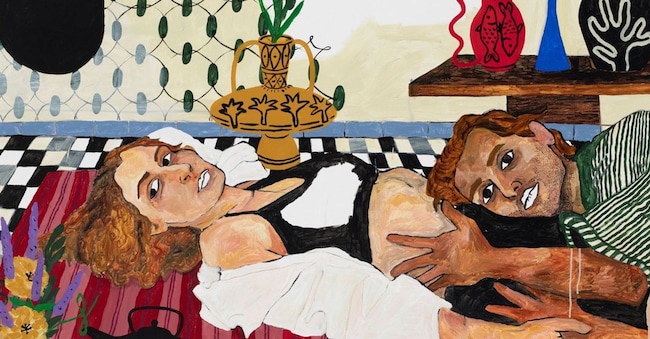
Over the past two decades, painting has experienced an extraordinary renaissance on a global scale, with young artists finding new ways of using the medium and developing unique styles. Painting has returned to prominence not only in galleries and art fairs, where it remains the preferred language of the market, but also in public institutions with exhibitions that testify to the fact that painting continues to be the preferred medium of expression for many artists. Its physicality then contrasts strongly with the growing abstraction of the digital, offering a concrete presence in an increasingly virtual reality. In 2023 at the Milan Triennale, the exhibition "Pittura italiana oggi", curated by Damiano Gullì was a vast reconnaissance dedicated to the contemporary panorama of painting in Italy, with 120 artists born between 1960 and 2000, each called upon to exhibit a work created between 2020 and 2023. A similar point of view can be found in the exhibition "Painting After Painting. A contemporary survey from Belgium" curated by Tanja Boon, Ann Hoste, Sam Steverlynck, Philippe Van Cauteren, Liesje Vandenbroeck, until 2 November at the S.M.A.K. Museum in Ghent that chooses Belgium as a land of exploration - a country with a long and prestigious painting tradition, fromJan van Eyck to Michaël Borremans and Luc Tuymans - but opening up to the contribution of artists from all over the world: of the 74 on show, many were not born in Belgium, but live and work there, an exhibition that therefore celebrates a creativity that has its origins in distant latitudes, embracing different sensibilities and aesthetics.
The artists and works
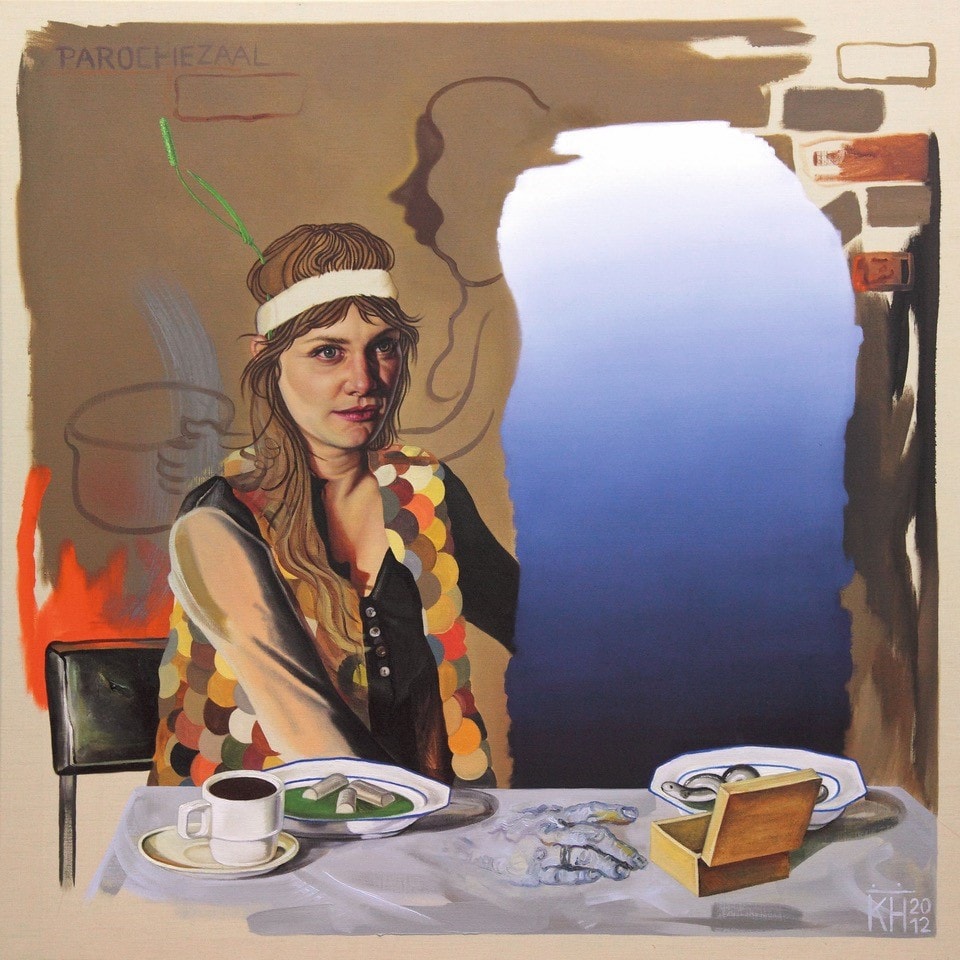
.The curators, aware of the weight of history, decided to turn their gaze to the younger generations: most of the artists were born from the 1970s onwards to those born in the 1990s. Some are already established names, for others it is their first major appearance in an institution. Most of the works are, again, very recent, created within the last two years, and the paintings are arranged according to thematic nuclei ranging from the impact of the digital to a reflection on identity. Some artists create narrative works that address their everyday life, political and social issues, identity, gender and representation, while others adopt a more abstract or formalist language and explore the relationship with other forms of contemporary image-making.
The exhibition bears witness to how different artists oppose a rigid delimitation of painting on canvas when creating their works, but use different materials. It is a slab of marble that Pieter Vermeersch (in Italy he works with P420, Bologna, marble works range from 9,000 to 45,000 euro, other canvases from 18 to 50,000 euro for more complex canvases prices up to 100,000 euro) chooses to paint on, a sheet of reflective glass is the medium for the artist Carlotta Bailly-Borg, while old supermarket flyers are used for the paintings of Anne Van Boxelaere (from Fred & Ferry, Antwerp, prices from 2.800 to around EUR 6,000) observing the schizophrenic social systems and oppressive developments in densely populated and built-up Belgium. Natasja Mabesoone plays with print, the silkscreens of the series 'La Coiffure / Combing the Hair', which we saw at the last miart, are on sale at Gallery Sofie Van de Velde, Antwerp, prices from EUR 6,200.
Despite the experimentation with visual media and languages, it is still painting applied to canvas that dominates the scene, and the first section of the exhibition brings together works that dialogue with traditional forms of painting, while renewing them through cultural and personal references. 'Doll' (2024) by the young Mae Dessauvage (born 1994), for example, presents an anime-like character depicted on the four sides of a miniature Gothic chapel (from Tatjana Pieters, Ghent, prices from 450 to 3,000 euros for small and medium-sized works). These works, inspired as much by historical iconography as by their own transgender experience, draw a bridge between medieval painting, postmodern architecture and contemporary comics.
Luís Lázaro Matos is not intimidated by the medium of painting and exploits every possible surface to realise his works and at S.M.A.K. he has realised, site specific, 'Diplomatic Immunity (The Eurorats)', 2025, an installation composed of five works on canvas, a text painted on the windows and a vast mural that re-imagines the European Union flag as a circle of spermatozoa. With irony and provocation, the artist refers to the case of József Szájer, Member of the European Parliament for the anti-LGBTQ+ Hungarian party Fidesz, who was caught fleeing a 'gay orgy' during the Covid lockout. Matos transforms him into a man-portrait going through a journey of emancipation in the Mediterranean (the artist works with Madragoa, Lisbon, his small and medium-sized works range between 2 and 11 thousand euros). A sense of humour but also provocation in the work "Madonna del Latte" by Monika Stricker (in Italy she works with P420, Bologna and her canvases range between 5 and 15,000 euros) which is part of a series that revolves around the perception that the male figure, praised for years as representative of power and virility, has been weakened, as if the foundations of patriarchal thinking, depicted for centuries also through art that has been its spokesman, have been questioned. In parallel, the still lives and portraits of Felix De Clercq take up the timeless themes of isolation and loneliness. Graduating from the Royal Academy of Fine Arts in 2020, the emerging Belgian artist (born in 1997) depicts sombre and withdrawn interior scenes inhabited by pensive male figures, conveying a sense of detachment and introspection (at Gallery Sofie Van de Velde, works on canvas range from 6 to 10,000 while those on paper from 3 to 5,000 euro).

