The interview

Mazzuca (Confindustria): ‘Can the South become Italia’s driving force? All it takes is the will to do so’

Natale Mazzuca, Confindustria’s vice-president for Strategic Policies for the Development of Southern Italy. The NRRP cannot be a mere interlude. Its legacy lies in the method: it must remain part of our culture

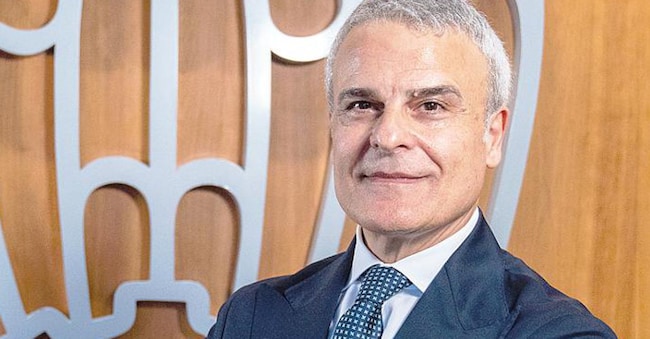
Natale Mazzuca. Vice Presidente di Confindustria per le Politiche Strategiche per lo Sviluppo del Mezzogiorno

4' min read

Translated by AI
Versione italiana

4' min read

Translated by AI
Versione italiana

A ‘multi-year’ and structural framework, with adequate resources: ‘few but stable choices’ to move beyond a crisis-driven approach and transform the South into a ‘solid logistics hub where it is worthwhile to invest’: only in this way will the South “be able to become the country’s new driving force”. Natale Mazzuca, Confindustria’s vice-president for Strategic Policies for the Development of the South, comments on recent data on the Southern economy and looks ahead.

The ‘Check-up Mezzogiorno’ report paints a picture of a South that has grown faster than the national average in recent years, but the first signs of a slowdown are now emerging. What is the current sentiment amongst southern entrepreneurs?

Loading...

A sense of confidence prevails – one that is cautious yet pragmatic. The figures show that Southern Italy is no longer stagnant: between 2019 and 2025, GDP grew by 8.3 per cent, compared with the national average of 6.3 per cent; our composite index of the southern economy has risen to 643 points and gained 8.2 points in 2025, mainly thanks to investment. Employment, turnover and limited companies are also on the rise. These are important signs, but we cannot ignore the weaknesses: exports are too weak, productivity remains low and there are significant disparities in the labour market. The employment rate in the South remains at 50 per cent, compared with 62.5 per cent in the rest of Italia. Svimez also forecasts that growth in the South will be slightly higher than in the Centre-North in 2026, but from 2027 onwards there will be a reversal that gives us cause for concern.

In short, entrepreneurs see real opportunities – not least thanks to the Single Special Economic Zone – but we need to move beyond a crisis-driven mindset.

How can we make this path of growth a permanent feature, whilst continuing to narrow the gap with the rest of the country and Europe?

The leap we need to make is to move from growth driven by one-off resources to growth based on sustainable competitive conditions. It is the transition from the ‘Southern Italy Factor’ to the ‘Southern Italy Platform’: a platform encompassing production, logistics, energy and skills, capable of strengthening Italy’s competitiveness.

Incentives are useful, and the Single Special Economic Zone (ZES Unica) is proving its effectiveness. But they are not enough on their own. We need a supply-side policy that links public and private investment: rail and road infrastructure, ports connected to inland ports and freight terminals, intermodal logistics, energy, water and digital networks, and well-equipped industrial estates. Public investment must reduce costs and uncertainties and act as a multiplier for private investment. For example, we are awaiting the outcome of the Southern Department’s call for proposals, worth 300 million, for transport networks, infrastructure and services in the industrial areas of Southern Italy. This must be complemented by human capital, research, advanced services, and a public administration capable of swiftly authorising and supporting projects. Southern Italy must not merely be a place where resources flow in, but one where investments take root, generating innovation, local supply chains, exports and skilled employment. A region that is attractive to young people and capital, with efficient transport links for goods and people. This vision was also shared by Leopoldo Destro and Mario Zanetti in this newspaper in recent days.

Now that the NRRP is drawing to a close, how can we avoid a sudden cut-off of funding and the loss of the new administrative capacity built up over recent years?

The NRRP cannot be merely a passing phase. Its most important legacy is the approach it embodies: not just the projects completed, but the ability to plan, spend, monitor investments and meet deadlines. It is this that must become part of our culture.

We must avoid a ‘dip’ in investment after 2026 by accelerating the implementation of cohesion policy and clearly planning the allocation of national and European resources. We need to select high-impact priorities with projects ready to go ahead and coordinate infrastructure, Special Economic Zones (SEZs), development contracts and financial instruments. At the same time, we must not allow the technical expertise acquired within public administrations – which constitutes a genuine foundation for competitiveness – to be lost. Together with the System, we are working on a comprehensive medium-term structural policy framework for the development of the South and, consequently, of the country as a whole.

Loading...

What should the next Budget Law include to ensure the continuity of public investment in Southern Italy and attract private capital?

We need just a few, but firm, decisions: first and foremost, ensuring continuity in public investment in strategic infrastructure projects that improve accessibility and services in industrial areas, strengthening logistics and energy links, and finally getting work underway on the Strait Bridge – an essential lever for connecting Sicily to the high-speed rail network and the major TEN-T corridors. This would send a strong signal of the State’s confidence in the South, transforming the perception of an isolated and marginal region into that of a solid, strategic logistics hub where investment pays off.

In the private sector, the stop-and-go approach must be overcome. The ZES tax credit has been extended to 2028 but must be backed by adequate annual funding and rules compatible with multi-year industrial programmes, particularly in the property sector. The tax credit can trigger investment, but its long-term success depends on the quality of the wider environment. Finally, for Southern Italy too, the capitalisation and scaling up of businesses are essential conditions for increasing productivity and market presence.

The budget should therefore focus resources on measures capable of generating additional investment, productivity and employment. Not one-off annual measures, but a multi-year, predictable framework that supports projects from authorisation through to implementation. Only in this way will Southern Italy cease to be a separate chapter in public policy and become the country’s new driving force.

Copyright reserved ©
Loading...

Brand connect

Loading...

Newsletter

Notizie e approfondimenti sugli avvenimenti politici, economici e finanziari.

Iscriviti