
South struggling on canteens, gyms and school buses
The result for the Mezzogiorno is reduced full time and, consequently, female employment in difficulty

2' min read
Key points
2' min read
From school buses to full-time classes, passing through libraries and gyms: another aspect that places Italy clearly behind, especially if compared with European data, but also if observed on the basis of the current needs of families, is the supply of school services. Which is still very fragmented and, even in the most virtuous territories, far from excellence. With the direct consequence of increasing the (already strong) economic and social gaps. Especially between North and South.
Full time
.The data of the Legambiente report photograph a general fragility of the territories on this level. Starting with one of the services most requested by families, full-time education, which has a direct correlation with the data on female employment: nationally, only 38% of classes in capital municipalities offer full-time education. In the lead is Central Italy, where more than one school in two (53.6%) gives this opportunity. But if the North is in line with the national average (37.1%), the situation gets drastically worse in the South (32%) and on the Islands, where full time is offered in only one class in six (16.8%). It is no coincidence that fewer than 4 out of 10 women are employed in the South, compared to an EU average of 70.8 per cent.
Before and after school
The national figures improve by a few points if we look at pre-school and after-school services, financed overall by only 42.3% of the provincial capitals, with the North (63.4%) far behind the Centre (33.3%) and the South (18.2%). Bologna, Imperia, Lecco, Pistoia, Udine and Varese are the administrations that spend the most on the subject. These 'extensions' of school hours, however, materialise in far fewer cases: only 17.5% of buildings manage to actually offer this service (29.1% in the North, 8.9% in the Centre, 2.8% in the South and 0% in the Islands). The South and the Islands lag far behind both in the support of school education projects - with expenditure per student being less than two euro in the South compared to over 29 in the North - and in the funding of projects for the under-14s, including summer centres, with 0.63 cents per student (the national average is almost 11 euro). Sports facilities are also scarce (one school in two in Italy has them, most of them indoor) and green areas, present in 64.4% of schools (but in the South in less than one in three).
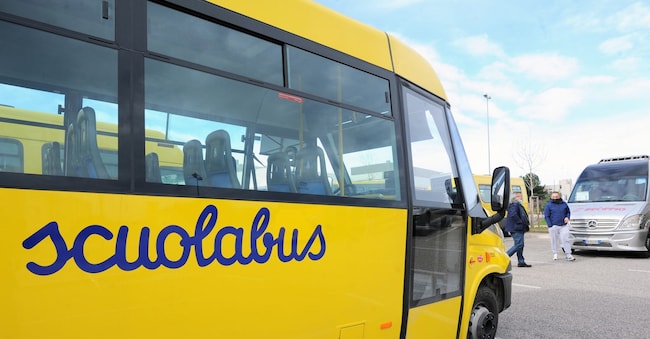
Another area of services that is difficult to find in our country is transport to and from schools: last year less than one in five nationwide had a school bus service. The cities with the best services are Brindisi, Fermo and Ragusa. In the area best served, the Centre, the percentage is close to 27% (i.e. just over one school in four), while the South (16%), the Islands (15.6%) and the North (15.3%) are well below average. Another sign of poor synergy between home and school.
Brand connect


Newsletter Scuola+
La newsletter premium dedicata al mondo della scuola con approfondimenti normativi, analisi e guide operative
Abbonati