Primo Piano

Telefisco Special: Leo, for the Christmas bonus we aim for 100 euro net

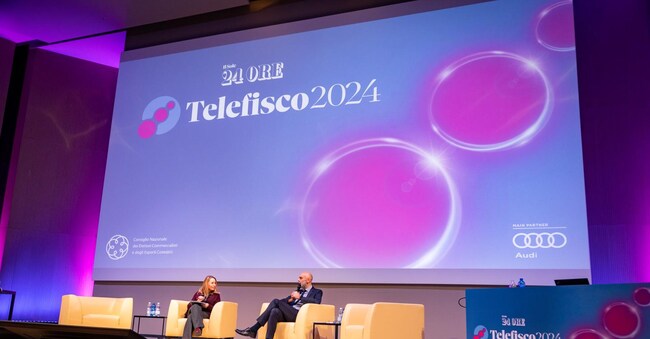
In the free conference of the Sole 24 Ore-Esperto Risponde the indications of the Inland Revenue Agency and expert reports
  • What's new in the Business Crisis Code

    Concluding the morning of the September edition of Speciale Telefisco, the second report on the Business Crisis Code, with the novelties explained by Giulio Andreani in dialogue with Alessandro Galimberti. And the seventh report, edited by Barbara Zanardi, recalling the novelties for 2024 on the subject of financial statements.

  • Young talents, the project of Sole 24 Ore and accountants

    'Young talents': this is the name of the innovative project that brings together the Sole 24 Ore Group and the National Council of Chartered Accountants and Accounting Experts. The aim is to increase the appeal of the profession for young people and to identify and retain trainees through a training course that focuses on some of the most interesting topics of the moment, artificial intelligence, blockchain, Esg. The announcement was made at the end of the morning by Eraldo Minella, general manager of Professional Services and Training Sole 24 Ore, and Elbano de Nuccio, president of the Cndcec.

  • Forfeiters, only invoice-documented expenses are to be declared in the RS box

    In its Circular No. 4/E of 4 April 2016 and its subsequent Circular No. 24/E of 30 May 2016, the Revenue Agency announced that taxpayers applying the flat-rate scheme are only required to declare expenses documented by invoices. Flat-rate taxpayers are also required to indicate, in the statement 'Flat-rate scheme for business, arts and professions - Disclosure requirements' of Schedule RS, the costs and expenses relating to goods or services used promiscuously to the extent of 50%. Expenses incurred for the purchase of goods and services (e.g. energy consumption) are to be reported gross of VAT.

  • De Nuccio: 'A cut in business incentives would be useful'

    The conclusion of the round table came from the president of the accountants, De Nuccio, who emphasised the priorities and proposals of professionals in the so-called manoeuvre season. "Our proposal is to maintain the 35 per cent tax bracket, but extend it up to EUR 70,000. In addition, we call for a cut in the incentives for companies, so as to have a more streamlined, but clearer and more constant range of benefits. We support, as Deputy Minister Leo said earlier, a pruning of tax expenditures'. Lastly, there is also a reference to Mario Draghi's admonition to support demographic growth and combat, at the same time, denatality. 'We need support for large families and the growth of new families'.

  • De Nuccio: 'Ready to apply cooperative compliance'

    Elbano de Nuccio, President of the Chartered Accountants, talks about cooperative compliance: 'I support the vision that is anchored in cooperative compliance. Until a few years ago it seemed impossible for the category of accountants to be recognised as exclusive. At last, accountants are recognised as having a role in improving taxation. We are moving from a logic of control to a logic of ex ante dialogue, in this I see an enormous coherence'. How is the category preparing itself? "We accountants, together with lawyers, are the only ones who have to prepare with suitable skills. The reform has not introduced new lists and registers. One thing it has required, however: the acquisition of specialised skills. We have already set up technical tables. We are eager to apply this tool'.

  • Ruffini: 'Interpelli down after superbonus'

    The director of the Revenue Agency, Ernesto Maria Ruffini, talks about the appeals: 'The superbonus has affected the drop in the number of appeals, we went from 18,000 in 2022 to 13,000 in 2023 and this year we will not reach 6,000. It is a physiological process. As general issues are resolved, the interpellations continue to concern only new issues and they decrease'.

  • Irpef, intermediate tax bracket at 33 per cent

    For the next manoeuvre, 'the objective is to raise the 35% Irpef tax bracket to 33%', but 'we will have to find resources of between 2.5 and 4 billion, and if possible we may want to go a little further by intervening on the third bracket, raising the threshold to 60 thousand euro, thus removing 10 thousand from the 43% rate'. Thus the Deputy Minister of the Economy, Maurizio Leo,

  • Ruffini: 'Three billion collected through compliance letters'

    "Compliance activities have taken on a central role in the work of the administration and professionals," recalls Ernesto Maria Ruffini, director of the Revenue Agency, who reports important numbers: "From 600 thousand communications in 2016 to more than three million last year, they have therefore more than quintupled. In recent years, 10 billion have been collected, only four last year. This year, we are up to over three billion so far'. The director of the Inland Revenue then adds that 'it is a common sense principle to give the taxpayer the chance to comply'.

  • Leo: 'Towards the pruning of tax bonuses'

    Maurizio Leo, Deputy Minister for the Economy: 'We will have to find the resources to reduce the Irpef on the middle class, which can range from 2.5 to 4 billion'. As for, 'deductions tax credits. 625 tax expenditures, one wants to do a pruning, without creating problems for certain sectors such as health, we will have to see which deductions of lesser interest can be done'. The objectives will be 'spelled out in the budget law'.

  • Manoeuvre: Leo, in the Omnibus Bill advance the Christmas bonus to Christmas

    "The Ires/Irpef decree is likely to enter into force on 1 January 2025," says Deputy Minister Leo, who emphasises that this is a decree that the government cares a great deal about because it makes changes to the taxation system to make it consistent with civil law. It involves the corporate world and deals, among other things, with realignments, loss carry-forwards, and demergers with spin-offs. The deputy minister also announces that the so-called Befana Bonus will become the Christmas Bonus with the Omnibus Decree: "The public accounts are going well on the revenue side, so the bonus can be included as early as December. It will be 100 euro with no effect on taxation, so 100 euro net'.

  • Leo: 'Concordat, no effect for those who do not adhere and declare correctly'

    Deputy Minister for the Economy, Maurizio Leo, says: 'There is great interest in the two-year composition agreement, which marks a turning point in relations with the tax authorities. The legislation establishes that those who do not adhere will be placed on selective lists. No negative effect if income and VAT have been correctly declared. So, you the taxpayer adhere because the proposal is reasonable but at the same time we avoid pathological situations'. On special tax amnesty, 'this is a proposal that has been submitted to Parliament and the offices will assess the technical aspects, but it is Parliament that will have to evaluate'. The same applies 'for research and development: the amendment will have to be evaluated by Parliament'.

  • VAT news: invoices, change notes and the Third Sector

    In the second discussion of the morning, an in-depth look at VAT, EU news for SMEs and the Third Sector. Maria Carla De Cesari, editor-in-chief of Norme e Tributi, interviews experts Gabriele Sepio and Benedetto Santacroce.

  • Superbonus, on disposals stop without appeal

    A taxpayer who incurred expenses eligible for the superbonus in 2023 but did not send notice of assignment by 4 April will no longer be able to assign the remaining instalments. The Inland Revenue Agency provides a restrictive interpretation of the stop to the assignment of credits settled with the latest measures. "As from 29 May 2024 (the date on which the law converting the last decree on the subject came into force), it is no longer permitted to exercise the option of credit assignment in relation to the individual residual instalments not yet used up of the deductions," explains the Revenue Agency's reply.

  • Building bonuses, deductions and the legacy of the Superbonus

    In the first Point of the morning, Giuseppe Latour talks with Luca De Stefani about building bonuses and related deductions. Focus on the legacy of the Superbonus and capital gains.

  • Declaration Form 2024, simplification in the RU framework

    In the fourth report, a focus on compliance and submission deadlines by Alessandra Caputo. Among the main novelties in the 2024 declaration model is the simplification of the RU framework. Space is also given to incremental flat tax and two-year composition with creditors.

  • Criminal omissions, communications by the end of the year

    The accelerated communication to the tax withholding agent and the taxpayer in the case of criminally relevant omitted payments will be applied as of this year. The Revenue Agency has instructed the offices 'to anticipate the sending of irregularity notices relating to the 2022 tax period containing potentially criminally relevant outcomes, in order to allow the taxpayers/replacement agents concerned to start paying the sums due in instalments by the deadline of 31 December 2024'.

  • The reform of sanctions and the new amnesty

    In the third report of the morning, Antonio Iorio takes stock of the effects of the tax reform on penalties and the new amnesty for offences committed since 1 September.

  • The point on preventive cross-examination and the new collection

    The first discussion between journalists and experts gets underway. Giovanni Parente talks with Laura Ambrosi and Luigi Lovecchio about the preventive cross-examination, the 'accertamento con adesione' and the new collection.

  • No analytical-inductive assessments for those adhering to the concordat

    Dario Deotto and Giorgio Gavelli analyse all the novelties of the arrangement with creditors. For Deotto, there is an absolute ban on analytical-inductive assessments for Isa subjects, for the years subject to the arrangement. The prohibition, however, does not apply to flat-rate taxpayers.

  • Collection, deferment in 120 instalments starting in 2025

    Clarifications from the Inland Revenue Agency are expected in the morning. The first answers on the instalment plan up to 120 instalments have arrived. The reform of Article 19, Presidential Decree 602/1973 (Article 13, Legislative Decree 110/2024) provides, in fact, for an instalment plan of up to 120 monthly instalments for amounts exceeding Euro 120 thousand. In order to access the plan, it is necessary to certify the temporary situation of objective difficulty which, for individuals and owners of sole proprietorships under simplified regimes, has as its reference the Isee and, for other subjects, the liquidity index. For the modalities of application and documentation of these parameters, the appropriate decree of the Minister of Economy and Finance is still awaited. The new rules on instalment payments are in any case intended to operate from applications submitted from 1 January next year.

  • Telefisco Special kicks off

    The Telefisco 2024 Special kicks off. It begins with greetings from the editor-in-chief of Sole 24 Ore, Fabio Tamburini, and the managing director of Gruppo 24 Ore, Mirja Cartia d'Asero. This will be followed by the first reports on composition with creditors.

Brand connect

Loading...

Newsletter

Notizie e approfondimenti sugli avvenimenti politici, economici e finanziari.

Iscriviti