The spectacular Azores of Pico Island
The volcano that gives the small patch of land its name, at 2,351 metres above sea level, is the highest point in Portugal

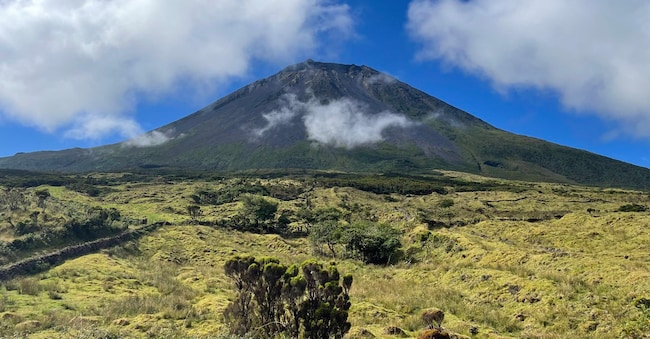
Of the nine islands that make up the archipelago of the Azores, outcropping in the middle of the Atlantic Ocean, the island of Pico seems to have been designed to stand out. What makes it immediately recognisable is the volcano that gives it its name: at an altitude of 2,351 metres, Mount Pico is the highest point in the whole of Portugal. A presence that dominates the landscape and is visible from almost every corner of the island, unless the clouds amuse themselves by hiding its profile. There are those who observe this mountain from below and those, like the most experienced hikers, who plan their ascent. The excursion to Pico is possible in any season, even in winter, when snow can peep down and make the scenery unexpected and impressive. As the second largest island in the Azores, Pico is an attractive year-round destination. In addition to hiking, it is distinguished by its wine-growing landscape, witness to a unique culture, and activities such as whale watching. The island can be reached by plane from Lisbon, with a stopover in Ponta Delgada, the archipelago's main airport.
The ascent to the mountain
Well-trained legs and good equipment are essential to tackle the ascent to Pico, the only mountain in the Azores with an alpine habitat. The excursion - challenging and extraordinary at the same time - requires a total of six to eight hours of walking and can be done accompanied by an experienced guide. If you plan to do it on your own, however, you must register at the Casa de la Montagne and use a GPS device. Once at the top, fatigue melts away as the horizon opens out over the Atlantic and the profiles of the nearby islands of Faial and São Jorge, which, together with Pico, form the so-called 'triangle' of the Azores. A magical perspective, especially at sunrise and sunset.
The whale watching experience
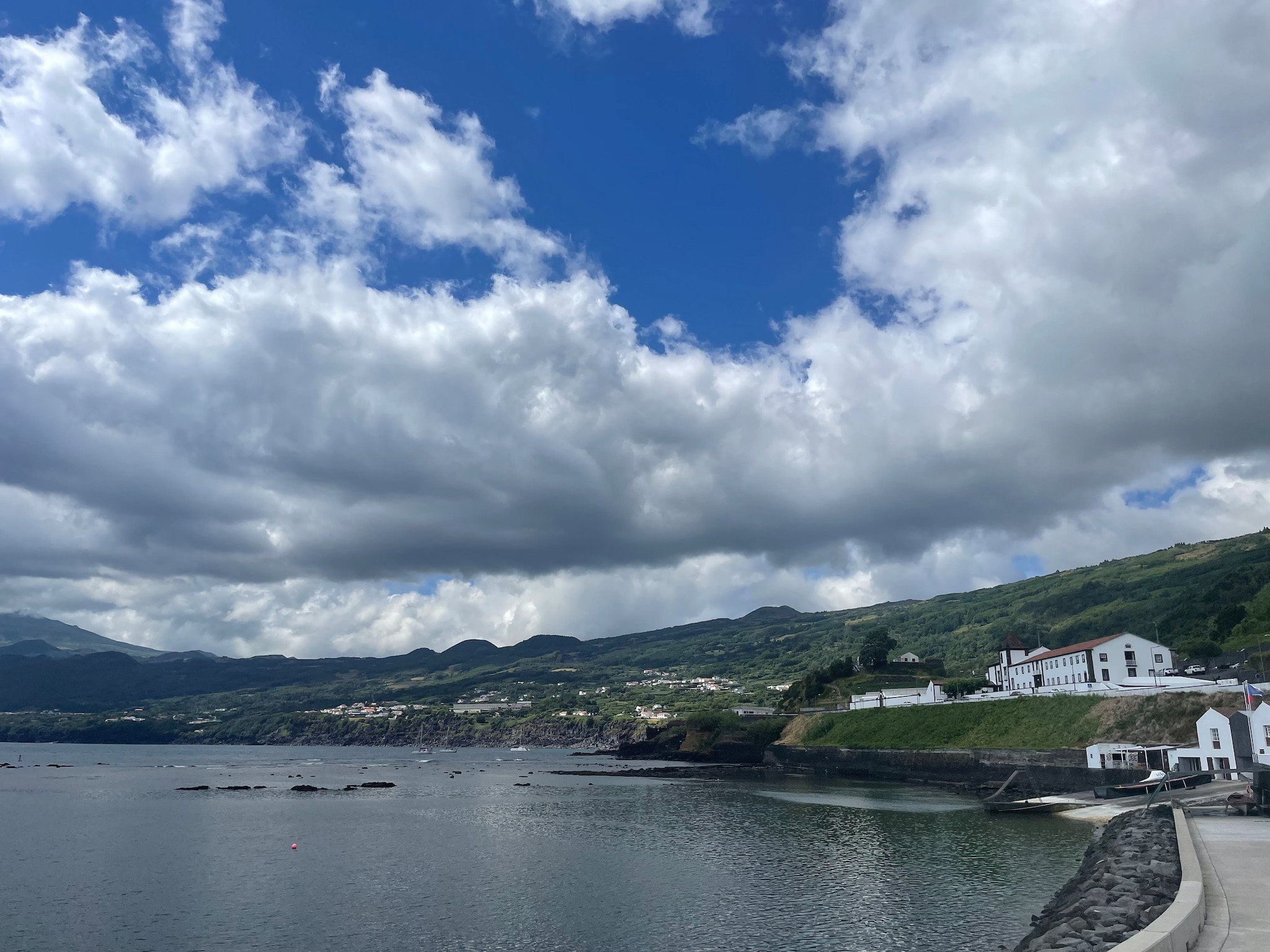
Once back down, the island invites us to turn our gaze to another protagonist, the ocean. Its waters, at the beginning of the 19th century, were the scene of the whaling that marked the economy and culture of Pico, representing a source of livelihood for the entire community. During the migratory routes of the whales, from the vigias, the sighting structures placed at strategic points along the coast, the signal would go out to those who saw them passing by and farmers, breeders and men intent on other work, would suddenly abandon everything to run towards the port of Lajes do Pico to prepare their boats and challenge the Atlantic in search of the giants of the sea. Traces of that past remain today in the island's museums, such as the Whalers' Museum, housed in the original 19th-century hunting boat sheds in Lajes do Pico; the space collects tools, objects, and holds the stories of those who lived through that era. Thanks to the introduction of the hunting ban in the mid-1980s, whales are now the protagonists of a different story, which tells the evolution of the island of Pico and the change in its relationship with the ocean. The Azores is one of the largest cetacean sanctuaries in the world and with whale watching activities, it is possible to sight whales, sperm whales, dolphins, crossing the Atlantic routes all year round.
Wine culture
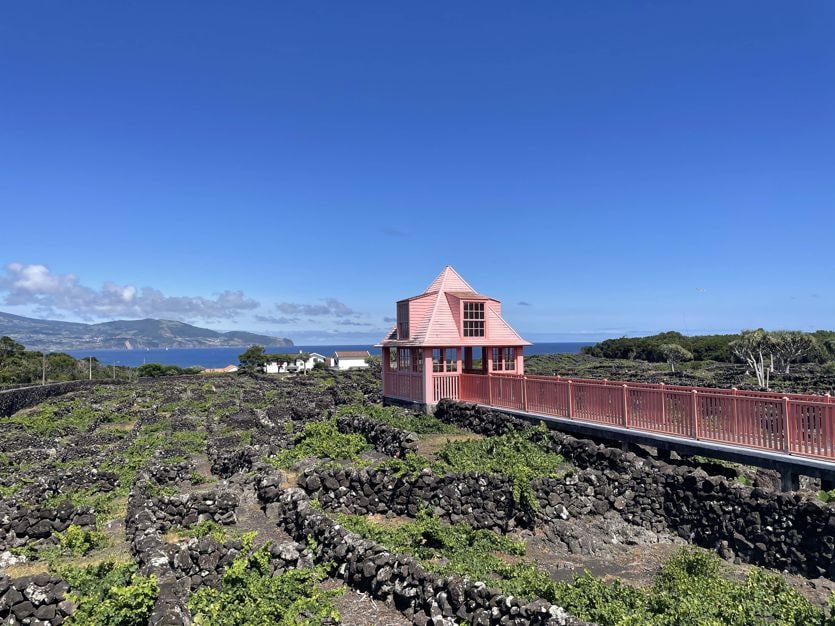
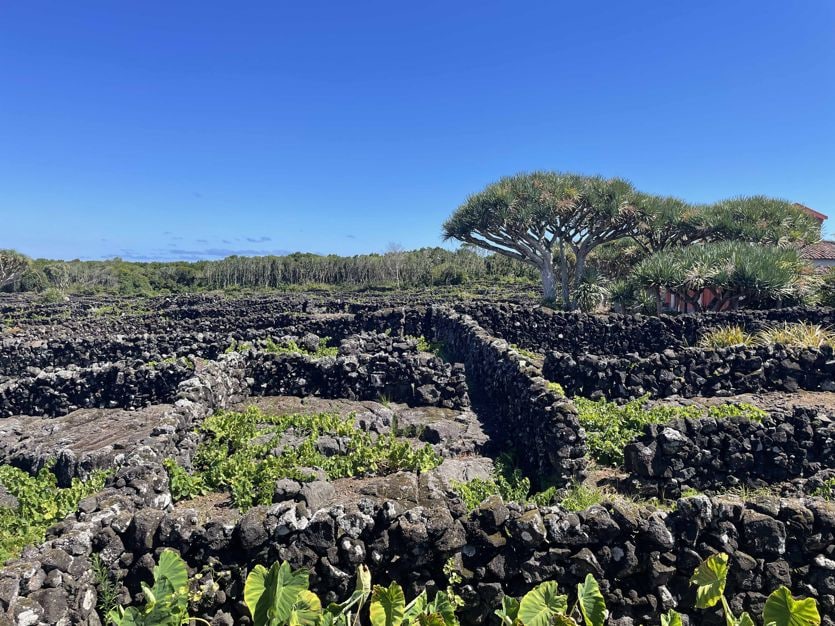
Another element that makes Pico a unique destination is the scenery on the slopes of the mountain in the western part of the island at Criação Velha. Here, the landscape - a UNESCO World Heritage Site since 2004 - is designed by a network of dry basalt stone walls, man-made to protect the currais, the small plots of black lava soil where the rows of vines grow, from the wind and salt. A type of viticulture, introduced in the 15th century, that continues to this day thanks to the work of local winegrowers, producers of red and white wines, of which the particularly popular verdelho stands out. To delve deeper into this culture, the Wine Cooperative in Areia Larga, founded in 1949, organises tours and tastings, while the Wine Museum, housed in an old Carmelite convent near Madalena, recounts the deep connection between the island and its wine production. For total immersion in this landscape dominated by rows of vines, one can stay at the boutique hotel Pico Vineyards, reserved exclusively for adult guests, perfectly integrated with the aesthetics of the currais. Equally evocative, and in harmony with the territory, is Lavahomes, an accommodation facility located on the east coast of the island.
Local Flavours and Cuisine
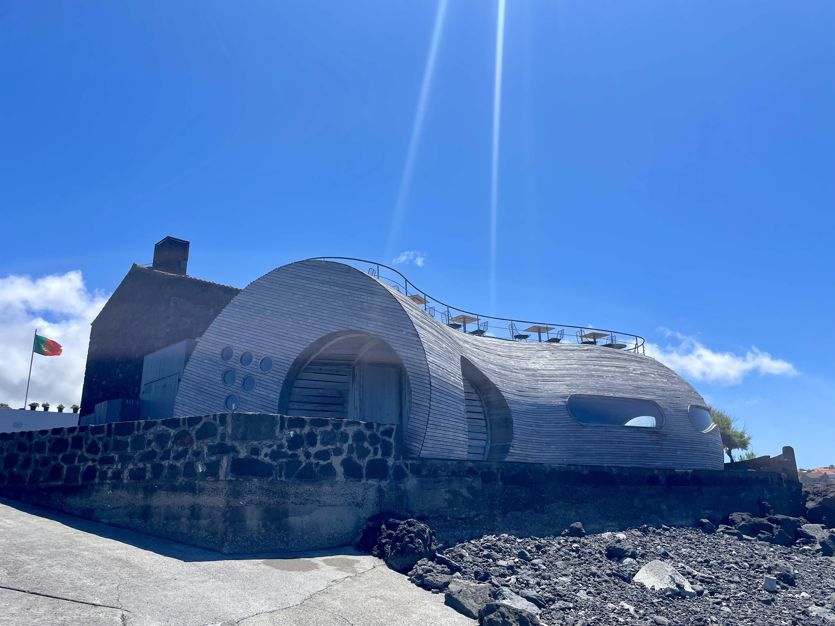
The discovery of Pico also passes through the table. The flavours of the traditional cuisine of the archipelago are expressed in typical dishes such as the famous octopus stew and alcatra, the beef stew, and to complete the gastronomic delights there is the PDO cheese from the island of São Jorge. Among the addresses where you can savour the local cuisine are Tasca O Petisca and Casa da Feijoca. Particularly unique is the Cella Bar, overlooking the ocean: its architecture, reminiscent of a whale's tail, a wine barrel or even a boat, won the Building of the Year award in 2016. A perfect location to hang out at sunset, when even the colours of the sky make this island special.