Art

The splendour of the Habsburgs on display in Rome

At Palazzo Cipolla, a fine selection of works that reflect the dynasty’s taste, power and cultural vision

4' min read

Translated by AI
Versione italiana

4' min read

Translated by AI
Versione italiana

The exhibition “From Vienna to Rome. The Wonders of the Habsburgs’, hosted at the Museo del Corso – Polo Museale in the rooms of Palazzo Cipolla, offers a refined journey into the heart of the great European imperial tradition of collecting. The exhibition, organised in collaboration with the Kunsthistorisches Museum in Vienna, brings to Rome a precious selection of works that reflect the taste, power and cultural vision of the Habsburg dynasty.

In mostra a Roma il meglio delle collezioni degli Asburgo

Photogallery15 foto

The exhibition

From the very first rooms, the role of the Habsburgs as tireless patrons of the arts becomes apparent. Among the most significant masterpieces is a striking painting by Titian, in which the depth of colour and the psychological portrayal of the subject bear witness to the special relationship between the artist and the imperial court. Alongside it, Flemish painting is superbly represented by the works of Peter Paul Rubens, in which the dynamism of the figures and the richness of the composition reflect the Baroque splendour so beloved by the Habsburgs.

Loading...

No less fascinating is the presence of Diego Velázquez, the court painter par excellence, whose portraits capture not only the likeness but also the status and psychological complexity of his subjects. His works engage in an ideal dialogue with those of Caravaggio, whose paintings are featured in the exhibition and are striking for their dramatic use of light and their almost theatrical realism.

The exhibition is not limited to painting. Works of art, jewellery and precious artefacts offer a glimpse into the most intimate and everyday aspects of imperial court life. Among these, exquisite examples of decorative arts stand out, bearing witness to the extraordinary level of skill achieved by the craftsmen working under Habsburg patronage.

The exhibition also stands out for its layout, which creates a continuous dialogue between the works and the historic setting of Palazzo Cipolla. The galleries guide visitors through an immersive experience, in which each work becomes a piece of a larger mosaic: that of the construction of a European cultural identity.

Whilst the exhibition layout helps to highlight the dialogue between the various facets of the imperial collection, it is above all certain iconic works that allow for a deeper understanding of the Habsburgs’ taste and cultural ambitions. Through paintings from different geographical and artistic contexts, the extraordinary breadth of a collection built up over the centuries as an expression of political prestige and intellectual refinement becomes apparent.

The works

Among the most evocative paintings is A Visit to the Farm by Jan Brueghel the Elder (c. 1597), a masterful example of the Flemish sensibility for landscape and everyday life. The artist constructs a scene rich in detail, in which the observation of nature is interwoven with a subtle social narrative. Nothing appears to be left to chance: every figure and every element of the landscape contributes to conveying a harmonious vision of the world, reflecting the encyclopaedic curiosity that characterised the great Habsburg collections.

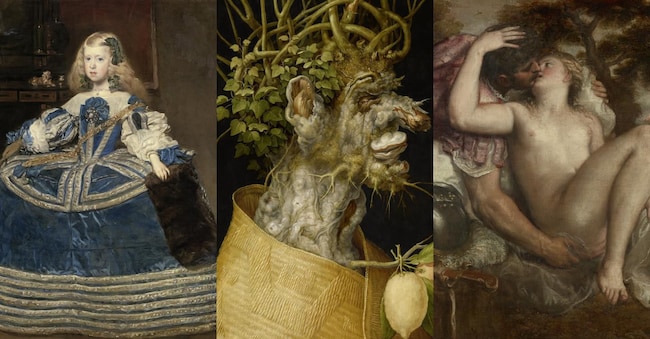
Diego Velázquez’s Infanta Margarita in a Blue Dress (1659) is a work of extraordinary elegance. Although it is an official portrait, the painting manages to transcend the conventions of court portraiture. The young princess appears both as a symbol of dynastic continuity and as a real individual, captured in a moment of delicate humanity. The luminosity of the dress and the freedom of the brushstrokes demonstrate the maturity of an artist capable of transforming a celebratory portrait into a refined psychological study.

With The Crowning with Thorns (c. 1601), Caravaggio draws the viewer into the heart of his pictorial revolution. Christ’s suffering is depicted with intense realism, devoid of idealisation, whilst the contrast between light and shadow heightens the drama of the scene. The work retains an extraordinary emotional power to this day because it directly engages the viewer, who is called upon to confront the fragility and pain of the human condition.

Among the most original paintings in the exhibition, Giuseppe Arcimboldo’s Winter (1563) stands out. The famous portrait, composed of plant and natural elements, goes far beyond a mere visual play on form. The artist gives form to a complex allegory of the cycle of the seasons and the order of creation, demonstrating an inventive imagination that continues to astonish contemporary audiences. This work brings together scientific knowledge, symbolism and wonder – three aspects that were well aligned with the cultural interests of the Habsburg court.

Mythology, on the other hand, finds one of its finest expressions in Titian’s *Mars, Venus and Cupid* (c. 1550). The composition is characterised by a refined balance between sensuality and formal harmony. Colour, a central element of Titian’s artistic vision, imbues the figures with vitality and transforms the mythological narrative into a universal reflection on the relationships between desire, strength and beauty. The work bears witness to the Venetian artist’s ability to blend symbolic depth with extraordinary pictorial quality.

Finally, Guido Cagnacci’s The Suicide of Cleopatra (1661–1662) is a work of great theatrical intensity. The artist interprets the Egyptian queen’s final act through a profoundly Baroque sensibility, focusing on the emotional and psychological aspects of the story. Cleopatra appears suspended between allure and tragedy, whilst the refined elegance of the composition accentuates the sense of inevitable fate. The result is a work that combines seduction and drama in a synthesis of rare narrative effectiveness.

The pillars of cultural diplomacy

“The Wonders of the Habsburgs” is not merely an exhibition of masterpieces, but a multifaceted narrative of power, taste and cultural diplomacy. The works on display bear witness to the Habsburg dynasty’s ability to transform collecting into a means of dialogue between different cultures and artistic traditions. Bringing a selection from one of Europe’s most prestigious collections to Rome offers the public a rare opportunity to understand how art has contributed, over the centuries, to the construction of a shared European cultural identity. By bringing together works by Italian, Flemish and Spanish masters, the exhibition captures the complexity and richness of a heritage that continues to resonate today.

From Vienna to Rome. The Wonders of the Habsburgs from the Kunsthistorisches Museum, Museo del Corso – Polo Museale, Palazzo Cipolla, until 5 July

Copyright reserved ©
Loading...

Brand connect

Loading...

Newsletter

Notizie e approfondimenti sugli avvenimenti politici, economici e finanziari.

Iscriviti