
The streets of used clothing between discounts, donations and disposal. And the rights of the buyer
How to give new life to an unused garment and, at the same time, save up to 50% compared to a new one

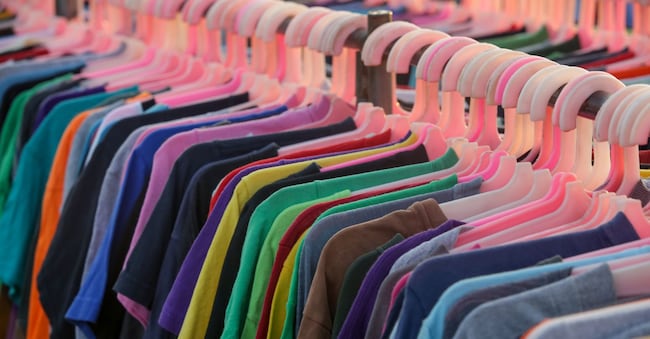
In some cases it is a fashion. In some others it is a choice under the banner of the circular economy: giving new life to an item of clothing that is no longer used and, at the same time, saving up to 50% compared to a new item. The used-clothing scenario is not made up of equal parts. Because there are sales channels and free collection channels. Parallel tracks that, at a certain point, split up to reach different destinations: sale on dedicated platforms, collection bins and waste.
Not only fashion and vintage
"In part we are faced with a fashion phenomenon, that of vintage where old clothes are put back into circulation," says Michele Carrus, president of Federconsumatori, "It is a phenomenon that feeds a market that passes through flea markets or platforms. One of the most important elements of an article destined for the bin, rather than for sale on a platform, is the brand name and therefore its quality. "A consumer may be induced to buy a valuable garment, even a second-hand one,' adds Carrus, 'a garment of little value will probably not find a market'. In addition to the brand there is also the condition of the article. It happens, therefore, that the signed garment ends up on a platform to be sold, the one in good condition but not branded on the bins and the damaged one directly in the waste.
The rules of the platforms
When buying or selling using the platforms, the rules must still be respected. 'If you buy these items online you still have the right of withdrawal for off-premises sales is a one-year warranty (sales between private individuals),' adds Carrus. 'Amazon itself makes you resell them. Obviously, in a direct relationship between two private individuals, i.e. outside authorised platforms, for a sale of unregistered goods, the one-year warranty does not operate'.
Who checks the condition of clothing
Then there is the issue of the condition of the garments and verification. Those that end up in the collectors, before being put into the commercial circuit (in most cases it follows foreign channels or Italian flea markets), must be sanitised, otherwise they become waste and then follow the disposal route. "As far as controls are concerned, there are more exclusive platforms that carry them out, such as Vestiaire Collective and Katawiki,' argues Carrus, 'but on others the control is delegated to the purchaser, who can then seek redress by opening a dispute (it all depends on the different terms and conditions of sale, which is why we recommend using well-known platforms and not unknown sites)'.
If the purchase is non-compliant
In the case of a non-compliant purchase, if you go through the various platforms, you can proceed with the return and request a refund of the amount spent. The platforms act as a filter and, very often, act as a guarantor, providing, in the event of a complaint, to handle the dispute and thus order the return of the expenditure incurred.

