
The summer exodus on the motorways is underway: here’s when the traffic peaks are expected
The peak in travel is expected to occur between 7 and 9 August. According to estimates by Autostrade per l’Italia, around 16 million vehicles will be travelling on the group’s motorways over the two busiest weekends

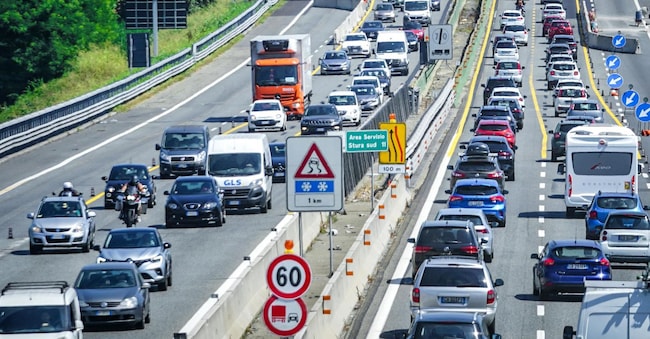
Summer 2026 is about to get into full swing. With the arrival of August, Italian roads are bracing for the mass exodus of vehicles heading off on holiday. From this weekend onwards, a gradual increase in traffic flows is expected along the Autostrade per l’Italia motorway network: “In particular, from the morning of Saturday 1 August, traffic leaving the main urban centres for holiday destinations will begin to intensify. The peak in travel will be reached over the weekend of 7 to 9 August”, explains Autostrade per l’Italia.
According to the group’s estimates, during the two busiest weekends of the summer exodus, a total of around 16 million vehicles will be travelling along the 3,000 km of motorway network managed by Aspi.
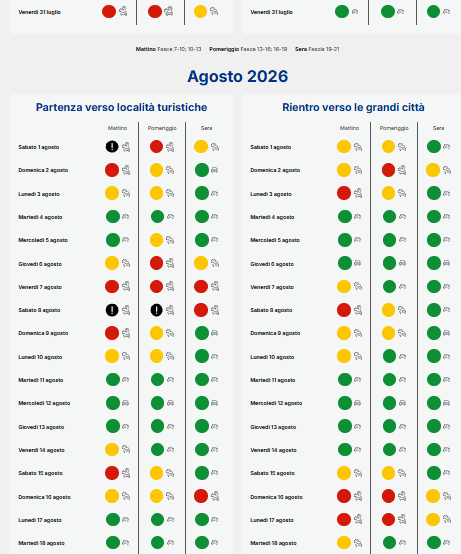
The busiest roads
As is the case every year, the motorways most affected will be the A1 Milan–Naples and the A14 Bologna–Taranto. “From the second half of August onwards, traffic returning to major urban centres will begin to build up, concentrated mainly on Saturdays and Sundays,” emphasises Autostrade.
To facilitate summer travel, the group has drawn up a special traffic management plan. Among the key measures is the suspension of the most disruptive roadworks along the main motorway routes. The plan aims to ensure the greatest possible number of lanes are available during periods of peak traffic. “Work,” Autostrade states, “will resume gradually by the first half of September, once the traffic associated with the post-holiday exodus has also subsided.”
To support traffic flow, the number of staff and vehicles deployed at strategic points across the network has also been increased, and emergency response services, as well as mechanical and medical support, have been strengthened along the sections managed by Aspi.

