
The superbonus does not stop: the 2026 queue brings another billion in spending
Enea report takes a snapshot of last year's announcements: total burden in 2026 rises to 2.5 billion

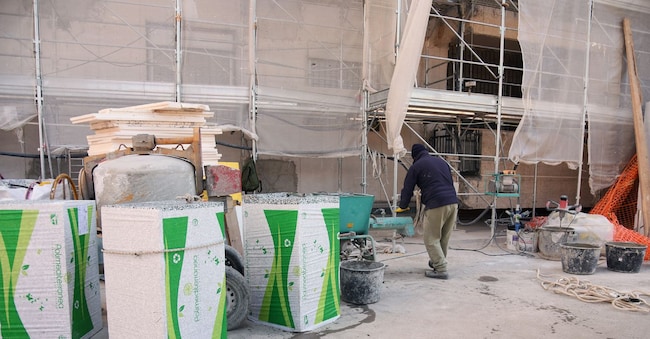
Another billion in deductions. The March report, compiled by Enea to photograph the progress of the superbonus sites, says that the charges borne by the state have grown again. And these sums are added to the 1.5 billion euros already consolidated in 2026; the total bill for this year, in short, is 2.5 billion approximately. A heavy bill at a time when the risk of recession is growing and the government is struggling to find resources to deal with the many emergencies linked to the difficult international situation.
But how is it possible that there are still expenses linked to the former 110%, despite thestop to the tax rebate? In reality, this is more of an optical and accounting effect. Which, however, gives the measure of how attractive the maxi-tax rebate remained even in its last weeks of life. Following the completion of the work, in fact, there are 90 days to communicate the asseveration to Enea, closing the procedure and making the deduction measurable for the Agency that deals, among other things, with energy efficiency. Thus, in the early months of 2026, the communications of those who, at the end of 2025, rushed to complete the work will arrive. Works that, moreover, for condominiums had to be started by 15 October 2024, as a result of the last extension that had tried to avoid the explosion of new expenses at the end of that year.
The sprint to the end of 2025
The month of March 2026, therefore, captures precisely the decisive sprint to close the construction sites at the end of 2025. Thus, one can understand why the numbers in the Enea report are quite high. The total account of the deductions accrued came to EUR 131.9 billion. A month earlier we were at 130.9 billion. These are, of course, condominium investments, the only ones possible: for these works the deduction was allowed last year as well, albeit at 65%, on the basis of the decalage set to progressively reduce the impact of the superbonus.
These numbers are even more impressive when analysed looking at the whole of 2026. In the current year, between January and February, the extra bill of charges for the state was about 1.5 billion. This comes, in short, to a total of 2.5 billion, more than double, to give a parameter, the sum that the government should employ in theHousing Plan for the adaptation of about 50 thousand council houses throughout Italia: for that operation, estimates speak of about one billion euro. The result is also significant when compared to how much the state spent on the superbonus in 2025: just over 5 billion euro.
The total expenditure of the superbonus
The almost 132 billion, however, only concerns the 505 thousand active construction sites for energy efficiency (including 141 thousand condominiums). To these deductions, then, must be added all those related to earthquake-proofing, to measure the total impact of the measure. Although there is a lack of numbers updated to recent weeks, according to the Revenue Agency (and to a report aligned to 27 May), we are in the order of 40 billion euro. Thetotal expenditure for the state related to the superbonus has come, in short, to about 172 billion euro since 202o to date.c


