Turin Book Fair

The supposed love from which one cannot escape

Terézia Mora, in 'Half of Life', tells of a toxic relationship. The author, realising the misogyny she had introjected, in order to truly understand what her protagonist felt, had to imagine that it was a man

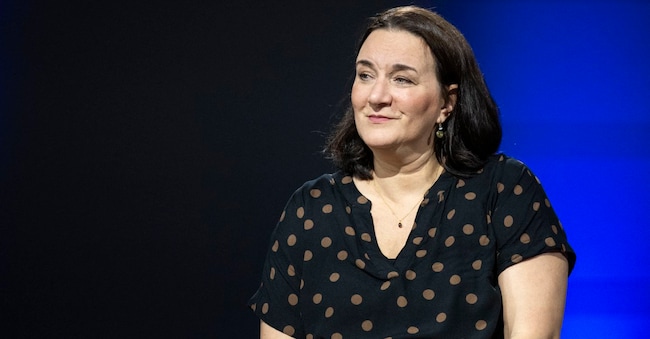
Photo by Hannes P. Albert / DPA / dpa Picture-Alliance via AFP

5' min read

5' min read

La metà della vita, is the title of Terézia Mora's novel (translated by Daria Biagi, Gramma, Feltrinelli, pp. 400, euro 22), a finalist for the European Strega prize. Muna, the protagonist, is 48 years old when the book ends. Eighteen when it begins. It tells the story of a supposed love from which one cannot escape. The story of an intellectual, an independent woman who, against all logic, becomes dependent on a violent and anaffective man.

This is the first novel in which your protagonist is a woman. How come?

Loading...

It took me a long time to try to define the contours and perimeter of the female figure I intended to put at the centre of my book. My experience was the experience of someone who lived in a macho society, where you have to do everything possible to avoid reminding the world that you are a woman. This was an imperative that I adhered to very much, and unconsciously, over time. So it took me a long time to outline an accomplished female figure that would fit my book. It was probably also very much related to the fact that the literary tradition I had grown up in was a literary tradition formed by men, so I had difficulty identifying a female author or a female literary figure who could inspire me. That is why I had set myself the goal of creating a story based also on what had been my experience as a woman. I had lived in a situation in which men were dominant, in which I felt put in the background, in which I had been humiliated and even silenced. And I also wanted to talk about the experience of other women, friends, who had an even worse experience than mine. I had to choose a character who would allow me to talk about these issues, with whom I had to come to terms, at the same time emphasising the female figure but also underlining her co-responsibility, because up to that point in my other works only female figures who were victims of what men did, whereas I now wanted to tell a story in which my protagonist was not exclusively a victim.

What is the story he told?

My story, as the title suggests, tells half a life story, it ends with the protagonist being 48 years old, it begins with the protagonist turning 18, she stops being a little girl and begins a phase of life that demands her to be more mature. Almost immediately she meets a man who is a couple of years older than her, but whom she regards as very adult, a very closed, very handsome and very intelligent man, towards whom she feels a very powerful and fatal love. So powerful that during the next seven years when the man disappears, coinciding with the fall of the Berlin Wall, Muna waits, harbours the hope of meeting him sooner or later, even as her life goes on. She studies, finds jobs, even in publishing, which is the field where she would like to make a career. But they are all entry-level jobs, paid poorly despite her great commitment and dedication. One gets the feeling in the book that this commitment and dedication is about to bear fruit at last, when suddenly this man reappears and a story begins between them that from the very beginning is very difficult.

In the remainder of the book, this relationship develops over the years according to the same pattern with which it began, thus a pattern of violence within the couple that escalates. Muna channels her life along the tracks she decides, but which are tracks that lead her into a dead end. At this point the man disappears again, but I will not reveal how the story ends, also because the ending of the book is an open ending, an ending that leaves room for different interpretations as to how the protagonist's life will go on.

Why did you decide to tell this story in the first person?

I think it was the only viable option to tell this story well. Given my intent, it was not possible to tell it with an omniscient narrator, this would not have told it all, just as I had to be careful that the character was neither too naive nor too wise. Because if on the one hand Muna is a reflective figure, undoubtedly, on the other hand she is a person who has an important block that manifests itself with respect to the man she falls in love with and that is exactly the dimension I decided to investigate in my work.

She said that at some point she realised that she had a guiding attitude towards her protagonist, she recognised the misogyny she had introjected. How did she get rid of it?

I cannot say exactly at what point I began to experience this judgmental attitude. I can say that on several occasions there are situations where the protagnostic decides. And these decisions from my point of view had to be wrong in order for the conflict between her and the man to go on. At a certain moment I remember it was as if I perceived that this protagnostic was a very dear friend of mine and I told myself that if I had ever had a friend who had behaved in this way I would have done everything I could to dissappoint her, to make her realise what was wrong. It was a block of mine, I couldn't stop judging Muna. But I had to try to dispel this feeling of mine so as not to betray my protagonist. The stratagem I wanted to adopt was to overturn, the situation, the balance of power, trying to make the man, who became the victim, and the woman, who became the executioner, transpire in a better key. I realised that this reactivated my empathy for Muna. And I realised that, at that point, for my protagonist I would be a good friend who would accompany her to the end of the story.

So it was easier for you to feel empathy for the perpetrator than for the victim?

If I were asked if I feel more empathy for a perpetrator than for a victim, I would obviously answer that I do not. But let's put it this way: if the victim is a man, it is very easy for us to understand what happened to him, to analyse what happens to him, because the yardstick we have for judging what happens to people is based on male patterns. Judging what happened to a man is easy. That is why, in order to try to understand the situation Muna was in, I had to turn it around. The patterns we are brought up with do not allow us to do the opposite. Let us also think about the fact that in so many Romance languages the word man stands for both pa person and mankind, by metonym, whereas the word woman does not. To use a catchphrase, the answer is that to understand women, we must remember that women are also men, in the sense of human beings.

Copyright reserved ©
  • Lara Ricci

    Lara Riccivicecaposervizio curatrice delle pagine di letteratura e poesia

    Luogo: Milano e Ginevra

    Lingue parlate: Inglese e francese correntemente, tedesco scolastico

    Argomenti: Letteratura, poesia, scienza, diritti umani

    Premi: Voltolino, Piazzano, Laigueglia, Quasimodo

Loading...

Brand connect

Loading...

Newsletter

Notizie e approfondimenti sugli avvenimenti politici, economici e finanziari.

Iscriviti