
The challenge of sustainable mobility starts from the cities: Turin, Florence and Rome leading the change
Anci's Urban Award captures a change of season by rewarding three major cities for their choices of multimodal integration in favour of the development of sustainable and more liveable metropolises, precisely at a time when the political debate around these issues is rekindled

The issues of cycling and the safety of slow mobility have returned to the political debate agenda in recent days, locally but also nationally, demonstrating the great relevance of these issues for the future of cities. The frequent accidents involving cyclists and pedestrians and the heated debates on individual infrastructure choices or speed limits reopen reflection on urban planning choices and, in spite of divisions all too often conditioned by polemical excesses and ideological choices, contribute to fuelling the debate on urban mobility in a logic of development and sustainability.
A significant signal in this sense comes from the Urban Award which, for the first time in its history, saw the podium entirely occupied by three large cities. The award, promoted by Anci with the aim of highlighting the best sustainable mobility practices in Italian municipalities, saw Turin on the top step, followed by Florence and Rome.
With these choices, this year's Urban Award photographs a real change of season: the boom in applications from large cities indicates that sustainable urban mobility has now become a cross-cutting priority, capable of combining planning, technology, education and quality of life.
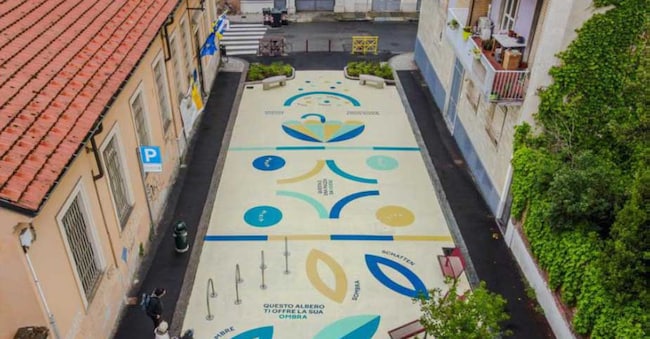
Indeed, Turin, Florence and Rome demonstrate that even in Italian metropolises, often considered too complex and immobile, a change of pace is possible in order to reduce traffic, improve air quality and give people back their space with concrete, rewarding and well-coordinated public policies. Mileage incentives, university cycle paths, regulations on sharing mobility, digital bonuses, pedestrianisation and urban regeneration: these are just some of the actions that have enabled the three major Italian capitals to climb the sustainability podium in a logic of multimodal integration of mobility that serves people and quality of life.
The jury thus wished to reward not only technical and infrastructural innovation, but also the real impact on behaviour, the involvement of local communities, the coherence of policies, and the ability to make a system between Tpl, cycling, incentives and regeneration. Alongside the three winners, there were two special mentions: Palermo, another large city experimenting with an original model based on play, schools and public space, awarded by the sponsor Intesa Sanpaolo, and Noceto, the only small municipality to receive an award, which has made soft mobility a stable and participatory good practice, rooted in time.


