
The tariffs conundrum raises fears for exports

3' min read
Key points
3' min read
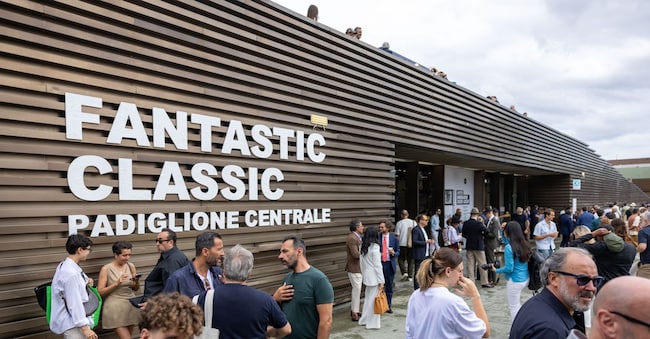
US tariffs remain an enigma for fashion operators gathered these days in Florence for the 108th edition of the Pitti Uomo fair, the most important men's fashion fair in the world, which opened yesterday and will last until Friday, with 740 brands, 45% of which are foreign, exhibiting their clothing, accessories and lifestyle collections for spring-summer 2026. A conundrum added to the geopolitical tensions that are sowing uncertainty in the market and curbing purchases halfway around the world.
Export declining in early 2025
.At the opening of the fair, fears and the desire for a relaunch alternated as if on a rollercoaster, in the face of the data on Italian men's fashion exports in the first two months of 2025: -6.9% in value, driven downwards by France (-3.5%), Germany (-4.2%), China (-16.6%) and Spain (-2.6%). In the leading quintet only the US has the plus sign, even +9.5%, but this could be the calm before the storm. "The American tariffs have so far had a psychological impact," explains the president of Confindustria Moda, Luca Sburlati, "although in the United States we are beginning to see signs of fewer purchases in shops. Now it will be a question of understanding what the final tariffs will be'. The additional 10% tariffs on exports to the US, applied since 5 April, will 'expire' at the beginning of July.
The US-EU discussion and corporate fears
.In recent days, an offer has emerged that the European Union would have made to the United States for fixed tariffs at 10% even after 9 July, which will now have to be translated into an agreement between the two countries. "The tariffs are not felt for now," explains Antonio De Matteis, president of Pitti Immagine and CEO of the Neapolitan high-end brand Kiton, "what scares us most is the change of mood that President Trump manifests every week. In addition to the changes that are taking place in the markets, with department stores aggregating as in the case of Saks Global and starting to make one-off purchases'. Uncertainty seems to be fashion's real enemy. "We have had excellent results up to May," explains Claudio Marenzi, owner of the Herno brand, which closed 2024 with +8% revenues reaching 184 million euro, "and we expect to exceed 200 million at the end of the year with a margin close to 10%.
The need for structural measures
.But our list prices are growing less than the tariffs, thanks to production optimisation'. Andrea Lardini, owner of the Marche-based Lardini brand and subcontractor of outerwear for luxury brands, is looking for serenity: "In order to restart, the sector needs the world to calm down, for wars to end, for carefreeness and the desire to buy to return. Uncertainty blocks everything'. But structural measures are also needed, according to Sburlati, who listed them from the stage at the opening of the trade fair: "The fashion system should now pedal as a group, more cohesively than it has done so far," he said, calling for a ten-year strategic plan to protect the supply chain and proposing three actions: the extension of tax credits on prototypes and samples; creating a system between the various fairs and exhibitions; and stimulating the creation of new companies, given that 1,500 have 'died' in the last year in the fashion industry alone.
Agenzia Ice is ready to help the sector, guaranteed president Matteo Zoppas: "The government's new export plan," he said, "envisages going from the 623 billion euro exports recorded in 2024 to 700 billion within the next two years, therefore with 11% growth to be achieved by focusing on 14 countries. We have to understand where to focus for the fashion sector'. And if the President of the Region of Tuscany, Eugenio Giani, painted a bright future for Pitti Uomo thanks to the arrival, in the next few years, of the new Bellavista exhibition hall inside the Fortezza da Basso and the underground high-speed train station, the Mayor of Florence, Sara Funaro, and the President of the Florence Centre for Italian Fashion, which controls Pitti Immagine, Antonella Mansi, said they were confident that, thanks to the high quality of production and know-how, the difficulties will be overcome.

