
From the Third Italy to the Second Mezzogiorno
Umbria and Marche have seen their GDP per capita plummet. The country is divided in two: 10 regions with a GDP above the EU average, 10 below

3' min read
3' min read
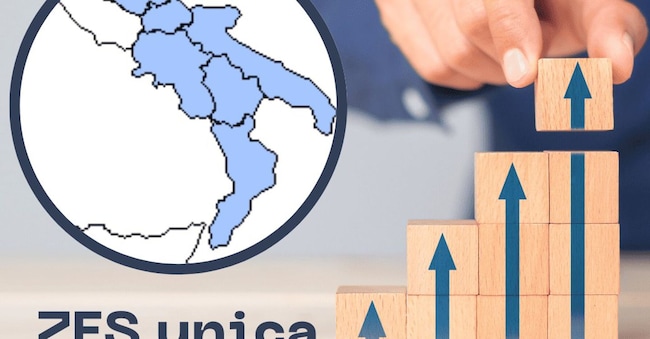
While the debate on the efficiency and governance of the regions is reopening in view of the upcoming electoral rounds, the importance of a passage that has taken place in recent weeks has not been grasped: the extension to Marche and Umbria of the special economic zone hitherto reserved for the South, the single SEZ. When Giorgia Meloni made the announcement there was some controversy, linked to the imminent Marche vote. However, the presidents of the two regions - including Umbria's Stefania Proietti, an emerging centre-left figure - welcomed the news, predicting more investment and new jobs. Beyond the immediate reactions, a long-term reading is needed to understand its real significance.
After the Second World War, Italy was divided into three large areas: the North-West, the industrial triangle; the North-East and Centre, one step down; and the South, characterised by a strong development lag and the recipient of specific policies. In the 1950s and 1960s there was a twenty-year period of rapprochement: both of the North-East and Centre to the North-West, and of the South to the rest of the country. The profound changes of the 1970s - the end of fixed exchange rates, the energy crisis, the decline of big Fordist industry - interrupted that process and the South came to a halt. But the North-East and part of the Centre continued to converge and people began to speak of a 'Third Italy', indicating with this term the Triveneto and some central regions such as Emilia-Romagna, Tuscany, Marche and Umbria. Until the 1990s, this area recorded an expansion of GDP and employment above the national average, leading Italy to be divided into two blocks: on the one hand the North-Centre, competitive and close to the most advanced European standards, and on the other the South, still distant.
After 2000, the situation changed radically. Umbria has seen its per capita GDP plummet: from 121% of the EU average in 2000 to 83% in 2020. Marche fell from 116% to 89% over the same period. The manufacturing fabric of the two regions, made up of small and medium-sized district enterprises that were once able to adapt to global challenges, has not been able to withstand the digital revolution. Small company size, rootedness in traditional sectors, often inadequate governance and the weakness of the learning by doing model have eroded competitiveness. According to economist Donato Iacobucci, regional industrial policies have also had a negative impact. It is in light of this performance that Umbria and Marche now enter the single SEZ together with all the southern regions. This is a significant change, attesting to the fact that territories that were once part of the Third Italy are now comparable to a 'second Mezzogiorno', as Luca Bianchi, director of Svimez, noted. Meanwhile, Latium and Tuscany have for years been recording performances that are substantially in line with those of the North, certifying the disarticulation of Central Italy.
We have a country divided in two: ten regions with a GDP above the EU average, ten below. The issue of regional gaps thus forcefully returns, imposing a reflection on territorial policies. On these pages Floriana Cerniglia emphasised the need to rethink regionalism, given the Consulta's ruling on differentiated autonomy and the changed international scenario compared to when Title V of the constitution was reformed. Isaia Sales denounced in 'Fatto quotidiano' how regions hinder administrative efficiency and favour a re-feudalisation of politics, particularly in the South. The expansion of the SEZ is one more reason to reflect on which institutional model can guarantee development and cohesion.
To be sure, the emergence of a new territorial issue - in addition to the southern one - is not just an economic issue but a cultural and civil one. One hundred and fifty years ago, Pasquale Villari's Lettere meridionali ignited the debate on the southern question, which was then fuelled by the commitment of many intellectuals. What reflection will accompany the birth of this second Mezzogiorno? Will there be a similar moral and political tension to sustain it? This is a crucial challenge for Italy if, although divided in two, it wants to remain a nation.

