
The three pillars on which Warsh’s new Fed is banking

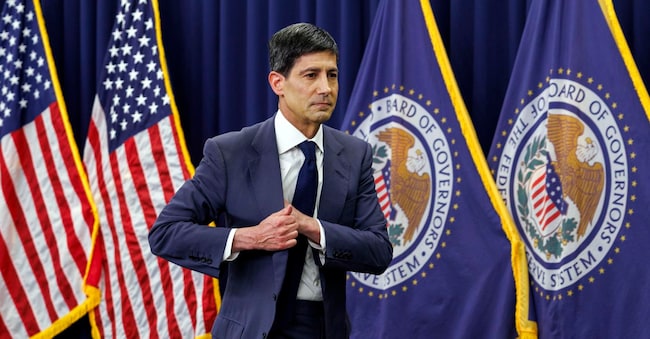
To enhance the effectiveness of the Fed’s monetary policy, the remarks by its new Chairman, Kevin Warsh, have revealed that there will be at least three key areas to focus on: on the one hand, policy relating to the inflation target; on the other, policies concerning two instruments: communication strategy and the central bank’s balance sheet. These are three pillars which, on the face of it, appear consistent with the ‘hawkish’ reputation Warsh has earned over the years. At the same time, however, in practice, these policies could turn out to be three Trojan horses designed to satisfy the wishes of those who have always influenced the Fed’s decisions: the White House and Wall Street.
The first approach focuses on the inflation target. The Fed’s statutory mandate identifies consumer price stability, on the one hand, and maximum employment, on the other, as the primary objectives of monetary policy. The closer these objectives are met, the more the path of interest rates will be one that increases the likelihood that the US economy will be consistent with long-term, non-inflationary economic growth. It follows that the main instrument of monetary policy – namely, the management of nominal interest rates – must be calibrated to balance these two different macroeconomic objectives. Therefore, the question every central banker at the Fed must answer is what relative weight to give to safeguarding price stability compared with that of employment, so that interest rate movements are optimal.
Now: in his first public appearance as Chair of the Fed, Kevin War emphasised the importance of monetary stability, and at the same time the importance of identifying a measure of price growth that serves as the best indicator for gauging that stability. These are two positions entirely consistent with the outlook of a hawkish central banker: in this view, controlling inflation takes precedence over maximising employment, so the search for the best way to measure inflation is a natural consequence. So, in theory, he is a ‘hawkish figure’. But then there are the facts: if monetary policy does not become restrictive, or if the chosen indicator results in a figure that allows the Fed to maintain an expansionary stance, then President Trump’s desire for low interest rates – whether for reasons linked to the dynamics of public debt or to securing electoral support – will be satisfied, as will the financial sector’s endemic preference for monetary expansion.
The second factor is Warsh’s stated intention to reconsider the Fed’s communication policy, which centres on forecasts, and to scrap it altogether. Here, the new governor appears to be following in the footsteps of the late Alan Greenspan, who led the US central bank from 1987 to 2006. Greenspan’s approach was based on ambiguity: the central bank should not act as a compass. Greenspan, too, originally had a reputation as a ‘hawk’, and his stance on communication was consistent with an approach based on market rationality, which also takes account of market expectations. The main implication of this approach in terms of monetary policy was that the central bank’s actions should not drive market dynamics, but rather go with the flow, as far as possible, even at the cost of creating the risk of a financial bubble. The axiom was that the dynamics of financial prices – even when exuberant – do not have destabilising effects on the real economy, as the internet bubble that developed at the turn of the millennium seemed to have demonstrated, having produced a laughably mild economic recession. But then reality set in: the Greenspan-style approach instilled in the markets the conviction that, in the event of financial imbalances, the Fed would act as their insurer, injecting liquidity into them. As indeed happened. Thus, ambiguous communication became the Trojan horse that transformed the Fed, when necessary, into a cash machine for Wall Street.
The third factor is Warsh’s stated desire to reduce the size of the Fed’s balance sheet, and thus the country’s overall liquidity. In theory, this policy is consistent with the stance of a hawk who wishes to give “space back to the market” in terms of the placement of securities, particularly government bonds. But in practice, especially today, it would only fail to trigger volatility in interest rates if the reduction in the Fed’s supply of liquidity were not made possible by a simultaneous reduction in demand – which could be achieved, for example, by deregulating the liquidity ratios imposed on financial intermediaries. Deregulation: a word that is music to the ears of both Trump and Wall Street. A third Trojan horse. One was enough for Odysseus to destroy a civilisation.


