
The timber trade: the challenges facing a sector worth 3.3 billion
Stefano Corà elected president of Fedecomlegno, part of FederlegnoArredo

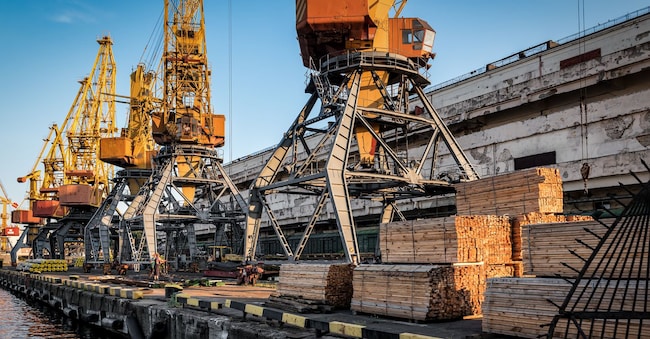
Fluctuations in raw material costs and supply difficulties, rising transport costs and a domestic market that is not exactly buoyant: the timber trade sector is facing some tough challenges.
These are challenges that the new president of Fedecomlegno – the FederlegnoArredo association representing importers, traders and agents dealing in timber, semi-finished products and wood-based materials – will need to take into account. Stefano Corà has been elected for the four-year term 2026–2030, with the aim of supporting companies in the sector as they navigate a market environment characterised by new regulatory, financial and commercial challenges.
Timber distribution
Despite the challenges posed by the global economic and geopolitical climate, figures from FederlegnoArredo paint a picture of a healthy timber trade sector, which recorded a 2.6 per cent increase in turnover in 2025, reversing the decline that began in 2023: overall, production turnover stands at over 3.3 billion euros (sales volumes include trade in all types of timber, whether imported or produced in Italia, and transferred between the various sectors of the timber and furniture supply chain).
This is a key sector for the Italian timber industry, given that our country has historically suffered from a shortage of raw materials and is therefore dependent on foreign sources for its timber supply. In 2025, imports within the timber sector grew by +14.7% compared with 2024, reaching a value of just under 5.8 billion euros. The main imports consist of primary wood products (logs and sawn timber: a 28.6 per cent increase compared with 2024, amounting to an additional 387 million euros), panels (up 14%, representing an increase of €176 million) and construction products (up 17.6%, representing an increase of €124 million). In terms of markets, Austria and Germany remain the main suppliers, both showing strong growth.
The new president
Stefano Corà has been working as an entrepreneur in the timber industry for over thirty years. For almost twenty years, he has been actively involved in the work of Fedecomlegno, serving as its vice-president from 2008 to 2014 and from 2020 to 2026, as well as being a member of the Executive Committee and the General Council of FederlegnoArredo. He has also held positions in European and international bodies within the sector, including the European Timber Trade Federation (ETTF) and the Association Technique Internationale des Bois Tropicaux (ATIBT), where he has been a member of the Board of Directors since 2006.

