Luxury hospitality

The 50: the ranking of the world’s best hotels unveiled in Paris

At the Salles du Carrousel, Rosewood Hong Kong was once again crowned the world’s best hotel for 2026. Six Italian hotels feature in the rankings.

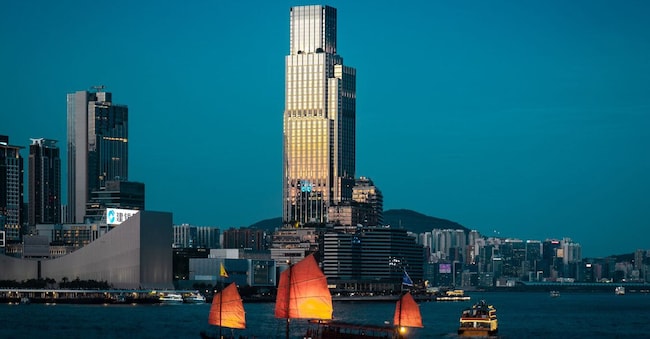
La vista del Rosewood Hong Kong. ©Gary Five

5' min read

Translated by AI
Versione italiana

5' min read

Translated by AI
Versione italiana

Whilst Asia once again dominates the global luxury hospitality market, Italia and Europe have also produced some of the most significant results in *The 50 Best Hotels* which, since its debut in 2023, has continued to highlight the most memorable hotels, shaping the aspirations of travellers and industry professionals (it is no coincidence that for many, if not all, ‘being featured in this ranking generates a great deal of interest and is one of the best marketing tools one can have’, as Richard Leuenberger, GM of Badrutt’s Palace in St. Moritz, winner of the 2026 SeiBellissimi Art of Hospitality Award).

Let’s take a step back: the latest edition of The 50 (let’s not call it The World’s 50 Best Hotels any more, as it has just been rebranded), which took place on Tuesday 15 September at the Salles du Carrousel in Paris, has once again crowned Rosewood Hong Kong as the World’s Best Hotel, having taken first place in 2025 and third in 2024, as well as winning the title of Best Hotel in Asia. With its 65 storeys rising above Victoria Harbour, this contemporary building, designed by Taiwanese architect Tony Chi, has become a distinctive feature of Hong Kong’s skyline since its opening in 2019. The fact that it has retained the top spot for the second year running confirms Asia’s growing influence at the very highest levels of international hospitality. “I am very proud, not least because Hong Kong – which I consider to be an extraordinary and well-rounded destination – has returned to the global tourism map following the pandemic,” says Hugo Montanari, managing director of the top-ranked hotel. “I recognise the great value of this award, but we must continue to work consistently, which is the true key to success: a human approach, a connection with the place, and a culture capable of creating a shared vision that also conveys emotion, because everything revolves around this.”

Loading...

Emotional luxury is the kind that leaves a lasting impression, because ‘emotions shape how memories are encoded, whilst memory guides behaviour and preferences, even when choosing a hotel’, explained neuroscientist Atom Sarkar during a discussion held prior to the evening’s event.

Asia is playing an increasingly central role in the global hospitality landscape, with 18 hotels in the rankings, including Capella Bangkok in second place – having already won in 2024 – and Four Seasons Bangkok at Chao Praya River in third: Thailand, which is expected to record 124 million additional overnight stays by 2030, alongside Saudi Arabia and Qatar, will be one of the destinations to watch ever more closely, according to the report presented by Eleonor White, senior research executive at Tourism Economics.

Europe is not standing idly by and tops the ‘The 50 Best Hotels’ ranking with 21 properties, making it the most heavily represented continent on this year’s list, on which Italia and France each feature with six properties, whilst the United Kingdom has four.
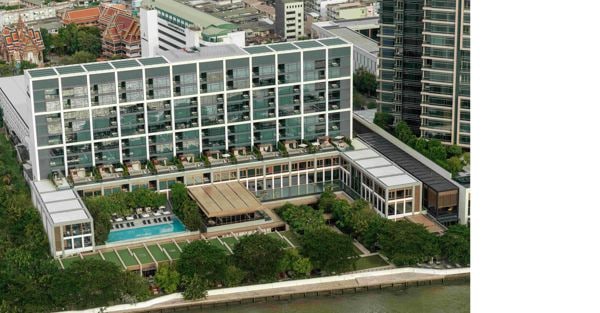
Il Capella Bangkok.

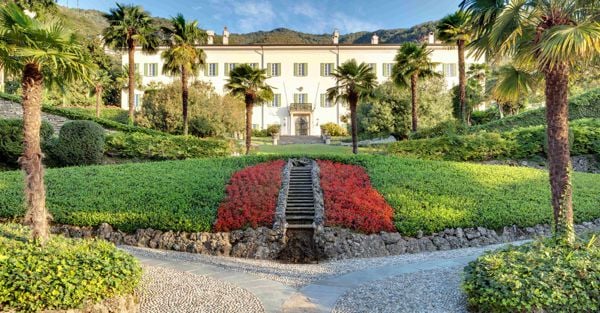
Among the Italian entries, Passalacqua on Lake Como once again stands out, coming fifth, and has also won the Best Boutique Hotel Award for the third year running. “Surprises, like dreams, never end,” says Valentina De Santis, hugging her team as soon as she steps off the stage. What does this award mean? “Even our first win, back in 2023, was a moment that was hard to put into words – such an unexpected joy. But, along with the happiness, a question also arose: how could we live up to all this? We found the answer by looking within ourselves. We simply had to continue being true to ourselves, believing in our very personal idea of hospitality, in the warmth of a home, in the little details, and in the beauty of authentic things. ‘We will always be grateful to The 50 for helping us become what we are today, and it confirms that when something comes from the heart and is driven by perseverance and passion, it can go much further than one could ever imagine,’ continues De Santis.  

L’hotel Passalacqua.

In a landscape dominated by large and powerful international groups (though, for the record, the voters – 800 worldwide – are deliberately anonymous to rule out any possibility of influencing the results), it is encouraging to see boutique hotels also making their mark, independent, family-run establishments with fewer than 50 rooms, perhaps run by the younger generation, such as Passalacqua, or, in the case of Casa Maria Luigia, by a restaurateur who has turned his hand to the hotel business. The latter, in Modena, is the new entry for 2026, ranked eighteenth, owned by Massimo Bottura and his wife, the entrepreneur Lara Gilmore. “Ours is truly a home, where we have applied the same importance, attention, care, quality, hospitality and the same level of service that we have always upheld in the restaurant business,” says Gilmore, visibly moved after receiving the award. Casa Maria Luigia was also awarded the Lavazza Highest New Entry Award.

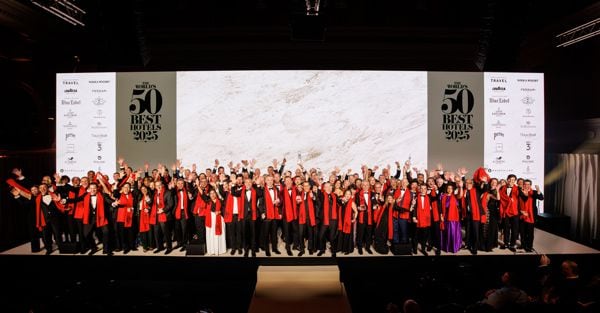
Foto di gruppo durante il The Worlds’s 50 Best Hotels.

The other Italian hotels ranked amongst the top 50 in the world are the Four Seasons Florence (No. 12), the Bvlgari Rome (No. 32), Portrait Milan (No. 39) and San Domenico Palace in Taormina, also part of the Four Seasons group (No. 50). “The strong European presence and the ten new entries – Casa Maria Luigia, San Ysidro Ranch in Santa Barbara, The Peninsula Istanbul, Patina Osaka, Portrait Milan, Plaza Athénée in Paris, Amangiri at Canyon Point, The Peninsula Hong Kong, Aman Nai Lert in Bangkok and the Four Seasons San Domenico Palace in Taormina – are testament to a dynamic, diverse and competitive hotel landscape,” comments Faye Huggett, director of community at The 50 Best Hotels.

The figures also speak for themselves: although global growth is slowing, as conflicts, high fuel prices and security concerns continue to affect tourist flows, 2026 marks an important milestone for the global travel industry: international arrivals are estimated to reach 2.78 billion, accompanied by total spending in excess of 2,000 billion dollars, both figures exceeding the levels recorded before the pandemic, in 2019. ‘At the top end of the market, high-net-worth travellers (with liquid financial assets exceeding $130,000) spend on average around $2,000 per person per night, a figure 6.2 times the global average. Of this expenditure, around $540 is spent on hotels, for trips lasting an average of eight nights,” explains Eleonor White of Tourism Economics. In 2026, the United States, with 151.3 million international departures, tops the ranking of the largest outbound markets, followed by Germany, the United Kingdom, China and France. However, it is China that shows the most significant growth potential: by 2030, the number of overseas trips by Chinese citizens is expected to increase by 64 million, a rise almost three times greater than that forecast for the other major international markets.

Asia observes, inspires and, above all, travels. And hotels around the world are adapting, continually redefining the standards of excellence. The 50 Best celebrates them for the impact they make and the extraordinary services they offer their guests. Making it onto the list is an achievement and a source of inspiration for the entire sector.

Copyright reserved ©
Loading...
Loading...
Loading...

Newsletter

Notizie e approfondimenti sugli avvenimenti politici, economici e finanziari.

Iscriviti