
The downward trend continues: the Trump unknown and the refuge in antiquity
After the drop at auctions in London and Paris, the next test in New York and the risk of new US duties on works and antiques. Amart's opportunity for collectors

6' min read
6' min read
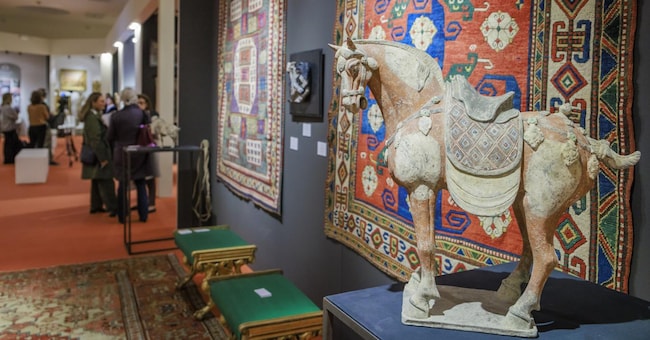
Art a good refuge against wars and inflation? "It is our balm, and antiques are still cheap: beautiful works that take my mind off ugly thoughts every day," says Marco Riccomini, an expert in ancient art, who has been called upon since the very first hour to vett the sixth Milanese edition, underway until Sunday 10 November, of AMART, in the Milanese spaces of the Museo della Permanente. The antiques exhibition-market organised by the Associazione Antiquari Milanesi and Promo.Ter di Confcommercio Milano takes the public on a fascinating journey from the contemporary to the antique. "It takes a cultural effort with the antique that pays off: in the end, as paradoxical as it may seem, looking back allows you to live today better, with more lucidity and clarity". The today of Donald Trump: America is the leading international art market and the top price bracket with a 42% share of USD 65 billion, followed by China and Hong Kong with 19% (Global Art Market Report 2024, ArtBasel Ubs).
We are in a market where the slowdown is continuing in 2023: revenue from evening auctions in October contracted for the three main competitors (Christie's, Sotheby's and Phillips) on a year-on-year basis to $377m in London by -9% and Paris by a deep -16% and the Artprice global art (auction) index fell three points below its 1998 level for the first time in 25 years. The upcoming evening auctions in New York will measure the vibrancy of trading in the US, the strongest performing market of the past 20 years and one that has led the recovery in sales post Covid and after the 2009 financial crisis. This market has grown by almost a third in value in ten years since 2013, fuelled by imports of art and antiques, the value of which has more than doubled from 2020 ($5.2 billion) to $10.3 billion in 2022 with more modest growth in 2023 (+1% to $10.4 billion, but -12% from 2019).
The fear of tariffs
.Will the new US President also impose new duties on art, putting the brakes on the slow recovery? Observers fear the consequences of tax and trade policies on art and culture. Since October 2019, the Trump administration has imposed 25% duties on imports from the UK and Germany on prints, including lithographs on paper or cardboard, drawings and photographs printed in the last 20 years. Many products from China were taxed, regardless of age or origin, including contemporary Chinese art as well as Ming imperial porcelain and all works that have been in European collections for over a hundred years but were originally produced in China. The duties initially set at 25% were, however, reduced to 7.5% and maintained by the Biden administration, with a significant impact on certain sectors of the market, resulting in a decline in the buying and selling of Chinese contemporary art in the US and vice versa.
In this election campaign Trump in his pledges has floated the idea of imposing tariffs of 10% or more on all goods imported into the US, claiming that this will eliminate trade deficits. These tariffs could include a tax of up to 60% on all products from China and hit the art market, with a natural Chinese reaction. But the unpredictable nature of the new president makes it difficult to say how his actions will affect the art industry, whose market is experiencing a reduction in spending by wealthy collectors who allocate 15% of their portfolios to art, according to the latest ArtBasel Ubs report on HNWS. Today, buying and selling times are longer, there is room for works of the highest quality and well-known, prestigious provenance.
"But there is not only the fear of duties on works," explains Franco Dante, an accountant expert in art taxation, "a risk not to be underestimated will be the closure of American borders for artists as well. It will be more difficult for Italians to enter the US as well. Protectionism damages the art system. And then the feeling of uncertainty reigns in Europe and the protective umbrella of NATO. The fears of an unfair peace between Ukraine and Russia and the reduction of the American military commitment will also take away serenity from investment in art. Tariffs will penalise money movements and European domestic economies will suffer from reduced exports. There will be less money for art, it will be more difficult for us to export our art and it will be more difficult for European collectors to invest'.


