
Trump's mistake and Powell's mistake
Inflation is a risk that the US president should fear given that his predecessor Joe Biden's defeat was due to that

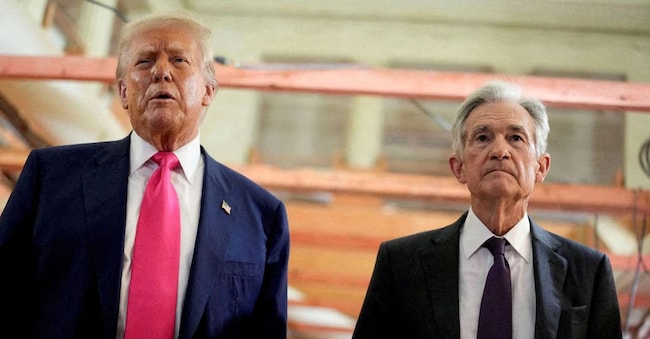
A US president who claims to want low inflation and low interest rates is wrong to attack the Fed governor. But a Fed chairman who claims to care about the independence of the central bank he heads is also wrong to implement an opaque monetary policy. The two mistakes increase the risks of instability. But do the words of the two actors really match their objectives?
The starting point is the facts, which must then be interpreted in the light of the best economic analysis. The first fact is Donald Trump's hostile attitude towards Chairman Jerome Powell. These days, media attention is focused on the possibility that Powell will be called to account for his choices regarding the restructuring of the central bank's buildings, as a result of Justice Department activism inspired by the White House tenant. The episode is only the latest, and it is very easy to foresee more to come, because it is the effect of a strategy that has characterised Trump's actions and words since his first term in office: monetary policy must be consistent with the objectives of the US president, who wants low interest rates.
The reason? Donald Trump appears convinced that the cost of money is a ballast holding back the decisions of households, businesses, and the financial sector, slowing consumption, investment, exports, and stock market growth. So interest rates must be structurally low. To this credo of the president's, the major objection of the prevailing macroeconomic analysis is the risk of rising inflation. This criticism has been answered in the past by another incumbent president - Recep Tayyip Erdogan, at the helm of Turkey since 2014 - who is also convinced that monetary policy must always be consistent with the objectives of the executive. The argument is as follows: if the level of rates reflects the cost of credit, and companies adjust the selling prices of their products by looking at the trend in production costs, higher rates produce higher inflation. However, the logic of the argument systematically clashes with the empirical evidence, which shows that lax monetary policies are associated with higher and higher inflationary costs and lower and lower real effects when they are more intense and longer-lasting.
Inflation is therefore a risk that Trump should fear, given that his predecessor Joe Biden's defeat was attributed precisely to the unforeseen inflationary flare-up in the US from the second half of 2021 onwards. Keeping inflation under control requires being able to influence expectations in the right direction, which in turn depends on the effectiveness of monetary policy, which in turn has as a necessary, though not sufficient, condition that the central bank is credible. Therein lies Trump's mistake: attacking the central bank president on a personal level means undermining the Fed's credibility and increasing inflation risks. But does Trump care about rates and inflation, or does he care about asserting the principle of presidential dominance over every public perimeter?
But Powell's behaviour is also wrong. Economic analysis tells us that with the same institutional set-up of the central bank, which defines its formal independence, the individual central banker's ability to resist political pressure is associated with his ability to tie his hands with monetary announcement policies, which Powell's Fed has instead stopped using since 2022. Just imagine a Powell who - as the Swedish central bank does - had continued to announce the expected profile for the coming two years since the eve of the 2024 presidential election: the bow of accusations of trying to make the Democrats win would have had no arrows to shoot. Instead, Powell continues undaunted with a self-referential monetary policy. Instead of making binding commitments on rates, he uses the Fed as a usbergo to defend his personal position. A central banker who wants to be credible ties his hands with announcements and is ready to resign in order to hold the politician on duty - in this case the US president - accountable. But does Powell care about the effectiveness of monetary policy, or simply his personal gain?


