
Forza Italia’s unease within the ‘Vannaccised’ right
From self-defence to ‘dragnet wiretapping’, discontent within the centre-right is growing. The leadership dispute between Tajani and Marina Berlusconi

Key points
For the liberal, Euro-Atlanticist party once led by Silvio Berlusconi, the balancing act is becoming more daring by the day. It was never easy to be at the centre of a coalition where the right-wing factions are the post-fascist, sovereigntist wing led by Giorgia Meloni and the post-secessionist, Eurosceptic wing led by Matteo Salvini. It is even more complicated now to find oneself at the centre of an alliance that, day by day, is taking a step towards the extreme, in the wake of General Roberto Vannacci.
The nuances of the Roggero case
There is no shortage of signs of distress and fears that the efforts to win over the moderate and Catholic electorate are being thrown away. The Roggero case is a prime example: the Forza Italia leader Antonio Tajani was forced to fall in line with the request for a pardon, despite the institutional blunder regarding the launch of the preliminary inquiry announced by the Minister of Justice, Carlo Nordio, without prior consultation with the Head of State, Sergio Mattarella, the only person on whom the granting of clemency depends. However, in various statements and interviews, he has had to clarify Forza Italia’s position in order to distance the party from the excesses of those who are turning the jeweller – sentenced to 14 years and 9 months’ imprisonment for killing two robbers – into a hero. “In our view, he was in the wrong,” Tajani emphasised, but “we believe social forgiveness for this man is right and appropriate”.
The ‘no’ to self-defence, Lega-style
It is quite a different matter – a very different matter indeed – to broaden the scope of self-defence beyond the expansion already decided in 2019, when Matteo Salvini was in charge of the Ministry of the Interior. The draft bill proposed by the Lega, which aims to justify and decriminalise any reaction to an attack by removing both the requirement for the danger to be imminent and the requirement for proportionality, is ‘unacceptable’ to Forza Italia, as the party’s Deputy Minister for Justice, Francesco Paolo Sisto. It violates “the cornerstones of criminal law”.
The clash with Fdi over the justice system
But it is not only from the Lega – which is facing a crisis of support – that Forza Italia finds itself at a distance. A similar rift is evident in the battle, waged entirely by Fdi, to amend the rules on wiretapping in the Justice Decree currently under consideration by the Senate. An amendment tabled by Giovanni Berrino (Fdi), a supporter of Meloni , seeks to extend the admissibility of wiretaps to proceedings other than those for which they were originally authorised, by referring to ‘indicator offences’. According to Forza Italia, however, the current legislation already permits the reuse of wiretaps in proceedings relating to the Mafia and terrorism. Extending their use further, on the other hand, would risk reviving ‘dragnet’ wiretaps, turning an exception into a rule and curtailing the right to the confidentiality of communications.
The leadership issue
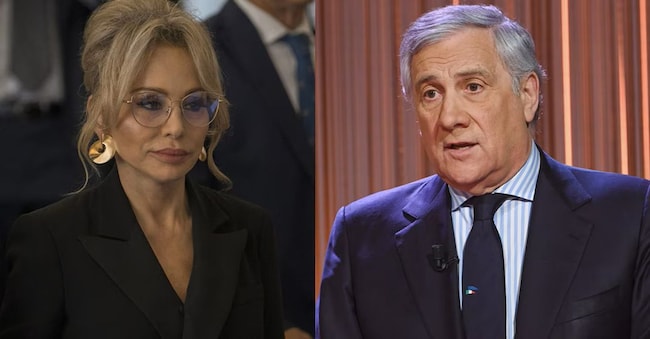
Complicating the picture – and the mediation efforts of Prime Minister Giorgia Meloni – is the issue of the Fdi leadership. “How can political agreements be sought if the people sitting at the table aren’t the ones making the decisions?”, a senior Fdi figure vents off the record. The reference is, of course, to Marina Berlusconi. She is suspected, particularly in the Senate – where the FDI group leader is Stefania Craxi – of dictating the party line on this and other issues, starting with the electoral law that saw the preferential votes so dear to Meloni rejected in the Chamber of Deputies in a secret ballot even by key figures within the majority. The commitment to reform the wiretapping system is, for the Prime Minister and the Chair of the Anti-Mafia Committee, Chiara Colosimo, deemed essential, undertaken in response to the alarm raised on several occasions by the National Anti-Mafia Prosecutor Giovanni Melillo, who contested the 2023 law which effectively prevents the use of wiretaps to detect ‘indicator offences’ that emerge in intercepted conversations.


