
The University of Bologna doubles its solar power capacity: a decisive step towards energy self-sufficiency
With four new systems installed between Bologna and Forlì, the University’s self-generated electricity now accounts for 7 per cent of its total electricity consumption, up from 3 per cent, resulting in savings of 850,000 euros a year and a reduction of 700 tonnes a year in CO₂ emissions into the atmosphere

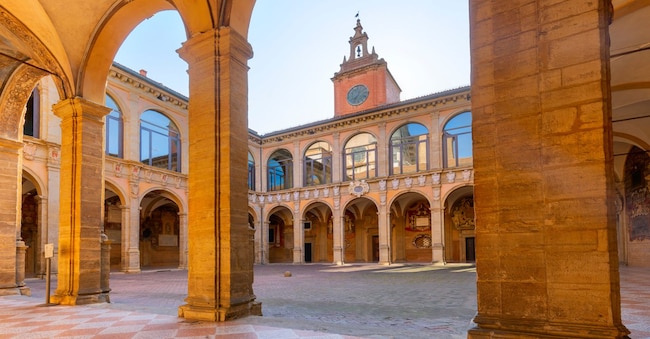
The University of Bologna is stepping up its efforts towards sustainability and taking a decisive step towards energy self-sufficiency. Thanks to the commissioning of four new large-scale photovoltaic systems located across the Bologna and Forlì campuses, the Alma Mater has doubled its capacity to generate electricity from solar power, increasing its total installed capacity from 1.5 MWp (megawatt-peak) to 3.08 MWp.
The expected annual output from the photovoltaic systems also doubles, rising from 1.69 GWh (gigawatt-hours) to 3.4 GWh, bringing the share of self-generated energy to over 7 per cent of total electricity consumption (compared with 3 per cent in 2025).
The project guarantees estimated annual savings of 850,000 euros on supply costs and a direct reduction of over 700 tonnes of CO₂ emitted into the atmosphere each year.
This result enables the University to exceed, ahead of schedule, the 2.5 MWp target set by the Strategic Plan for 2027. However, the aim is to grow further, with the installation of additional rooftop and agrivoltaic systems, to reach 10 per cent self-generation by the end of 2027.
Curbing volatility in the energy markets
Between July and August, the price of electricity (PUN) rose by 44 per cent, whilst the price of gas (PSV) rose by 40 per cent. Against this backdrop of great uncertainty and sharp price rises, the decision to invest in on-site electricity generation is proving to be a key strategic lever for financial stability.
“We regard the self-generation of renewable energy not only as an environmental duty, but as a structural element of economic protection for our University,” states Rector Giovanni Molari. “The gradual electrification of consumption and the reduction in reliance on gas-fired power stations mean we must transform our rooftops into active infrastructure, reducing our dependence on the grid and shielding the University from speculative spikes in the energy markets.”
The new facilities: details of the works
The University has therefore decided to adopt a strategy involving the installation of new solar panels on its own buildings: a plan that is transforming the roofs of the Alma Mater from passive structures into active spaces, reducing dependence on the electricity grid and cutting emissions associated with energy consumption.
Funding
In Bologna, the new photovoltaic systems – funded by the University, the PNRR and ministerial calls for proposals – have been installed on the buildings at the Navile Campus and the Fanin District, home to the Department of Agri-Food Sciences and Technologies. On the Forlì Campus, meanwhile, the solar panels are on the roofs of the former ENAV building and the warehouse on Via Cicognani, which houses the Industrial Engineering laboratories.
The features of the new systems
• The photovoltaic system installed at the Navile Business Park has a capacity of 744 kWp (kilowatt-peak), with an expected annual electricity output of 0.83 GWh (gigawatt-hours), equivalent to 12 per cent of the annual electricity consumption of the entire Navile district.

Brand connect


Newsletter Scuola+
La newsletter premium dedicata al mondo della scuola con approfondimenti normativi, analisi e guide operative
Abbonati