
The US asks Italy to be a founding member of the security force in Gaza
The proposal has been submitted to Palazzo Chigi and the Farnesina, but the decision has not yet been taken, while questions remain open regarding the governance of the plan and the multilateral framework

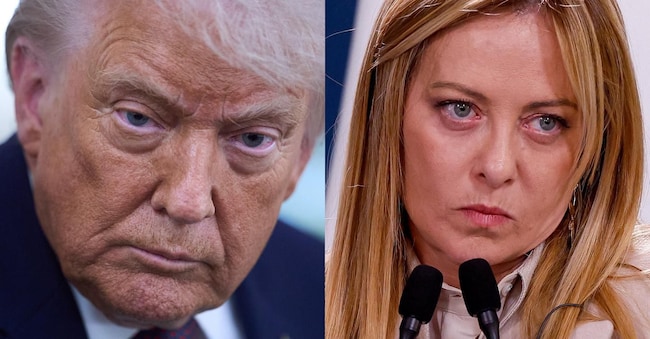
The invitation arrived on the table at Palazzo Chigi in a diplomatically tense week. The United States has asked Italy to join, as a founding member, the International Stabilisation Force (Isf) for Gaza, the multinational force envisaged by the Washington-backed plan for the 'post-conflict' phase in the Strip. According to Bloomberg, the proposal was presented to Prime Minister Giorgia Meloni and the Ministry of Foreign Affairs and International Cooperation. The political decision has not yet been taken and, again according to the same sources, Italy would not contribute with troops but with a commitment to train the future Gaza police and with its own political weight in the channels with Israel, Arab countries and the Palestinian leadership.
On a formal level, Washington has not confirmed the details of the invitation to Rome: White House spokeswoman Taylor Rogers, when asked, did not specify whether Italy had received a request, limiting herself to saying that "announcements on the ISF will come soon", while a US official indicated that several countries have expressed interest and that the United States is in talks with partner nations. On the Italian side, Meloni's office did not comment and the Farnesina did not respond to requests for clarification reported by the agencies.
What is Isf
The frame of reference is UN Security Council Resolution 2803, adopted on 17 November 2025, which authorised member states working with the Board of Peace (BoP) and the Board of Peace itself to establish a temporary International Stabilisation Force in Gaza. In the UN documentation, the mission was linked to a phased plan: cessate fire, transition and reconstruction mechanisms, demilitarisation and the building of 'vetted' local security forces.
The functions attributed to the ISF would range from security support to the protection of civilians and humanitarian operations, to work on crossings and border areas, and above all to training and support for a new Palestinian police force intended to assume long-term responsibility for law and order. Already in the November 2025 negotiation phase, there was talk of a potential mandate that included stabilisation 'including through demilitarisation' of non-state armed groups and the 'permanent decommissioning of weapons' 'as necessary', as well as the protection of corridors and humanitarian activities.
This is precisely the point that interests Rome: the hypothesis of a contribution that is not 'combat' (non-operational) but training, in particular through the Carabinieri, a force that is often deployed in capacity-building and training contexts for local police forces in international missions. The orientation had already emerged in the autumn of 2025, when in November the Defence Minister Guido Crosetto had said that Italy was willing to provide carabinieri to train the future Palestinian security forces "when everything is over", specifying however an operational limit: the training would not take place "neither in Gaza nor in Rafah", but "in an external place" to guarantee the security of the personnel.


