
US-Taipei interdependence at the heart of the Taiwan issue

3' min read
3' min read
The People's Republic of China on Monday 14 October carried out a military exercise in Taiwanese waters called Joint Sword - 2024B, alerting the international community to the future of cross-strait relations. The military manoeuvre, which involved several People's Liberation Army (PLA) forces along with the Chinese Coast Guard, was actually predictable according to experts, as it followed the Joint Sword - 2024A exercise last May. Even then, the addition of a letter to designate the operation had led to speculation that the Chinese government intended to conduct more than one military exercise within the year, unlike the previous year, when the PRC conducted a single exercise in April, Joint Sword 2023. The increase in military exercises by the EPL has been particularly noticeable since the Democratic Progressive Party (DPP) came to power under the leadership of Tsai Ing-wen. Since 2018, China has conducted military drills around Taiwan with increasing frequency to put pressure on the DPP-led government. Beijing's military actions this time come in response to the island's more or less explicit claims of independence - statements by President Lai Ching-te.
Yet, it is difficult to dismiss the recent manoeuvres as mere military 'escalation' in the strait. At the centre of the tension is once again the economic and trade competition between China and the United States, coupled with Taiwan's strategic role in the global technology industry.The frequency of military manoeuvres should not be underestimated, but it is worth dwelling on the importance of the sanctioning measures implemented by China towards what is defined as the 'rebel province'. In fact, at the same time as the military operations, China announced on the same day (14 October) economic sanctions against two Taiwanese citizens who are well known to international public opinion: Puma Shen, class of 1982, legislator and co-founder of the Kuma Academy - an organisation created with the aim of 'educating' Taiwanese civilians in self-defence and a pre-war mentality - and Robert Tsao, founder of the United Microelectronic Corporation (Umc), a leading company in the semiconductor sector. Tsao himself, although not officially among the founders of the Kuma Academy, was accused by the Beijing government in 2022 of fostering independence forces, following the announcement of multi-million dollar funding to the Kuma Academy with the aim of establishing a veritable civil militia on the island. But some US tech companies have also been sanctioned recently. On 18 September 2024, with Decree No.12 issued by the Ministry of Foreign Affairs of the PRC, Beijing announced sanctions for nine US companies accused of interfering in China's internal affairs and threatening China's sovereignty and territorial integrity. All nine companies are allegedly accused of trading arms with Taiwan (Sierra Nevada Corporation, Stick Rudder Enterprises Llc, Cubic Corporation, S3 Aero Defence, Tcom Limited Partnership, TextOre, Planate Management Group, ACT1 Federal, Exovera) operate in the fields of cybersecurity, artificial intelligence, and modernisation of military forces. Although it is difficult to hypothesise truly reliable future scenarios for cross-strait relations, a number of considerations can be made. Firstly, the continuity of the US factor in China-Taiwan relations, which today as in the past remains more crucial than ever.
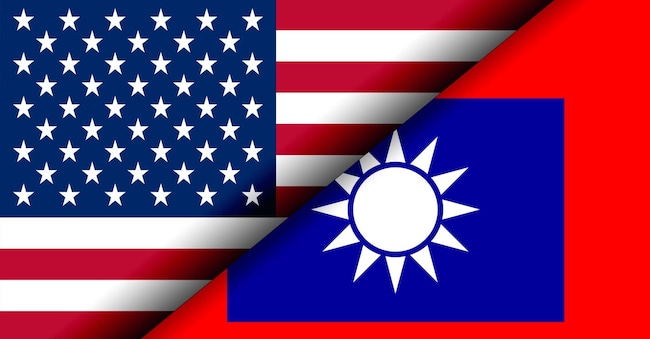
It is a well-known fact that arms sales to Taiwan have always been a highly controversial issue in China-US relations. According to Sipri data between 1977 and 2020, 77% of Taiwan's imported conventional arms came from the US. However, the ongoing technological and commercial competition between Washington and Beijing appears to be decisive for the course of cross-strait relations. This is because the Taiwan issue for China is now more than ever influenced by the commercial and technological relevance played by the island in the global supply chains of the semiconductor industry. And the partnership between the US and Taiwan has been growing stronger and stronger far beyond defence engagements and arms sales. Starting in June 2022, a major bilateral trade discussion known as the US-Taiwan 21st Century Trade Initiative was initiated. There are eleven areas of negotiation in all: customs administration and trade facilitation, regulatory practices, anti-corruption, small and medium-sized enterprises (SMEs), agriculture, standards, digital trade, labour, environment, state-owned enterprises, and non-competitive market policies and practices. Taiwan remains a major trading partner of the US and a key link in global technology supply chains: 90% of global chip production is concentrated on the island. Taiwan's policies aim to generate growth in emerging technologies and reduce dependence on the PRC by diversifying trade and investment and relocating production.
In practice, the island's desire for political independence coupled with the growing economic interdependence between Washington and Taipei, but above all, the connection between the two, are perceived to be among the main threats to Chinese sovereignty today.
Lecturer in International Relations and Asian Studies, Department of Political Science, Luiss Guido Carli University, Rome

