
The value of art: empathy, wellbeing and inclusion
This is the finding of the study by Roma 3 University entitled ‘Art, Empathy and Well-being’, carried out as part of the ‘Accessible Culture’ project

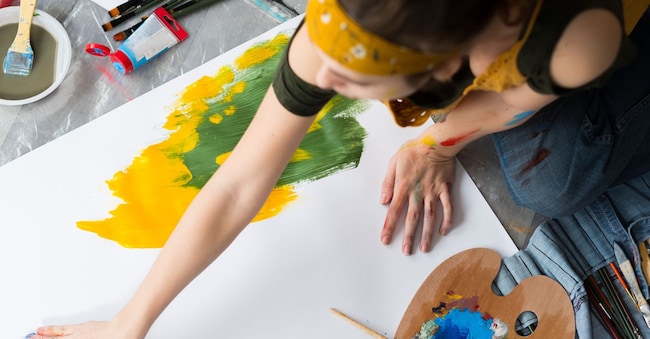
Art therapy creates value. And its impact extends beyond those who experience it. This is because art, relationships and empathy ‘can help to generate value’ even within the network of people who come into contact with these experiences. This is supported by a study from Roma 3 University on ‘art, empathy and wellbeing’, carried out as part of the ‘Accessible Culture, Possible Wellbeing’ project, in collaboration with the National Gallery of Modern and Contemporary Art.
The initiative
The initiative, which involved 1,932 participants, is based on the testimonies gathered during the workshops held at the Gallery as part of the collaboration with ASL Roma 2.
The researchers investigated ‘whether the relationship between psychological fragility and familiarity with art therapy practices was associated with more inclusive attitudes, greater empathy and well-being’.
Psychological fragility
The study reveals that almost one in two people (49.7 per cent) have friends or family members who are experiencing psychological distress. ‘Those with this direct experience show greater openness to forming relationships,’ the study states, ‘on a scale of 1 to 7, the average level of inclusiveness is 5.25, compared with 4.81 for those without direct experience.’ Not only that: “Avoidance is also significantly lower: 1.85 compared with 2.26,” it continues. “In other words, having first-hand knowledge of vulnerability is associated with a greater willingness to engage and less social distance.” Although awareness of art therapy programmes remains very low, at 2.22 out of 7, the analyses point to empathy as ‘one of the mechanisms through which familiarity with art therapy is linked to well-being’.
“The data confirm what we had observed in the testimonies gathered during the project,” note Carmela Donato and Michela Addis, lecturers in the Department of Economics at Roma Tre University, “ the value generated by art is not confined to the individual experience, but extends to those who accompany, observe or even come into indirect contact with these initiatives. This is an important perspective, because it encourages us to consider the value of art not only for the individual, but also for relationships and communities.”

