Residency

The Veneto 'Piano Casa': 50 million to be invested for young people, couples and caregivers

The President of the Region, Alberto Stefani, explained the new regional plan to revise Law 39/2017, which revolves around the recovery of some 8,800 council housing units that are currently vacant and looks beyond the Isee ceiling

by Paola Pierotti

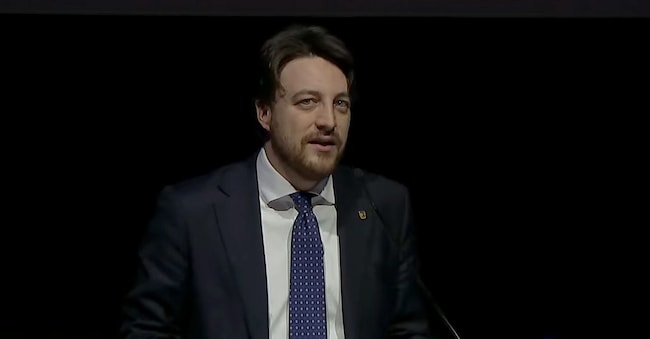
Alberto Stefani, presidente della Regione Veneto

4' min read

Translated by AI
Versione italiana

4' min read

Translated by AI
Versione italiana

To provide housing for those who work but cannot afford rents on the private market and are not included in the public housing lists, but also to find resources to start rehabilitating the 8,800 council housing units that are currently vacant and in need of redevelopment or renovation. This is the twofold objective of the 'Generazione Casa' programme launched by the new governor of Veneto Alberto Stefani. This is the basis of the new regional plan to respond to the housing emergency and convert it into a development opportunity, starting with the revision of Regional Law 39/2017, containing regulations on public housing. A local action, which takes note of the national and European emergency, which focuses on the redevelopment of existing buildings (reducing energy costs) and opens up the relationship with the private sector (with a virtuous circle in the construction and redevelopment sector).

Governor, to whom is the programme you are working on addressed? 

Loading...

The issue of housing today represents one of the main levers of social cohesion and territorial competitiveness. The priority target is not limited to the groups traditionally assisted by public housing (currently the average isee of users is 7,700 euro), but includes that increasingly large group of workers, young people, caregivers, families and single-income households who, despite having a stable job, are unable to access sustainable housing solutions on the private market and remain excluded from the Erp (public housing market) lists. The numbers say it: in Veneto by 2030 there will be a shortage of more than 280 thousand workers and, as Confindustria also claims, many of them will give up their jobs because of the housing emergency.

Housing and work. Rising rents, reduced supply and growing demand are producing structural effects, such as difficulty in retaining human capital, youth depopulation, reduced productive attractiveness. How do you plan to deal with this issue? 

The Region's priority is to overcome a dual vision between public housing and the market, building an integrated system that combines Erp, social housing, rent by agreement and innovative housing access tools. In this framework, initiatives such as Generazione Casa are designed to respond to a real and widespread demand, supporting precisely those who work and want to build a life project in Veneto, without giving up the dignity of living.

Any numbers on the plan? What are you starting from?

The project is based first and foremost on the recovery of about 8,800 council housing units currently unused, owned by the Ater - Aziende Territoriali per l'Edilizia Residenziale (Territorial Housing Authorities), which are currently unused because they are in need of renovation and energy requalification. This is an existing heritage that the Region intends to rapidly restore to its housing function, converting the unused into a resource for the territory. The first operational step is the revision of Regional Law No. 39 of 2017, which regulates Public Residential Housing. The amendment will make it possible to release part of the housing currently blocked in the Erp rankings, allocating it to specific categories of Veneto citizens. These recipients will be offered the possibility of accessing lowered rents, sustainable but outside the traditional mechanisms of social housing.

We are talking about an investment of 50 million, for how long and with what scanning hypothesis?

This investment for the Home Plan is part of a multi-year strategy and represents one of the first concrete applications of the reprogramming of European funds recently approved by the Regional Council. Thanks to the adhesion to the new European Regulations on the mid-term review of the cohesion policy 2021-2027, the Veneto Region has been able to re-modulate the ERDF and ESF+ Programmes, obtaining two strategic advantages: the increase of the European co-financing share from 40 to 50 per cent and an extension of the implementation time by one year, which allows a more effective and realistic programming of the interventions. The 50 million is not a ceiling, but a structural basis that will be reinforced by further resources: cohesion funds, residual NRPs, regional financial instruments, public-private partnerships and, in perspective, regional 'home bonds'.

Priorities? 

Resources will be committed by giving priority to projects that can be implemented immediately and are capable of generating a rapid increase in the supply of affordable housing. The aim is to activate a leverage effect, using the public contribution as a risk-reducing instrument for operators, owners and institutional investors.

Any details on the incentive mechanism? 

These will include contributions to the redevelopment of existing assets, support for rents with agreed rents, including through guarantee instruments, promotion of innovative formulas such as rent to buy, with special attention to young people, integration with other regional, national and European instruments.

What criteria should be used to select the allocation of resources?

We envisage a governance with regional direction, but based on institutional cooperation, consistent with the Veneto model of responsible autonomy. The Region defines the strategic guidelines, the quantitative and qualitative objectives and the criteria for the use of resources, while the municipalities will identify the needs, properties and areas of intervention.

Redevelopment and renovation only or is there also room for new construction?

We support the recovery and valorisation of the existing heritage, for environmental, economic and social reasons. In Veneto there is a significant heritage of vacant or underused housing that can be quickly put back on the market, with lower costs and more certain timescales than new construction. This does not mean excluding new interventions, but placing them within a selective logic of urban regeneration, avoiding unnecessary land consumption and aiming at high energy and quality standards.

Copyright reserved ©
Loading...

Brand connect

Loading...

Newsletter RealEstate+

La newsletter premium dedicata al mondo del mercato immobiliare con inchieste esclusive, notizie, analisi ed approfondimenti

Abbonati