
The Venice Biennale Archive finds a home at the Arsenale

The archive of La Biennale di Venezia forms part of its heritage. The papers, documents, letters and messages, together with other collections that supplement and complete them, make it possible to reconstruct the relationships and creative processes behind exhibitions, shows and festivals. The photo library (thousands of plates, prints, negatives and digital images), the media library (all audio and video documentation of activities), the poster collection, the art collection and the documentary archive containing press reviews, and finally the library, which holds more than 180,000 items including catalogues, rare volumes and journals: all of this constitutes the asset that preserves the institution’s memory. It is unique in the world precisely because of its diversity and, above all, because it simultaneously covers six different artistic sectors (art, architecture, cinema, dance, music and theatre), which La Biennale develops on an ongoing basis to fulfil its institutional mission. The institution’s statutes also recognise the archive as the seventh Sector of Activity, alongside the first six, entrusting its management and development to the Artistic Directors themselves. For this reason, the ASAC (Historical Archive of Contemporary Arts), established as early as the first Exhibition in 1895 and which became an institute and then an autonomous sector from 1928 onwards, is today a fully-fledged International Centre for Research into Contemporary Arts. Its collection is constantly enriched by the materials that are added at the end of each event, generating a living and ever-evolving body of work for students, researchers, artists and curators called upon to interpret the present and envisage future projects. The centre hosts a College of Writing, the ‘Writing in Residence’ programme, workshops, meetings and research projects, some of which are carried out in collaboration with other cultural institutions and universities. All these activities are based on the principle of ‘learning by doing’, according to which every course of study must result in the production of a tangible outcome. Research is, in fact, closely linked to the Centre’s creative activities and takes many forms: from publications – including the Venice Biennale Magazine, relaunched in 2024 – to exhibitions curated by the Artistic Directors as part of their remit and subsequently included in national and international exhibition circuits. These are complemented by special projects such as It is the Wind that Makes the Sky, launched to mark the anniversary of Marco Polo’s death, which retraced the stages of his journey through a series of exhibitions in the major cities he visited. Other special projects are of an interdisciplinary nature, such as “La Biennale della Parola”, which gave rise to the evenings dedicated to Meister Eckhart’s commentary on the Gospel of John and the Arcipelago Battiato project. These initiatives, together with others already completed or currently in the planning stage, bear witness to the Centre’s commitment to combining research, education and cultural production within a single creative process.
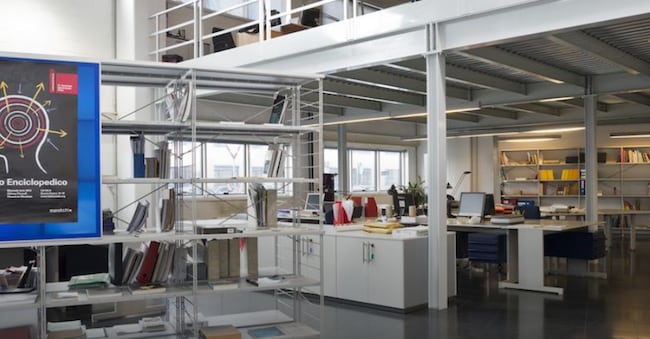
Over the coming months, the collections will be transferred from their current mainland location at the Vega, Marghera Science and Technology Park, where they have been safely stored, catalogued and restored in recent years. The transfer will take place without interrupting the public’s ongoing access to and use of the collections in the newly restored spaces at the Arsenale, which were unveiled last week. The Archive, therefore, as well as the Library – which has been based in the Central Pavilion at the Giardini since 2009 – will be situated at the heart of the exhibitions and activities relating to dance, music and theatre, in even closer alignment and synergy with current activities; in the archive, these become memory, only to be regenerated in the future. Over 8,000 square metres of new space perfectly meet the needs of the archive’s various functions as a research centre. These include extensive storage and conservation areas, alongside small restoration and work workshops. The scale of the spaces – with over 8 km of shelving, to give just a rough idea – ensures not only the management and promotion of the collections already held, but also the ability to accommodate third-party archives, guaranteeing their proper preservation, handling and consultation. The new premises also make it possible to increase the number of research workstations and to envisage spaces dedicated to longer-term residencies. Finally, a multifunctional space will be set aside for cultural production, meetings, workshops and public events. This restoration completes a process initiated by the Venice Biennale more than 26 years ago, which has made it possible to redevelop and permanently reopen the monumental section of the Venice Arsenale to the public. The new archive spaces – formerly the Magazzino del Ferro and the Edificio dei Congegnatori e Aggiustatori – will continue to be a ‘Fabbrica’ but a factory of the future through research, thereby fulfilling the institutional purpose of the Venice Biennale, namely “to promote, at national and international level, with full freedom of ideas and forms of expression, research and documentation in the field of contemporary arts through ongoing research activities as well as events, experiments and projects”.

