
The election that could change Israel: here’s what’s at stake and who the key players are
On 27 October, Prime Minister Netanyahu will face off against a diverse but large coalition. These are the first elections since the Hamas attack on 7 October 2023

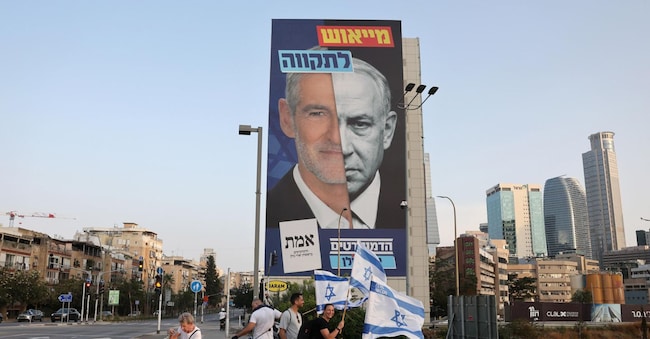
More than 7 million Israelis are preparing to vote in the first national elections since the attack launched by Hamas on 7 October 2023 from the Gaza Strip. The election on 27 October 2026 comes eight months after the start of the conflict with Iran and is seen as a referendum on the leadership of Prime Minister Benjamin Netanyahu, who has been in power for years. From the outside, one might think that voters are focusing on issues related to Israel’s actions in the war in Gaza or its occupation of much of southern Lebanon and parts of Syria; instead, Israelis are focused on domestic issues. At the heart of the debate are the security failures (always a sensitive issue) that made 7 October – the bloodiest day in the country’s history – possible, as well as compulsory military service, attempts to reform the judicial system, and the figures leading the various political parties.
As for the key figures in these elections, Netanyahu himself, aged 77, seemed set to lose power, at least according to the polls in recent months. However, as the election approaches, the gap between him and his opponents has narrowed, and the coalition challenging him does not appear likely to form a government easily. Having been in power for a long time since 2009 – following a first term as prime minister in the 1990s – Netanyahu has become the face of Israel abroad, whilst at home he remains a figure who deeply divides public opinion. His supporters call him ‘King Bibi’ and regard him as the strong leader Israel needs to defend itself in a hostile region. But Netanyahu is fighting for his political survival: he is wanted by the International Criminal Court for alleged war crimes in Gaza – charges he denies – and is on trial in Israel for corruption, offences he denies having committed. Opinion polls point to a sharp decline in support for his party, Likud, following the attack on 7 October, which has shattered Netanyahu’s credibility on security matters (in recent months there has been a succession of scoops and revelations suggesting that, prior to 7 October, Bibi had been warned on several occasions of an imminent large-scale attack by Hamas and had done nothing about it). Furthermore, his government’s policies on issues concerning the relationship between religion and state have proved unpopular with many Israelis. No one, however, underestimates the Prime Minister’s ability to weather the storm, as he has done in the past. It is no coincidence that, during this election campaign, he has declared his intention to form a government of ‘broad national unity’.
Netanyahu’s many rivals
The figure who has emerged in recent months as the current prime minister’s most formidable opponent is the former Chief of the General Staff, Gadi Eisenkot, aged 66, who lost a son in combat in Gaza. Eisenkot has presented himself as a figure outside the traditional political sphere, a military man and a hardliner on security issues; his humble origins and his family’s sacrifices stand in stark contrast to the decades Netanyahu has spent in the upper echelons of power and the corruption cases against him. Eisenkot heads a new centrist party called Yashar, a Hebrew term meaning ‘upright’ or ‘honest’. Alongside Eisenkot, challenging Netanyahu is former Prime Minister Naftali Bennett, 54, a right-wing politician, former member of special forces, former associate of Netanyahu and a millionaire in the high-tech sector: he has joined forces with another seasoned politician, the former centrist Prime Minister Yair Lapid. Their new party is called ‘Together’ and aims to heal a traumatised nation and put the country back on the right track. Their alliance seeks to reconcile positions that are often diametrically opposed, but it already has a success to its name, having succeeded in ousting Netanyahu from government in the 2021 elections.
Another former ally who is now an opponent is the former Defence Minister Avigdor Lieberman, aged 68, once a close ally of Netanyahu. Even more hardline than his former leader, Lieberman left the government in 2018, accusing the Prime Minister of being too soft on Palestinian militants in Gaza, and has become one of his fiercest critics. His party, ‘Israel Beitenu’ (Israel, Our Home), draws much of its support from the community of immigrants from the former Soviet Union. Former General Yair Golan, 64, celebrated for having saved several people during the Hamas attack on 7 October, leads the ‘Democrats’ party, which rose from the ashes of the Labour Party (a historic Israeli political party) and the smaller left-wing Meretz party.
About a month ago, a photograph of some of these politicians from the current opposition – gathered informally in a living room around a coffee table – went viral in the media, and they were dubbed ‘the bloc for change’ with a common goal: to oust Netanyahu. Those present included the host, Yair Lapid; his ally Naftali Bennett from the Yachad coalition; the leader of Yashar, Gadi Eisenkot; the leader of the Democrats, Yair Golan; and the leader of Yisrael Beiteinu, Avigdor Lieberman. That said, the Israeli electoral system is proportional: voters cast their ballots for party lists, and parliamentary seats are allocated to the candidates on those lists; therefore, it will not be easy for such a diverse coalition to find common ground.

