
The willing accelerate on arms. Starmer: Putin does not want peace
Pressing to bring Moscow to the negotiations. Britain will accelerate arms deliveries and provide five thousand extra missiles to strengthen the Ukrainian anti-aircraft. Italy is also finalising its twelfth military aid package to Ukraine.

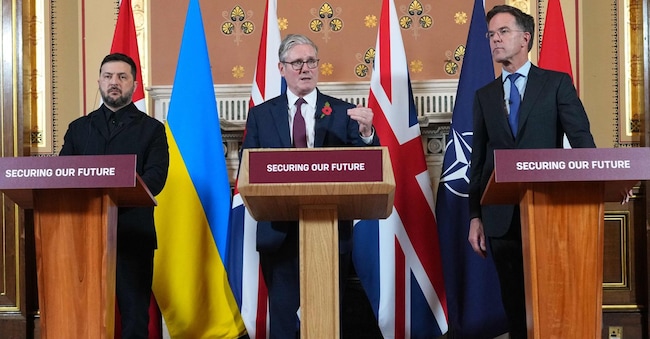
LONDON - Increasingly heavy sanctions and pressure on Russia to bring it to the negotiating table, more financial and military support for Kiev in 2026 and 2027, and a tight timetable to unlock frozen Russian assets: these were the commitments announced yesterday at the end of the 'Coalition of the Willing' meeting in London.
"The future of Ukraine is the future of Europe," said British Prime Minister Keir Starmer, who emphasised the coordination and unity of purpose between allies to counter Russian President Putin "who wants to divide us in order to weaken us".
In addition to Starmer and Ukrainian President Volodymyr Zelensky, the meeting in London was attended by NATO Secretary General Mark Rutte, Dutch Prime Minister Dick Schoof, and Danish Prime Minister Mette Frederiksen, while twenty other European leaders, including French President Emmanuel Macron and Italian Prime Minister Giorgia Meloni, participated virtually.
The coalition also welcomed a new member, Japan: new Prime Minister Sanae Takaichi attended the meeting and chose to express her support for Ukraine in its debut on the international stage.
On the frozen Russian assets there is an agreement in principle and 'technical issues' have to be resolved, but there will be a solution 'before Christmas', Frederiksen assured, because 'there is no alternative. Russia has to pay for the damage it has caused'. EU leaders this week approved the 19th sanctions package against Russia and promised more financial support for Ukraine, but failed to make a decision on the use of frozen Russian assets to strengthen Kiev's defences.

