The female question? Always in women's art
The exhibition at the Museum of Modern Art curated by Alison M. Gingeras narrates the action to redefine the role even before the feminist movements of the 1960s

Key points
"The Woman Question 1550-2025" [The Woman Question 1550-2025], curated by Alison M. Gingeras and presented at the Museum of Modern Art in Warsaw until 3 May 2026 represents one of the most interesting and talked-about exhibitions currently underway. The exhibition presents works by women artists and people who identify themselves as women over the past 475 years globally; it is organised in nine chapters and brings together some 200 works by almost 150 women artists, which articulate the thesis that women's action existed even before feminist movements took shape in the 1960s.
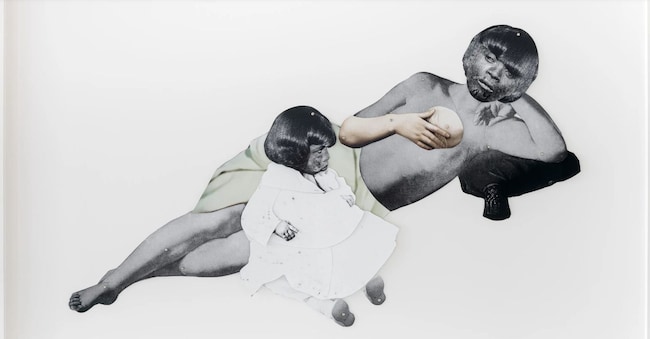
From the idea of the 'strong woman' to the role played by art education in women's emancipation; from women artists' self-representations through self-portraiture to the way they redefined their role from muse to creator; from women's surrealism to art as a tool for sexual liberation; from the redefinition of motherhood beyond clichés to the actual contribution of women artists, and women in general, to wartime society, and the idea that much of anonymous creation should probably be attributed to women.
Women tell their stories
Within this high-impact curatorial journey, Gingeras compares works created in different eras, with different techniques and styles and by artists from disparate regions of the world and with different backgrounds. The result is a universal statement as much as a personal obsession; an exhibition that appeals to the general public as much as a source of debate among professionals; a project as rigorous as it is playful. Within such a complex event of curatorial strength and ambition, it is worth highlighting a few moments, also to highlight artists we should keep an eye on.
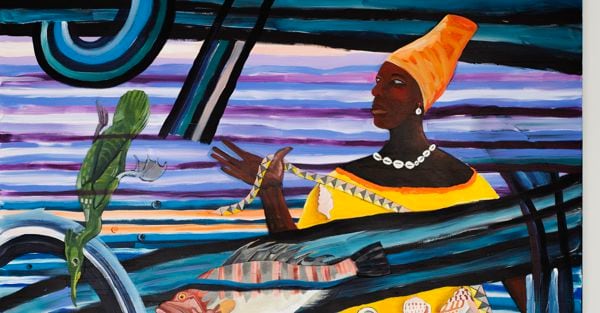
The first work presented in the exhibition is by Lubaina Himid (b. 1954), whose artistic practice explores themes of identity, colonialism and power through brightly coloured paintings and installations made of silhouettes and found objects. A pioneer of the British Black Arts Movement, Himid - who will represent Britain at the upcoming Venice Biennale - uses colour and narrative to give voice to unacknowledged stories.

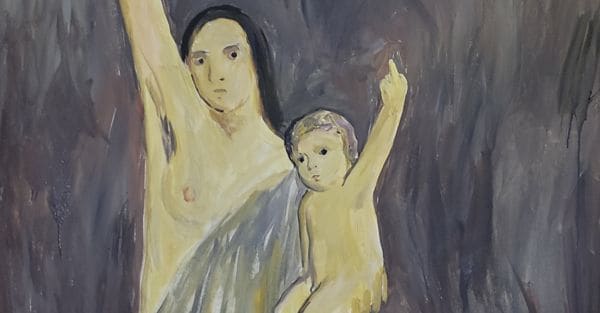
The work of Swiss artist Miriam Cahn (b. 1949), displayed next to Artemisia Gentileschi's masterpiece 'Susanna and the Elders' (1610), sets the tenor of the entire exhibition. Cahn's figurative paintings are incisive and often even violent; the artist reinterprets genres from art history such as the nude and the portrait in a unique way, while also recalling the style of children's drawings.
-U41135432357Nxa-600x313@IlSole24Ore-Web.jpg)