
The Wonder: a cinematic journey into wonder and the female word
An independent documentary that, through seven women, rediscovers the beauty hidden in the ordinary with poetry, silence and evocative black and white photography
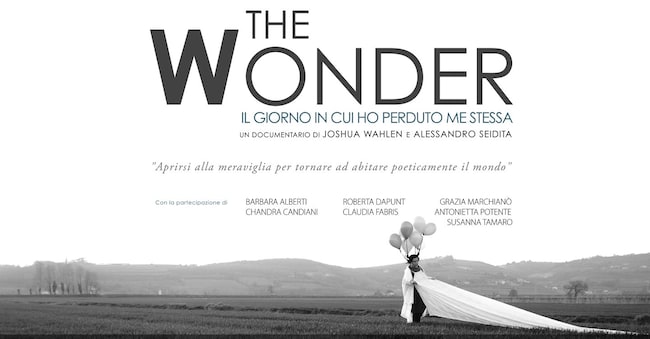
Can wonder be the key to experiencing a deeper connection with life? This question is the starting point for the new cinematic journey of Joshua Wahlen and Alessandro Seidita, a proven pair of filmmakers particularly accustomed to using documentary film to express their artistic point of view. Eight years after their successful and much appreciated Voci dal silenzio, in which they illuminated the singular experience of some hermits around Italy, they are back with another independent work, financed - like the previous one - by crowfunding, i.e. "from below" (i.e. from a community of 200 small producers), this time inspired by the words and profound reflections of seven 'special' women in search of wonder, understood as a force capable of giving meaning even to the most ordinary aspects of everyday life, to rediscover a more conscious and profound way of inhabiting the world.
The writers Barbara Alberti and Susanna Tamaro, the poets Chandra Candiani and Roberta Dapunt, the theologian Antonietta Potente, the artist and performer Claudia Fabris and the orientalist Grazia Marchianò are the protagonists of this journey in which we speak of words and poetry, of nature, of inspiration, of contemplation, of silence, of life and death, of body and soul, of matter and spirit in a kind of dance accompanied by beautiful black and white photography that ranges from seas to mountains, from desert to snow, to water, to the enchantment of nature, flowers and woods, composing a veritable visual poem.
"We wanted cinema to return to being a rite of contemplation, a space where image and sound could breathe together," explain the two authors, emphasising that "The Wonder is a eulogy of the fragility that runs through life, but also a journey to rediscover the value of wonder and the purest beauty that hides in the folds of the ordinary". Themes that do not usually find space in the mainstream, but which the authors can explore, precisely, thanks to a choice of cinema that comes to life, in a way, from a virtual community that becomes real.
A key to the interpretation of this work can already be found in the words of St. Teresa of Avila that counterbalance the title: "The day I lost myself", a clear invitation to emancipate oneself from an individualistic perspective and to return to looking at the human being as part of the web that binds all living (and non-living) species within a larger, interdependent system.
A choral testimony
The testimonies of the women protagonists of the documentary, interwoven here and presented in choral form, invite us to build relationships based on listening; they encourage us to broaden our horizons of meaning and to observe what surrounds us with new eyes; they exhort us to keep our thoughts and words intact, to reconsider the simplest and most immediate elements of our lives as inexhaustible sources of meaning. Their own stories tell of the courage of knowing how to pursue a dream, an ideal, an inner voice.


