2026 World Cup

A World Cup of records: unprecedented figures, crowds and spectacle

From stadium attendance to television viewing figures, from digital engagement to the economic and social impact, the group stage of the North American tournament has set an impressive series of records.

 IMAGN IMAGES via Reuters

4' min read

Translated by AI
Versione italiana

4' min read

Translated by AI
Versione italiana

The 2026 FIFA World Cup will go down in history not only for its new 48-team format and for being jointly hosted by the United States, Canada and Mexico, but above all for having redefined every measure of greatness in world football. From stadium attendance to television viewing figures, from digital engagement to economic and social impact, the North American tournament has set an impressive series of records.

Stadiums: nearly five million spectators

The group stage attracted 4,644,549 spectators, with 99.7 per cent of available seats filled and an average of 64,508 people per match.

Loading...

This figure smashed the previous attendance record set in the USA in 1994, when total attendance stood at around 3.5 million. Even more impressive was the international nature of the event: fans from 210 countries and territories attended at least one match in the tournament.

On 25 June, a new all-time record for daily attendance in the history of the World Cup was set: 426,834 spectators watched the matches played that day.

Furthermore, no fewer than eight matches attracted more than 80,000 spectators, confirming the ability of North American stadiums to host mass events on an unprecedented scale.

The rush for tickets

Of the 104 matches scheduled, the ones most requested by fans were: Portugal v Colombia in Miami; the World Cup final in New York/New Jersey; and Mexico v South Korea in Guadalajara.

The ten countries with the highest number of tickets purchased were: the United States, Canada, Mexico, England, Germany, Colombia, Brazil, Argentina, Australia and France.

A perfect snapshot of the event’s global reach.

Fan Festivals: 5.5 million people celebrating

The success was not confined to the stadiums. The FIFA Fan Festivals organised in the host cities welcomed over 5.5 million visitors during the group stage alone. The daily record was set on 24 June, with a total of 527,402 visitors.

The figures for Mexico City are particularly striking: on 18 June, 201,500 people gathered there in a single day.

Also worth noting is the Fan Festival in Kansas City, which welcomed visitors from 157 different countries, whilst in Miami, during the Scotland v Brazil match, a staggering 32,000 beers were consumed in a single day.

Canada discovers the global craze

One of the most successful side events was “Canada Celebrates”, the travelling programme that followed the World Cup from coast to coast. The event has already attracted 94,250 fans at 22 of the 40 planned stops, featuring big screens, sporting activities, concerts and cultural events.

The aim was to reach every Canadian province and create the biggest football celebration the country had ever seen.

The World Cup soundtrack

Music also achieved extraordinary figures. The official World Cup album had been streamed over 374 million times by 22 June. The tournament’s theme song, “Dai Dai” by Shakira and Burna Boy, reached second place in Spotify’s global Top 50 and fifth place in the global Shazam chart.

For the first time in history, a FIFA soundtrack has entered the Billboard Top 200 Albums chart, reaching number 152.

On YouTube, IShowSpeed’s “Dai Dai” and “Champions” have topped the global music video charts, helping to push the FIFA channel past 30 million subscribers.

Television records around the world

Never before has the World Cup been watched on television as much as it was in 2026. The opening matches in the three host nations attracted a total of over 50 million viewers across Canada, the United States and Mexico.

In the United States: Mexico v South Africa was the most-watched opening match ever broadcast in English, with 7.2 million viewers; Brazil v Morocco attracted 10 million viewers, setting a record for a group stage match not involving the US national team.

In Canada, the national team’s first-ever World Cup victory attracted 5.3 million viewers, making it the most-watched match ever in the country.

In Brazil, the match against Morocco attracted an average of 28.9 million viewers, reaching 49.9 million unique users across Globo’s platforms.

In China, after just 41 matches, the tournament had already attracted 205 million unique viewers, with the Tunisia v Japan match drawing 24 million viewers on its own.

Beer, hot dogs and pizza: flavours from around the world

The World Cup also saw huge figures in the food and drink sector.

During the group stage, the following were consumed: 2.8 million beers; 300,000 hot dogs; and nearly 1 million bottles of water.

If laid out in a row, the hot dogs purchased would stretch for about 45 kilometres.

The food on offer varied depending on the host country: Canada: beer and crisps; the United States: hot dogs; Mexico: pizza and chips.

Digital: 17 billion impressions

Whilst the stadiums were sold out, the real boom took place online.

The digital figures are impressive: 130 million unique visitors to FIFA.com (+26% compared with Qatar 2022); 30 million users on the official app (+130%); 39 million new followers on social media; 17 billion impressions; 1 billion interactions; 11 billion video views.

TikTok was the dominant platform: 16 million new followers for FIFA; a rise of over 300 per cent in ‘World Cup’ searches in the United States.

The most-viewed content was Lionel Messi’s goal against Algeria, which racked up 53 million views on the platform.

An army behind the tournament

To stage the biggest World Cup in history, an unprecedented organisational effort was required.

The figures speak for themselves: 645 FIFA operational bases set up; 5,020 official transfers; 4,738 staff members from 134 different countries; over 20,000 security personnel; 265,369 shifts worked.

The volunteers: the heart of the event

A total of 40,050 volunteers were involved during the group stage. Coming from 162 countries and territories, they were one of the most tangible examples of the tournament’s international spirit.

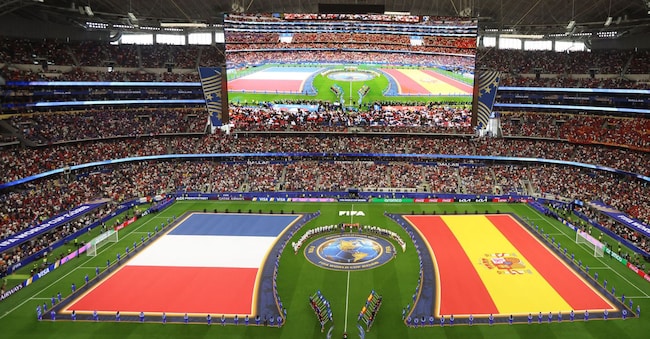
A further 10,000 volunteers helped with the pre-match ceremonies, including the spectacular display of the giant national flags, each measuring around 200 square metres.

Record-breaking media and communication

The group stage was covered by 5,230 accredited journalists from all over the world, with an average of 445 media representatives per match.

FIFA also organised 218 official press conferences.

The best-selling jumper

On the commercial front, the most successful kit was Mexico’s. Adidas reported tournament-related sales in excess of 1.13 billion dollars, confirming the World Cup as one of the most significant commercial events in sporting history.

Copyright reserved ©
Loading...

Brand connect

Loading...

Newsletter

Notizie e approfondimenti sugli avvenimenti politici, economici e finanziari.

Iscriviti

Tutto mercato WEB