
The Young Berlusconi, the docuseries arrives on Netflix amidst testimonies and previously unseen images
Three episodes lasting 50' each, no narrator, but witnesses, capable of confidences and unpublished anecdotes. In addition to the interviews, the series, to be released in Italy on 11 April, is made up of archive material, some of it unpublished or rare. And it recounts Silvio Berlusconi's success from his beginnings as an entrepreneur to the invention of commercial TV in the mid-1970s up to the political elections of '94
3' min read
Key points
3' min read
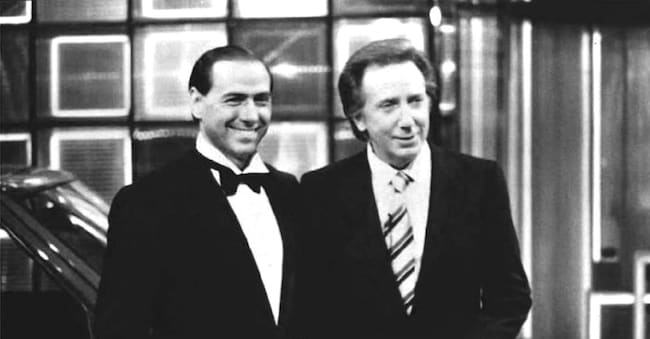
In the first images of the trailer we see a very young Berlusconi interviewed by Mike Buongiorno who asks him: 'You do a lot of things well, distribution, publishing, cinema, football, construction, how do you do it, I don't know, but has it never occurred to you to go into politics? Dry replied: 'I am a man of doing, so what I do well is being an entrepreneur'. Netflix recounts 'The Young Berlusconi' in a docuseries to be released in Italy on 11 April on the streaming giant (and to follow in many other countries starting with France, Germany and Austria where it will be broadcast by Zdf Arte and Orf) directed by Simone Manetti. The docuseries is a B&B Film production in co-production with the German production company Gebreuder Beetz Filmproduktion and the Franco-German broadcaster Zdf Arte, co-financed by the Lazio Region, by the Media programme of Europa Creativa, and realised also thanks to the MiC Tax Credit.
Unpublished witnesses and anecdotes
.Three episodes of 50' each, no narrator, but witnesses, capable of confidences and unpublished anecdotes. In addition to interviews, the series consists of archive material, some of which is unpublished or rare. The series uses music, archives and personal stories as key elements.
From the invention of commercial TV to the descent into the field in '94
And it chronicles Silvio Berlusconi's success from his beginnings as an entrepreneur to the invention of commercial TV in the mid-1970s to the general election of '94. Silvio Berlusconi launched himself, like many in those years, into the construction business. He built Milano 2, a futuristic new town surrounded by greenery, where, to avoid the forest of antennas on the roofs, he planned, for the first time in Italy, to wire the entire town with coaxial cable. And so it was that, in 1974, a television was born in a basement at the service of the residents who could follow mass, condominium meetings, their children's sporting activities and the advertisements of the shopkeeper next door. Nobody would have imagined that TeleMilanoCavo's condominium television would soon turn into one of Europe's largest private TV groups.
The fundamental role of advertising
.Berlusconi sniffs out the bargain: private television is the business of the future. He wants lively, colourful but at the same time reassuring programmes, and advertising must be its soul. Rai's monopoly is circumvented by Berlusconi's so-called 'pizzone', a tape recorded with programmes and advertisements that is delivered to all the stations, scattered throughout the country, affiliated with Canale5, which has now replaced TeleMilano. With this rudimentary yet ingenious ploy, a small local television station in Milan managed to make its voice heard throughout Italy and sell lots and lots of advertising.
A TV that speaks to the consumer and advertisers
.And so, during the bloody tail end of the years of lead, Berlusconi makes television viewers dream, recounting an Italy that does not yet exist, but which will be revealed shortly afterwards. Entire generations grew up in front of the Fininvest group's television screens, which aired tele-quizzes, soap operas, American TV series, Japanese cartoons, football, comedy programmes. Berlusconi spoke to the consumer and advertisers, while state TV addressed the citizen: from this moment on, the boundaries between the two worlds became blurred, Berlusconi's communication shaped a new audience, which would soon become the electorate.

