
Theatres: a wave of strikes and protests over pay rises
Barring any last-minute agreements, La Scala’s staff have confirmed the strike on 20 October. Live performances will be suspended on 27 October

There is a common thread linking Italy’s motorways and theatres at the moment. The main news stories concern the protests by lorry drivers and farmers, whose demonstrations have also brought the movement of goods along the country’s roads to a standstill.
But there is another group of workers who, over the past week, have begun to make their voices heard by stepping – as the saying goes – into the limelight. These are workers in the live entertainment sector, who are calling for the renewal of their national collective agreement (which expired in 2021) and, in particular, a pay rise commensurate with the increases in the cost of living in recent years – driven above all by those very same rises in energy and fuel prices against which hauliers and farmers are protesting.
The protest at La Scala in Milan
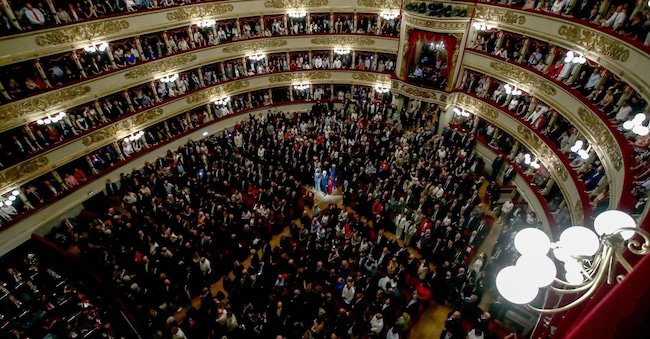
Distinct yet similar is the mobilisation of the staff at Italia’s most prestigious theatre, La Scala in Milan, who, having declared a state of industrial action on 7 October, have announced and confirmed (despite meetings held with the management) a 24-hour strike on Tuesday 20 October, putting the premiere of *Faust* – Charles Gounod’s opera conducted by Daniele Rustioni – at risk; in this case, the performance would be postponed to 24 October. At the Piermarini Theatre too, the protest concerns the renewal of the single collective agreement which, given La Scala’s managerial autonomy, differs from the national one and applies only to La Scala’s staff.
But the point remains the same: according to the trade unions, the negotiations with the superintendent failed to provide adequate responses to the first point of their platform, namely a 15 per cent increase in gross annual salary for all staff, with effect from January 2027: ‘a non-negotiable demand for the recognition of the value of the work, the professional skills and the daily contribution of all staff to the prestige and smooth running of La Scala’, reads the joint statement issued by the trade unions following the meeting on 12 October. Nor have subsequent meetings broken the deadlock: ‘Whilst we appreciate the openness shown by the superintendent regarding inflation adjustments, there has been no concrete progress on the financial demands set out in our platform,’ reiterated the workers’ representatives, confirming the strike on 20 October and also announcing demonstrations and protest vigils.
General strike on 27 October
A general strike by theatre sector employees has instead been called for 27 October; their national collective agreement was last revised in 2018 and has effectively been in force for nearly nine years. According to the trade unions, Federvivo (the umbrella organisation for theatres) has responded ‘with financial proposals that are wholly inadequate, failing even to make a dent in an inflation rate which, during the period without a collective agreement, has reached 23 per cent’.

