
Teca is born, teleconsultation with specialists to support hospitals in Africa
A team of professionals from Genoa will work remotely with doctors on the ground. It starts with the Saint Luc hospital in Central Congo

Key points
Creating a structured specialist teleconsultation unit capable of offering clinical and scientific support, at a distance, to doctors working in African hospitals and health centres, particularly in the Democratic Republic of Congo and Uganda. This is the aim of the Teca project, an initiative presented yesterday evening and promoted by the University of Genoa, in cooperation with the non-profit organisation Doctors in Africa and the Genoa Medical Association.
The plan to set up the interdisciplinary teleconsultation network for health cooperation in Africa (Teca, in fact) stems from the concrete request for support made by a number of Doctors in Africa's partner health facilities, which operate in contexts characterised by limited resources, logistical difficulties and not always continuous access to specialist expertise.
University of Genoa, non-profit organisation Doctors in Africa and professional order
'The initiative,' explains Edoardo Berti Riboli, professor emeritus of the University of Genoa and president of the non-profit organisation, 'was created to offer remote clinical consultancy to colleagues working in complex healthcare situations, through a group of Genoese specialists belonging to the university and the Order of Physicians, who will meet fortnightly'. Telemedicine, continues Berti Riboli, 'is certainly nothing new: others have used it and are using it, for example the Sant'Egidio community and the Gaslini hospital. In this case, however, it is not a single doctor, specialised in a particular field, who gives his support remotely, but a group of specialists who meet every fortnight and tackle, as a team, the cases that are submitted to them. To start with, we have set up a multidisciplinary teleconsultation unit, promoted by Doctors in Africa, to support the Saint Luc hospital in Central Congo'.
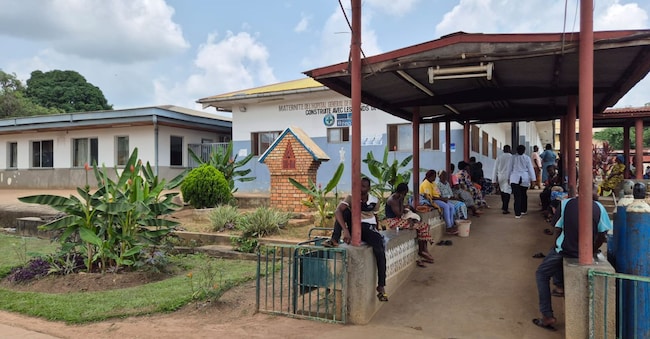
Situated near Kisantu, a remote area of the African province, the hospital is a landmark health facility for the area; it is an organised structure, with 350 beds and a fundamental role in local care, but with a limited number of specialists: the 18 doctors currently on duty are mainly generalists, with the exception of the radiologist and the anaesthetist. It was precisely from this situation that the need emerged to offer systematic support for the management of complex clinical cases, from differential diagnosis to therapeutic approach and follow-up.
Clinical expertise to make up for lack of advanced diagnostics
'Many African hospitals,' explains Berti Riboli, 'do not have the diagnostic equipment that is commonplace for us in Italia. In particular, the Saint Luc hospital does not have instruments such as CT, MRI or endoscopy. This means that, the specialist called upon to give an opinion, has to work in conditions very different from the usual ones: it is like taking a leap back several decades, going back to a medicine based above all on clinical observation, anamnesis and the symptoms reported by the patient. For this reason, teleconsultation requires a significant commitment from our specialists: they cannot rely on the support of advanced diagnostics and must rely on their own experience, clinical expertise and ability to guide therapeutic decisions even with limited resources'.


