
Theft, arson, the felling of centuries-old olive trees: intimidation has not deterred Patrizia Rodi Morabito, a farmer in Rosarno
Winner of the Lea Garofalo Prize in 2024, she is working to secure a future for her estate by following Pierre Rabhi’s methods: biodynamics and ‘sobriété heureuse’

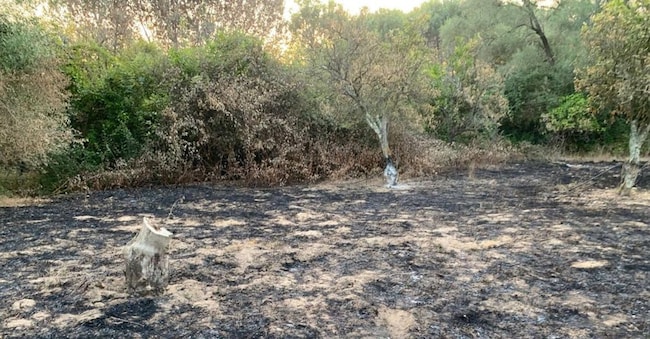
She herself does not even know how to describe what is now happening with some frequency on her estate, Tenuta Badia – 60 hectares of citrus and olive groves in Rosarno: intimidation, reprisals, attacks? Patrizia Rodi Morabito, a farming entrepreneur in a fertile and lush part of the Gioia Tauro Plain – though plagued by gangmasters and various forms of crime – moves with a quiet, measured step. She is cautious when recounting the harassment she endures on the land her father handed over to her 14 years ago: olive trees cut down, kiwi and pomegranate plantations set alight, and thefts of hundreds of kilograms of citrus fruit and equipment. Three fires in the last month. “And that’s just to mention the most striking incidents,” she explains. “Who started them? I don’t know. No one has claimed responsibility,” says the Rosarno-based businesswoman. She is tired but she is not backing down.
Starting afresh from the wounds inflicted on the earth
‘They burn my kiwis? Well, I’ll reclaim the land and plant another orchard there. They cut down my olive trees, and I’ll replace them. I always start again right where they’ve caused me trouble. I start afresh from the wounds inflicted on my land.” And he treats the land with love and respect, following the principles of agroecology. He uses natural methods to enrich the soil, protect his crops from pests and avoid synthetic chemicals.
Pierre Rabhi’s agroecology in the Gioia Tauro Plain
Respect for biodiversity and the rights of those who work the land, in accordance with the theories of the French peasant philosopher Pierre Rabhi, of Algerian origin, which were developed on the basis of the thinking of Ehrenfried Pfeiffer, an American theosophist, and the Austrian philosopher Rudolf Steiner. Rabhi was the founder of the Colibris, a global alternative network that practises new models of society based on food sovereignty, ecology and humanism in the spirit of ‘happy simplicity’: agriculture combined with ethics. And inner ecology.
Like a Benedictine nun
‘Even this approach of mine annoys people. I adapt to the land; I support the plants as they grow ’ explains Rodi Morabito, ‘I don’t force them with chemicals; I only cut the grass when necessary, to keep the soil cooler and moister; I prune my centuries-old olive trees with great care, obtaining the necessary authorisations and awaiting the inspectors. Do they want to weaken me? Instead, I take a step forward every day. Just like a Benedictine nun.”
The 2024 Lea Garofalo Award, named after the woman who fell victim to the ‘ndrangheta and was murdered in November 2009 by her former partner, has seen the Rosarno-based businesswoman receive a string of accolades in the cause of the rule of law. These accolades act as a sort of protective barrier, bringing her work and the harm she has suffered into the public eye. It is a level of exposure that Patrizia Rodi Morabito would have preferred to avoid, but with which she must live. Even the police keep a close eye on her. Trade unions and institutions express their solidarity with her at every opportunity, standing against the logic of criminal subjugation. ‘I’m walking a tightrope. But I receive so many signs of support, so much solidarity, and I’m not afraid for myself. If anything, I’m beginning to be surprised by the relentless attacks, the incidents that keep happening time and time again.’

