
There are 236 Blue Flag beaches in Italy. Here are the new entries
Chosen on the basis of 32 parameters of the Foundation for Environmental Education. Liguria, Puglia and ex aequo Campania and Calabria on the podium
by Enrico Netti
 Aggiungi Il Sole 24 Ore
ai preferiti su Google
4' min read
Key points
4' min read
There are 236 seaside resorts in Italy where the 'Blue Flag' will fly this year, while there are 485 beaches that have been classified as 'excellent' for four years in a row, accounting for 11.5 per cent of those awarded worldwide. On the other hand, the number of tourist landing places that have been awarded international recognition by the Fee (Foundation for Environmental Education) on the basis of 32 programme criteria has dropped from 84 to 81. On the podium is Liguria, which marks two new entries but loses two flags, thus confirming 34 locations; Puglia rises to 24 with three new municipalities and one exit, while Campania and Calabria follow at par with 20 flags, with one more award each. With one new entry, Marche receives 19 blue flags, while Tuscany drops to 18, losing one municipality. Sardinia confirms its 15 locations, Abruzzo also rises to 15 with a new entry, Sicily reaches 14 flags with three new entries, Trentino-Alto Adige rises to 12 with two more municipalities, Lazio remains at 10. In Emilia-Romagna 9 localities were awarded and Veneto's 9 flags reconfirmed. Basilicata confirms its 5 localities, and always 5 are the municipalities in Piedmont that obtain flags. Lombardy confirms 3 municipalities, Friuli-Venezia Giulia maintains its 2, as does Molise. On the lakes, there are 23 Blue Flags this year, with 2 new entries.
The new entries
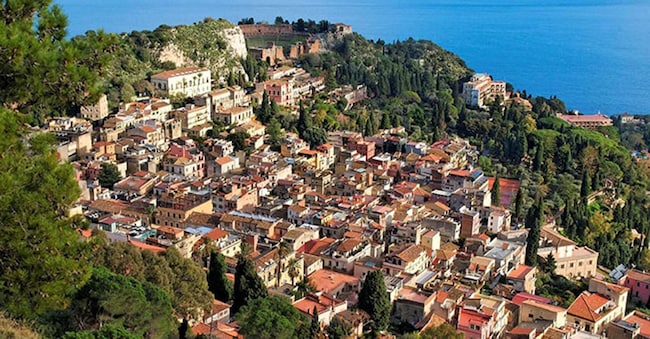
.In total there are 14 new entries: Ortona (Abruzzo), Parghelia (Calabria), Cellole (Campania), Borgio Verezzi (Liguria), Recco (Liguria), Porto Sant'Elpidio (Marche), Lecce (Puglia), Manduria (Puglia), Patù (Puglia), Letojanni (Sicilia), Scicli (Sicilia), Taormina (Sicilia), Tenno (Trentino Alto Adige), Vallelaghi (Trentino Alto Adige). Four municipalities were not reconfirmed: Ameglia (Liguria), Taggia (Liguria), Margherita di Savoia (Puglia) and Marciana Marina (Tuscany).
At today's Blue Flag award ceremony at the CNR headquarters in Rome, in the presence of mayors and the Minister for Civil Protection and Sea Policies, Nello Musumeci, the president of the Fee Italia Foundation, Claudio Mazza, stressed that the number of flags is increasing, "but what is growing is above all the sensitivity and awareness of citizens, to whom the credit for this recognition goes. Every Blue Flag administration knows that virtuous management of the territory also necessarily passes through training and the involvement of individuals, schools, associations, local activities, and all operators". And indeed, great emphasis is placed on the land management implemented by municipal administrations that are also aiming for the Blue Flag to promote their territory in terms of tourism. The Programme's 32 criteria, explains Fee Italy, are periodically updated in order to encourage participating local administrations to commit themselves to solving, and improving over time, problems related to land management for a careful protection of the environment. In the evaluation phase carried out by the Commission according to a strict procedural scheme, several institutional bodies contributed, including the Ministries of Tourism, Agriculture, Food Sovereignty and Forestry, Environment and Energy Security; the Istituto Superiore di Sanità; the Orders of Chemists and Physicists; the National Research Council; the University of Tuscia and the University for Foreigners of Perugia; and private bodies such as the beach trade unions (Sib-Confcommercio and Fiba Confesercenti). The subsequent approval by the international jury led to the final result. The 81 award-winning berths, explains Fee Italia, demonstrate that tourist ports have consolidated the sustainability choices made, meeting the requirements for international awarding, guaranteeing the quality and quantity of services provided in full environmental compatibility. The Fee, founded in 1981, is an international non-governmental, non-profit organisation, registered as a charity in the UK and headquartered in Copenhagen, Denmark, currently present in 81 countries on five continents. The main objective of Fee programmes is the dissemination of good practices for environmental sustainability, through multiple education and training activities, with a particular focus on schools of all levels. "Our Italy is increasingly blue. With the addition of the new 2024 Blue Flag resorts, Italy rises to 485 beaches certified for excellent sea quality and good environmental sustainability practices, i.e. more than 11% of the world's award-winning beaches: a recognition that once again attests to the high level of the Italian offer in terms of ecology, services and reception - says Daniela Santanchè, Minister of Tourism - as well as being an additional ally in increasing the competitiveness, visibility and reputation of facilities and the Italian brand".
Rethinking the tourist tax
.'We need to reflect on the tourist tax, as we are already doing. First of all, we need to focus on the principle of proportionality: whoever goes to a hotel and spends 1,000 euro a night, I think it is fair that he should pay more than whoever goes to a hotel and spends 50 euro a night. So we should rethink it in these terms and in such a way as to make it a real purpose tax, so that the resources collected through it are then channelled towards improving tourist services,' Minister Santanchè said during an interview with 'Giù la maschera' on Rai Radio 1.

