
The Thessaloniki metro starts, managed by Milan's public subsidiary Atm
The new line operated by the Milanese subsidiary Atm is on its way. Meanwhile in Milan the tender dossier for the tpl is being studied for the end of 2026

3' min read
3' min read
The new metro in Thessaloniki - the second in Greece after Athens - bears the Italian signature. It is Milan's public transport subsidiary, Atm, which as of today starts operating the ten-kilometre line that will allow the city to be connected from east to west, with 13 stops.
Atm won the tender in 2023 to operate the infrastructure, for EUR 250 million spread over 11 years. The project had a long gestation period in Greece, almost 20 years between design and construction. Today the trains open to the public, and when fully operational, the expectation is that it will be able to serve 313,000 people a day, solving the mobility problems typical of the city of Thessaloniki, Greece's second largest city with 1.5 million inhabitants, unaccustomed to using public transport.
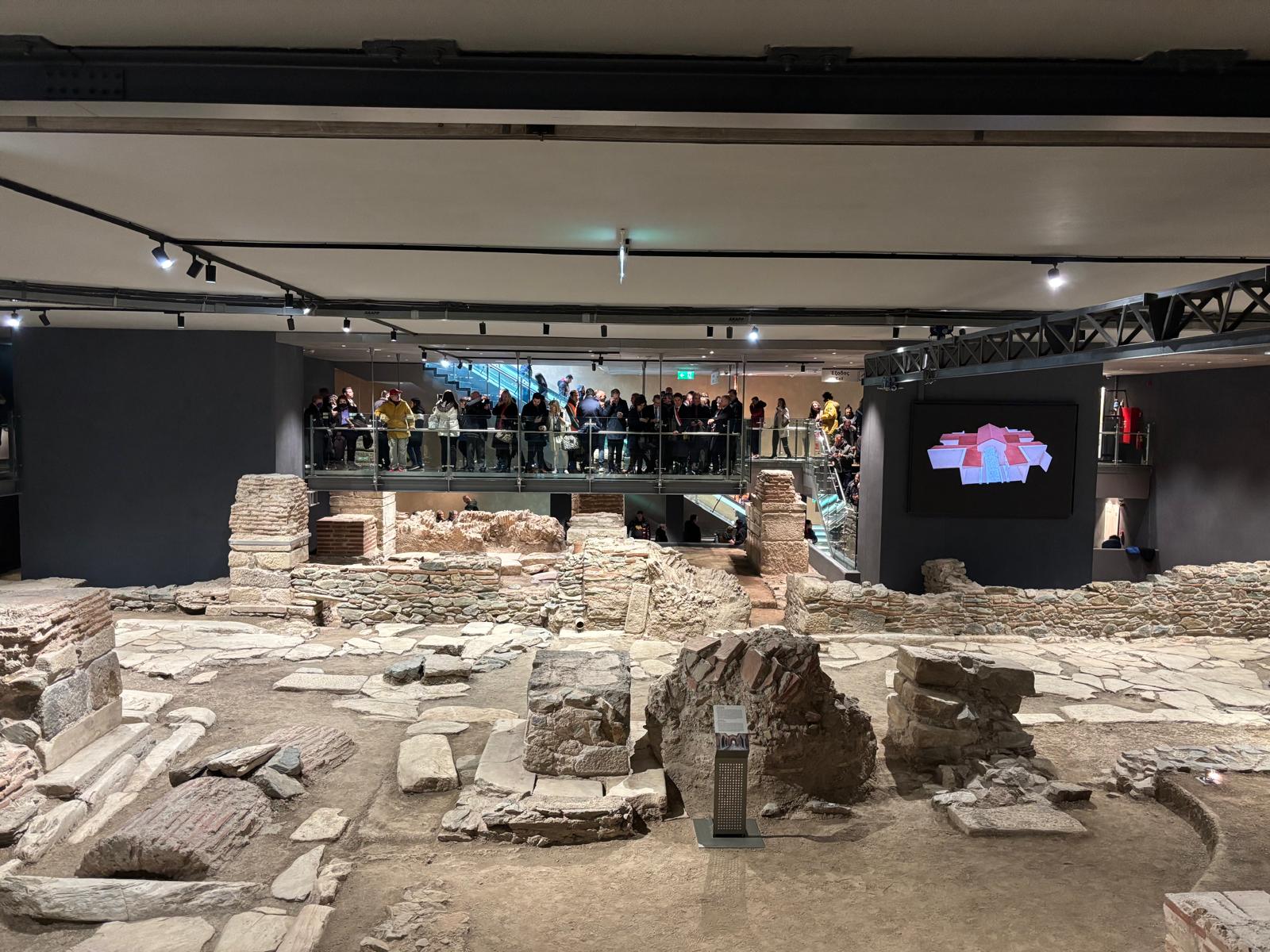
Today is inauguration day, in the presence of the main Greek authorities, including Prime Minister Kyriakos Mitsotakis and Transport Minister Christos Staikouras. From this afternoon, Greek citizens will be able to start using the line, whose peculiarity is that it is automated, without a driver, like the last ones built in Milan, but which represents an absolute novelty in Greece, towards which there was also an initial diffidence to overcome.
The management company is a newco, Thema, 51% owned by Atm and 49% by Egis, a French engineering company. Thema's CEO, Carlo Bianco, emphasised the know-how of Atm, which has already gained experience abroad in Copenhagen, where it has been managing metro lines for over 15 years. In Thessaloniki, a Milan-led training process has been carried out: the company has found mainly Greek employees, trained by Italian ones (a point of pride that has been emphasised several times is the presence of 30% women, at all levels of activity, a very high percentage compared to traditional employment in the transport sector).
Atm is meanwhile evaluating various dossiers abroad, to compensate for the loss of users in Milan (after Covid the drop is between 15 and 20 per cent) and maintain a balanced budget. In 2023, the group closed with a profit of EUR 713,000, and orders abroad are worth 11 per cent. With Thessaloniki the share will rise to 15 per cent.


