
Terzi di Sant’Agata: ‘AI, the US and Europe are now united against the Wild West. The Gigafactory presents a challenge for Italia’
The Fdi chair of the Senate’s EU Policies Committee speaks

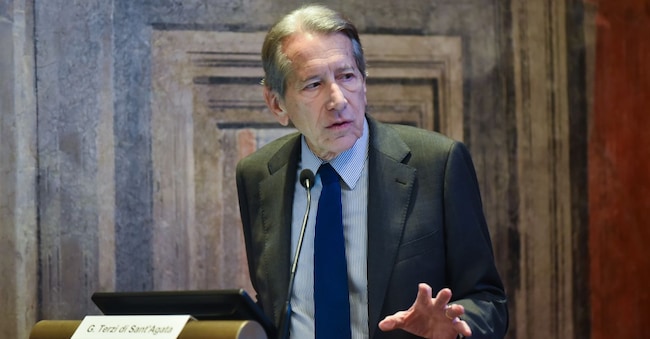
“Even the Americans have realised that there cannot be a ‘Wild West’ when it comes to artificial intelligence, because it would undermine their own national security.” Giulio Terzi di Sant’Agata, an Fdi senator and chair of the EU Policies Committee at the Senate, speaks as someone with a deep understanding of the United States: he has served as Italia’s ambassador to the US, permanent representative to the UN and foreign minister. Today, he has few doubts: “The divide between the European and US models on AI is much shallower than it appears. And the alliance with Washington is fundamental to the technological and industrial future of the West.”
On the one hand, apocalyptic predictions, on the other incidents, hallucinations, autonomous agents spiralling out of control. Are these real dangers or mere scaremongering that risks stifling investment in AI?
Artificial intelligence is advancing at an exponential rate, in terms of its power and potential impact across every sector of the economy and science. I have the distinct impression, not least from conversations I have had on both sides of the Atlantic, that there is now a shared awareness amongst Europeans and Americans of the need to regulate AI and its risks as effectively as possible. Europe has been discussing this for ten years. The AI Act has already largely come into force. And Italia was the first to take action, launching the Law 132/2025. This is the approach outlined by President Meloni and Undersecretary Butti: to play a leading role, placing the value of the human person at the centre.
A more European feel…
Reports of people escaping and incidents occurring demonstrate the validity of this approach. I see Italia, France and Germany on the same wavelength: committed to innovation, whilst upholding the need for security. Security for individuals, combating behavioural manipulation, social scoring, falsifications that violate human dignity, and intrusions into healthcare, the justice system and education. It is true that the US approach started out differently. Trump’s Executive Order of 2 June excludes prior authorisation for advanced models. But at the meeting with the CEOs of the Big Tech companies, four commitments were signed: internal controls, dedicated monitoring teams, third-party audits and independent committees. Now the Super Intelligence Force brings things full circle: it aims to ensure that the government is aware of what is happening within generative models to prevent any harm to national security.


