
Hotels, one third of turnover comes from the restaurant
A study conducted by Scenari Immobiliari explains that in Italia 40% of hotels offer a catering service also open to the external public, a segment that is worth 28% of the total turnover, generating a turnover estimated at more than 3.5 billion euro

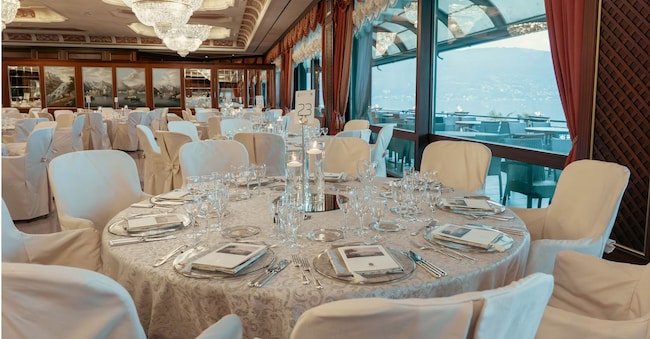
Hotel catering is now a strategic field on which brand reputation, loyalty and competition are at stake. Between hybrid formats, signature partnerships, flexible management models and new brand identities, the challenge is to make food & beverage an organic and recognisable part of the experience. All the more so now with the proclamation of Italian cuisine as a World Heritage Site. A study conducted by Scenari Immobiliari explains that in Italia 40% of hotels offer a restaurant service also open to the external public, a segment that is worth 28% of the total hotel turnover, generating a turnover estimated at over 3.5 billion Euro. The fine dining and casual dining restaurants contribute to increasing the value of the rooms and, consequently, the overall hotel turnover. As far as haute cuisine is concerned, 158 Michelin-starred restaurants are housed in hotels, representing 40% of all Italian starred restaurants. And high quality restaurants can increase the value of rooms: between 10-15% in 5-star, 8-10% in 4-star, and 2-5% in 3-star.
The central role of gastronomy
"The recent proclamation of Italian cuisine as a World Heritage Site confirms the central role of gastronomy as a cultural expression and a powerful tourist attraction," comments Elisabetta Fabri, president of Associazione Italiana Confindustria Alberghi. "Today, food & beverage in hotels is no longer an accessory service, but a strategic lever that defines the identity, positioning, and value of the structures. Global trends show that 60% of luxury travellers also choose a hotel for its gastronomic offer, particularly at key moments of the experience: breakfasts, afternoon teas, panoramic terraces that become true destinations. At the same time, almost one in five tourists travel expressly to enjoy new culinary experiences".
In this scenario, starred chefs are evolving into real brands: their presence in hotel restaurants enhances attractiveness, reputation and even room rates, transforming catering into one of the most effective competitive tools. At the same time, the most innovative concepts focus on "multi-sensory experiences, gastronomic storytelling and local ingredients," Fabri continues, "responding to the contemporary traveller's growing demand for authenticity and involvement. From sustainability to reinterpreted traditional dishes and experiential table design, f&b is now becoming the heart of the hotel lifestyle".
A creative workshop
Zacchera Hotels is cited among the hotel groups that have contributed to show how food & beverage is becoming a creative laboratory, from the innovation of the format to the integrated technologies for control and sustainability of the department, up to the attention to sustainability and waste reduction: "Our attention to the efficient management of resources," says Antonio Zacchera, CEO of Zacchera Hotels, "is a value that we have inherited and perfected over time. This commitment to sustainability was further strengthened during the 'downtime' due to the pandemic: in those difficult times, we thought positively and about the future and therefore decided to review our procedures and protocols to improve the management of our f&b departments. Since then, we have started a process of digitising all processes in order to optimise resources and reduce waste. We are now also training 5.0 cooks in our facilities.
Fabrizio Doria, chief development officer BWH Hotels Italy & South - East Europe, speaks of a significant transformation driven by supply chain quality and sustainability: "Demand is increasingly moving towards traceable products, certified suppliers and a responsible approach to procurement. In this direction, we support the affiliated structures through our group's procurement system: the central purchasing office SI Supply selects manufacturers and distributors certified by third-party bodies that document the attention paid to the entire supply chain, guaranteeing high standards and facilitating conscious and transparent choices, which are then valued towards the end customer. At the same time, the fruition model is also changing: the hotel is no longer perceived only as a place to stay overnight, but as a gastronomic experience space. This translates into an increase in external customers and a rethinking of management models. Today, different formulas coexist: in-house catering, which ensures full control of the experience, and outsourcing, which allows the integration of specialised skills and innovative formats". BWH-affiliated hotels retain full autonomy in the management of the department, "which is fostering a growing focus on more flexible formats".
For Damiano De Crescenzo, general manager of Planetaria Hotels, "what matters is to choose a format that increases the quality provided rather than optimising costs, as was often the case in the past, when hoteliers outsourced catering to relieve themselves of an economic burden". For the manager, today, if you opt for outsourcing, you have to rely on specialists with trained personnel to guarantee a better level of quality. In the case of Planetaria, however, the case is different: "We manage everything directly in our 12 hotels. We have created a culture for insiders,' says De Crescenzo, 'and we are passionate about this complex machine. An example? The breakfast must not be a simple list of products to tick off, but a care in the display, in the choice of seasonal products and must express the cuisine of the territory, the manager recalls. It is a complex job because it includes not only the management of the restaurant, but the menu change, the room service: "You have to be in charge," he maintains. For the group, food&beverage is worth, as for the national average, about 28-30% of the total turnover. Some change has also taken place in conference catering: 'We do more standing than seated service because it allows networking'.
Brand connect


Newsletter RealEstate+
La newsletter premium dedicata al mondo del mercato immobiliare con inchieste esclusive, notizie, analisi ed approfondimenti
Abbonati