This profession is like a film: great Italian design sells emotions
Total creative freedom and clear-headed managerial rationality: for Piero Gandini, leading a group with a turnover of 847 million euros and 2,000 employees is like being a film producer.

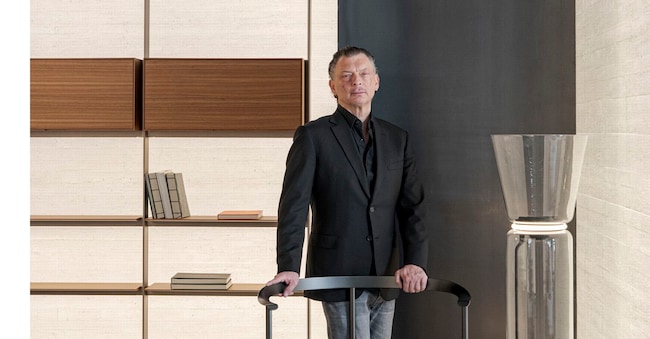
The clarity of simple things is a gift, and it often belongs to those who know their subject. The better one knows a subject, the more confidently one navigates its complexities. And if the subject is design – which means a constellation of international talent and medium-sized companies, characterised by a high level of creativity and a long history – unravelling the path forward requires clarity of thought, vision and steady nerves, all the more so in an economic climate as lacklustre as the one we are currently experiencing. Given these circumstances, spending nearly two hours in conversation with Piero Gandini is both reassuring and disarming: an injection of confidence in the belief that ‘it can be done’, without compromise and without hesitation. Perhaps it is because he literally grew up on ‘bread and furniture’ and has been in this sector for decades, but it seems that managing a giant such as Flos B&B Italia Group – with a turnover of around 847 million euros (in 2025) and more than two thousand employees – is as natural as breathing. And indeed, amidst this climate of widespread pessimism, he is a breath of fresh air.
He has held the role of executive chairman of the group for just under two years, and his business mission is clear. “We are continuing what we agreed with the investors right from the start, when we first began discussing my return. Rather than thinking in terms of a single entity, the idea is a revamping of the individual corporate identities, each within its own market and design ecosystem, refocusing industrial policies on development and positioning. These are very different companies, each with a very strong heritage and a distinctiveness that cannot be compared to the others.’ B&B Italia, Flos, Maxalto, Azucena, Arclinea, Audo, Lumens (and, until this summer, Louis Poulsen): we are talking about a piece of design history. “The business of investment funds is to buy companies and then sell them on. Our strategy is to fully realise the potential of each of the brands, creating the best conditions for growth. We will assess when and what to sell when the time is right; we have given ourselves all the time we need. This is the development phase.”
As part of the portfolio rationalisation process, the first divestment was Louis Poulsen to a Danish investment firm. ‘From a certain point of view, it was the simplest company: an iconic lighting brand, founded in the late nineteenth century, now very much focused on the B2C market. It has focused on reissues and archive pieces, with highly successful commercial decisions, and has enjoyed excellent organic growth. It is very satisfying to have found a valuable home for it by selling it to a foundation whose mission is to support Denmark’s historical heritage. The brand’s qualities and identity will be carried forward. This was the first spin-off; others will follow in due course. We are in no hurry, and the Italian brands will certainly be the last to be sold – partly because it is a pleasure to own them, look after them and promote them, and partly because they are the largest and most complex. We are on track, and everything is proceeding as planned’.
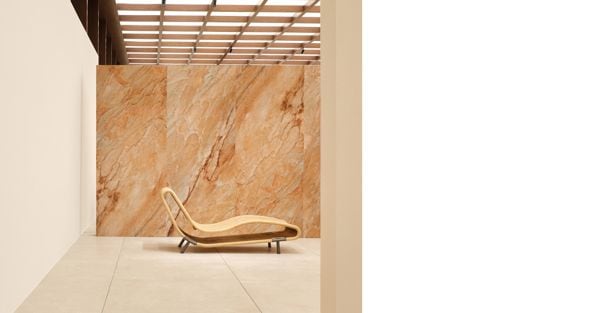
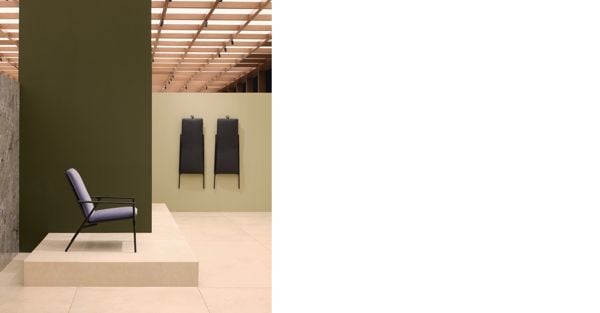
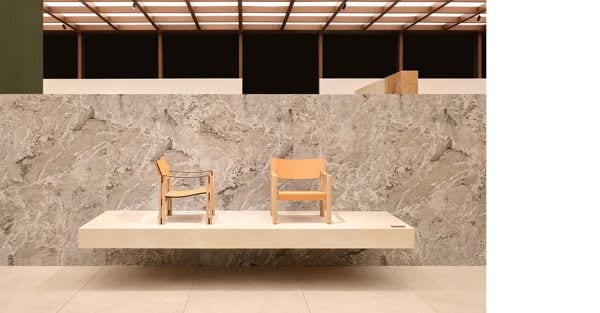
The conversation takes place at B&B Italia’s headquarters, which returned to the Salone del Mobile in 2026 after a 25-year absence: a powerful comeback both symbolically and in terms of design, brought to life through a meticulously crafted exhibition design by Formafantasma. Nothing superfluous; all attention is focused on the product, and on one product at a time. ‘Often, the dilemma in the world of furniture is whether companies should focus on product ranges or design. I don’t understand why these two strategies should be seen as mutually exclusive. In my view, if you’re B&B Italia, you cannot afford not to have design excellence. What happened in the days of Zanuso, Pesce, Bellini and Sapper must happen today with Citterio, Bouroullec, Van Duysen, Anastassiades and all the others. The impact of narrative has grown enormously in our sector, which is an adaptation to the times. We are all fed, every day, by an immense quantity of images (it is no coincidence that the younger generations have a much more developed and sophisticated visual culture than ours). But if narrative ends up mattering more than the product itself, then we have a problem.”
The reasoning is as sharp and straightforward as the geometric lines chosen for the company’s new direction, including in its communications. “B&B Italia was a company that made courage and vision – an almost utopian vision – the cornerstone of its culture. I am convinced that Piero Ambrogio Busnelli made most of his decisions on gut instinct (and I confess that I feel very much the same!). After all, how could he not? When you have Zanuso bringing you the vision of a ‘Lombrico’ (the sofa that B&B Italia put into production in 1967) or Pesce bringing you the ‘Up’ series (including the famous ‘Up5_6’ armchair designed in 1969): these are flashes of inspiration that strike at people’s imagination, emotions, curiosity and desire. That sort of thing shaped Italian design; it is to the drive of those entrepreneurs that we owe the standing and reputation of ‘Made in Italy’ today’. The strategist’s rationality has given way to a vehement and cheerful passion; the English terms that accompanied the economic analysis have been replaced by lively gestures and an expressive concreteness that uses words as if they were a tangible material. ‘In Italia, we have a value chain that no one else possesses: our artisans, the way we know how to make products, the presence of so many agile companies, and the supply chain network that feeds off one another. Added to this is the habit, developed quite early on, of working with international creatives. We mustn’t forget who we are and where we come from. I don’t know of any genuine design companies that are marketing-oriented; they’re product-oriented. We Italians are all – or almost all – out there trying to make the best product in the world!” Beyond business? “No, within business. Managing creativity is fundamental. On the one hand, I keep pushing our teams and designers to express the freest and most poetic creative impulse. On the other hand, you have to take a step back and assess which products to bring to market, in which and how many finishes, and how to organise the range. Ours are businesses; optimising and streamlining processes means achieving financial results. This leads to greater investment capacity and therefore greater flexibility.”