How humanoid robots will transform the car industry
Numerous manufacturers are testing humanoid robots for use in repetitive tasks. BMW, one of the first to use them, has admitted, however, that they are slower than human workers

Key points
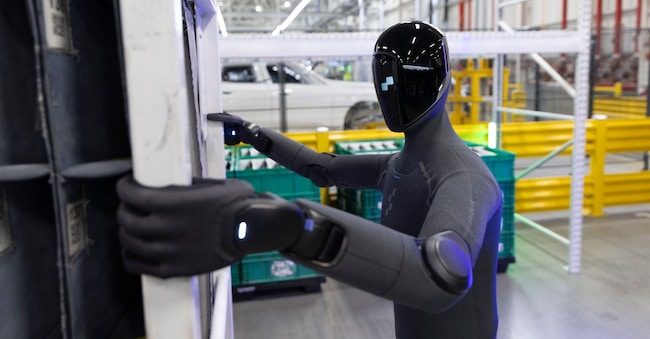
Humanoid robots are set to revolutionise car manufacturing, taking on monotonous tasks without breaks, benefits and, above all, operating 24 hours a day. Not to mention that robots offer precision and stability that can reduce – or even eliminate – the rate of defective products. This is particularly true for welding and painting processes, though not limited to these. The initial investment in robots will, however, be high – particularly for small and medium-sized enterprises – and this must be added to the costs of maintenance and upgrades, which are also significant. BMW was among the first to recognise that robots would represent the future of car manufacturing, but other manufacturers are also testing them, including Mercedes, Hyundai, Tesla, GM and even Renault.
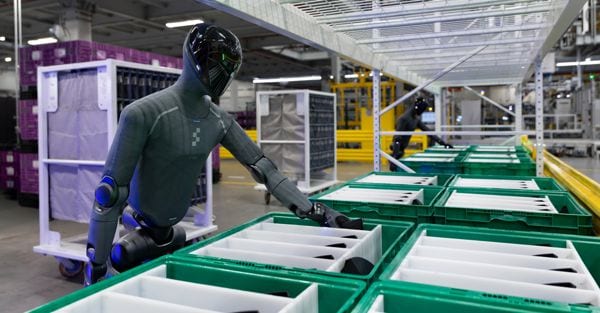
BMW robots tested at the US factory
The humanoid robots from the Munich-based brand are manufactured by Figure AI and have been undergoing testing for months at the American factory in Spartanburg, South Carolina, in the US. They are used to move components from containers to trolleys. As well as being able to walk, grasp parts and pull trolleys – and although they are, for the time being, a little slower than humans – they will improve as their development continues at an ever-increasing pace. BMW is not the only company to believe that robots represent the future of car manufacturing. Mercedes and, above all, Hyundai are also working on this; Hyundai, in fact, decided some time ago to acquire the specialist firm Boston Dynamics.
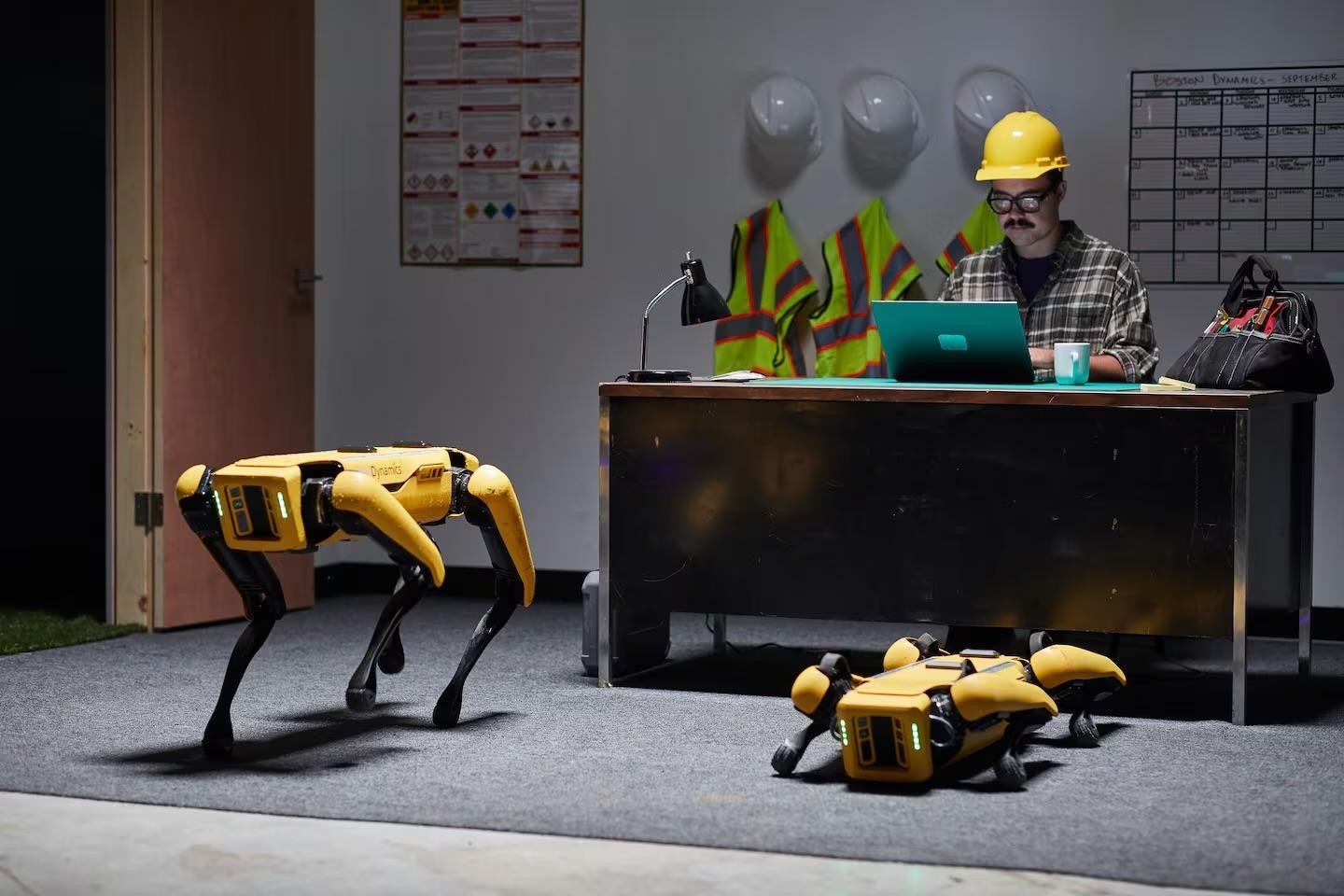
Hyundai and Boston Dynamics
Mercedes is testing humanoid robots called Apollo, developed by the US firm Aptronic and designed to sort and handle components for the brand’s cars. Hyundai takes a different approach: for robotics in general, it relies on Boston Dynamics, a company acquired by the Korean brand which offers an advanced range of robotic solutions – including industrial, humanoid and service robots for the automotive sector – using robots to organise parts for assembly by workers. Added to this is Tesla, which has, from the outset, regarded the production of its Optimus robot as more strategic, to the extent that it considers it far more relevant than an affordable car.
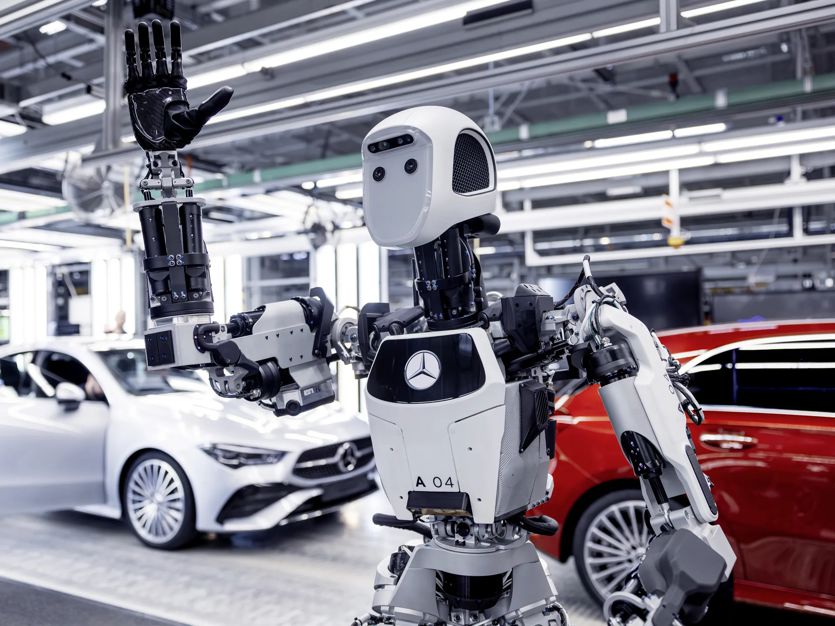
Tesla considers Optimus to be more strategic than a car
Elon Musk believes, in fact, that the Optimus humanoid has truly enormous potential, particularly in business terms, envisaging applications for it that go far beyond car manufacturing. It is no coincidence that Tesla, having recently halted production of the Model S and Model X, has freed up a large part of its factory in California specifically for the production of Optimus. By shelving – or perhaps scaling back – the project for an affordable model such as the eagerly awaited Model 2 – which was due to be available at a price of $25,000 – the company is focusing decisively on both autonomous vehicles and, above all, robotics, which will be available on a large scale over the course of the coming year.
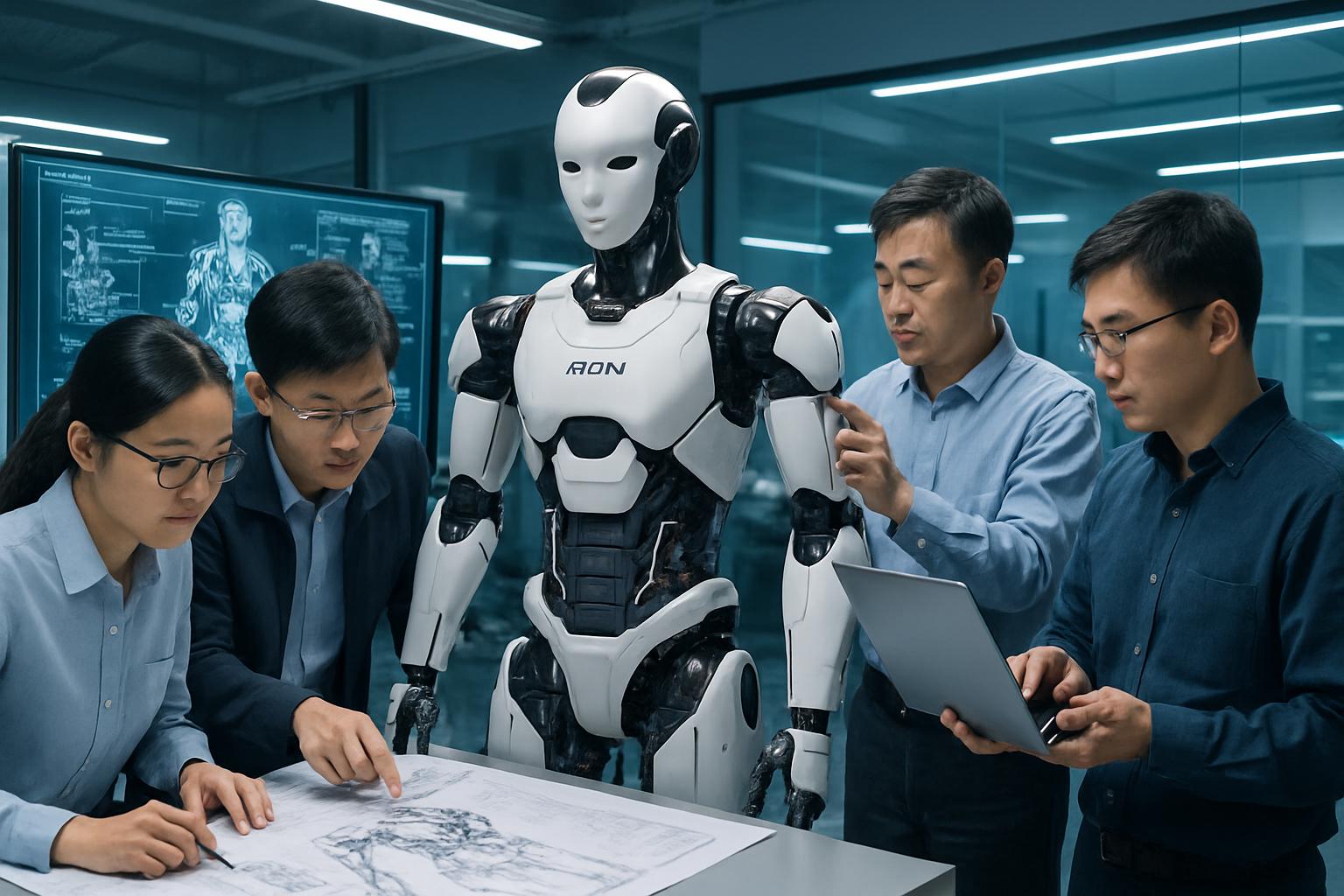
Human-like robots with hands, legs and a head
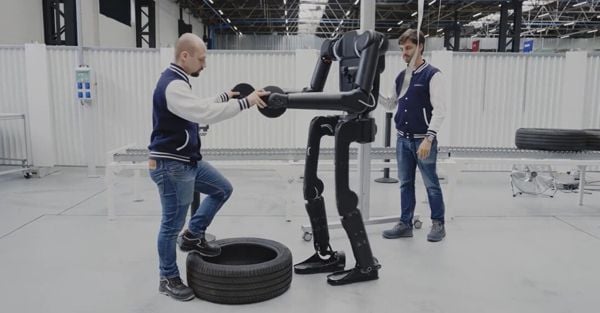
There is currently a marked disagreement that calls into question the use of humanoid robots. Resembling humans may be the smartest way to automate car factories. GM, in this regard, is taking a different approach: experimenting with collaborative robots that do have arms and hands, whilst abandoning the idea that its humanoids should move like real people. Furthermore, GM states that whilst hands are useful inside factories, it is unclear whether legs are. Another brand, Renault, has recently unveiled a headless robot. In short, if the aim is to transform the car industry, certain excesses will need to be overcome.