Theatre

Thomas Bernhard in the round

The Burgtheater in Vienna offers stage adaptations of two crucial novels
by Flavia Foradini

3' min read

Translated by AI
Versione italiana

3' min read

Translated by AI
Versione italiana


Thomas Bernhard is now a classic of post-war European literature, both in prose and theatre. After a long phase in which he was labelled a 'muddier of the fatherland', he now enjoys a privileged place in the playbills of major theatres as well as in bookshops. For some time now, not only in Austria has the focus been on his production, but also his novels, which have a theatrical quality and are at their best when read aloud or recited by a professional, capable of giving the right emphasis to the Austrian author's often interminable and articulate sentences.

Loading...

The 2025-26 season at the Burgtheater sees new adaptations of two pivotal novels, which will remain in the repertoire until at least the summer.
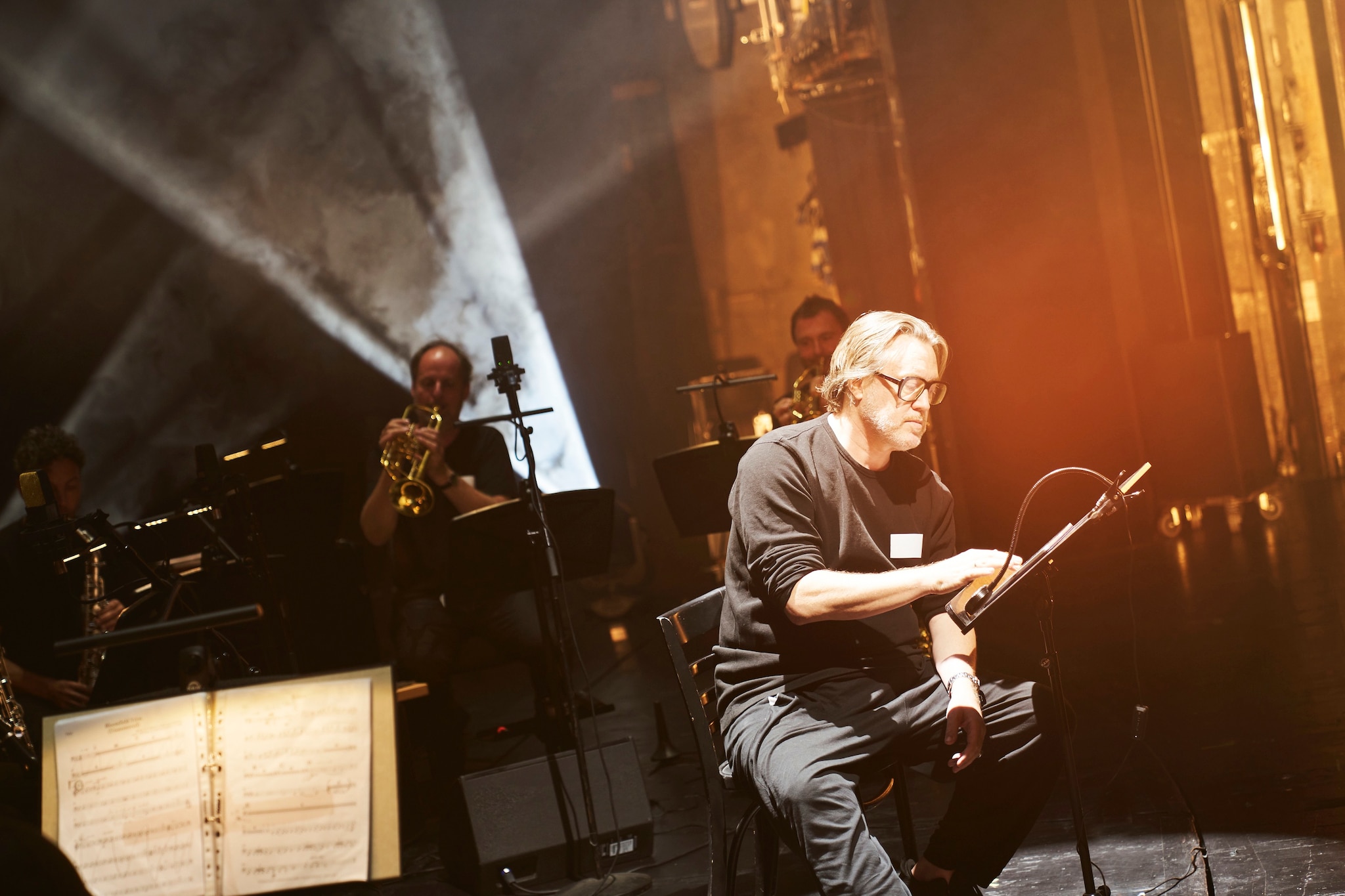
Nicholas Ofczarek


Extinction

'Extinction. A Devastation' (Auslöschung. Ein Zerfall) is Bernhard's last novel, published in 1986 but written in the early 1980s. The focus is the small village of Wolfsegg in Upper Austria, where the protagonist, intellectual Franz-Josef Murau, returns for the funeral of his parents and brother, who died together in an accident. He now lives in Rome and that unexpected journey to the places of his childhood is a difficult descent into hell, into family constellations and conflicts that are as intricate as they are unbearable, and into a past of his parents' connivance with Nazism. When the telegram from his two sisters reaches him with the news, from the desk drawer of his flat overlooking Piazza della Minerva, Murau pulls out photographs of his deceased relatives and plunges into memories. And when he arrives at Wolfsegg, those memories reveal themselves to be a painful, enduring reality. The funeral ceremony, in keeping with the family's economic affluence and social pre-eminence, will turn into a showcase crammed with hypocrisies, starting with the arrival of Spadolini, an unscrupulous archbishop but above all now his mother's former lover.
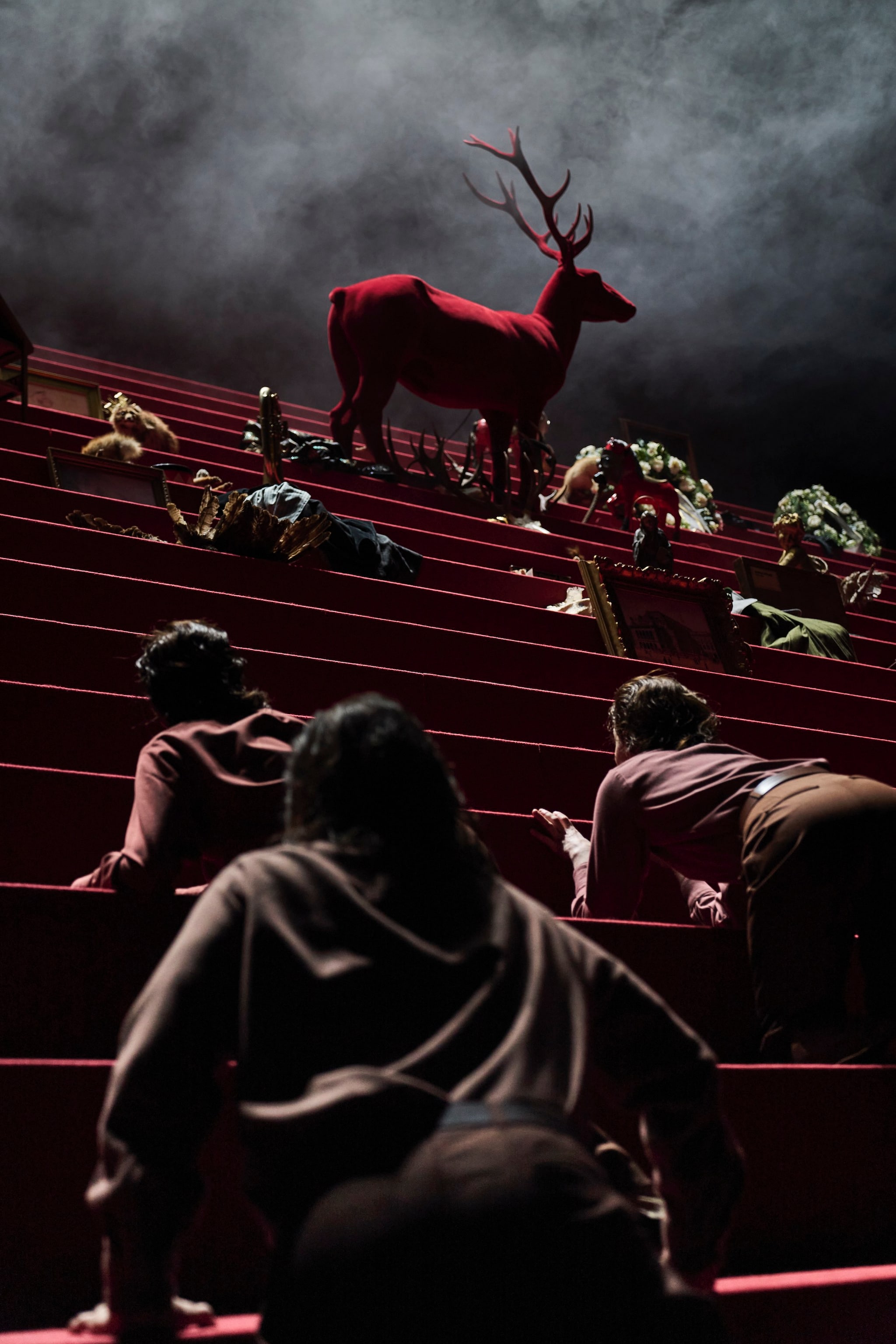
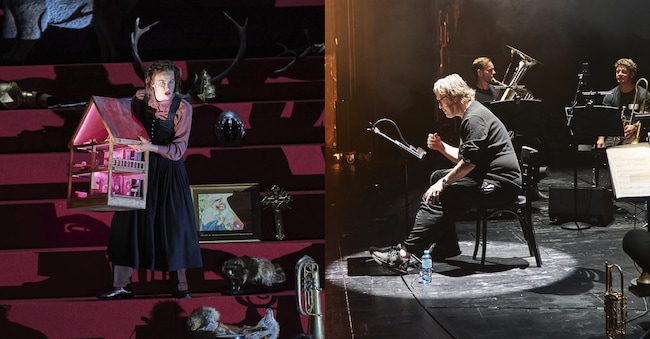
The adaptation is by Jeroen Versteele and Swedish playwright and director Therese Willstedt, who have divided the Bernhardian impetus of the narrative thread among eight actors. The four women and four men also play all the crucial characters evoked by Murau: in front of the closed curtain, in the first part of the play, while in the second part the stage is occupied entirely by a steep, very high red staircase, studded with the props necessary for the various actions, and up which the actors climb, in a laboured ascent, like the one to which the insoluble, cemented family problems force them.

It is certainly not easy to concentrate a novel of over 600 pages into two and a half hours, and the evening alternates between moments faithfully in line with the ferocity of certain passages of the novel, which reveal Murau as the author's perfect alter ego and know how to speak to today's audience, and passages more epidermically demonstrative of fundamental Bernhardian topoi, of his invectives, insults and hyperbole.

Ausloeschung


An axe blow. An irritation

Much more successful is the second adaptation that the Burgtheater is offering in the 2025/26 playbill: 'In Blows of an Axe. An Irritation' (Holzfällen. Eine Erregung), a novel that created a scandal when it was published in 1984 because of those so recognisable characters from intellectual Vienna who were mercilessly attacked and denigrated by the protagonist. The resulting seizure of copies already in bookshops was unique in the history of modern Austrian literature. Today, however, what remains of that novel and stands out is a virtuoso vivisection of a Viennese cultural world that still has many of today's traits and produces moments of irresistible comedy, read by an outstanding Nicholas Ofczarek. One of the best-loved actors in the Burgtheater ensemble, he sits alone on a bare stage, excellently assisted by the 'Musicbanda Franui', which plays live interludes. In the two-and-a-half hours of the fine adaptation that captures the best of the text, signed by Tamara Metelka and Andreas Schett, Ofzcarek brings to life the novel's 'artistic dinner' in the Auersberger house, meticulously observed by the protagonist sitting in an armchair. Comedy is in its blood, and in the Vienna to which the play makes timely reference, and whose local humus it restores intact, it is fully received by the audience, which punctuates the play with thunderous laughter.

Both productions are selling out, with performances sold out to the very last seat in the highest gallery: an accolade that Bernhard would presumably sneer at.

Brand connect

Loading...

Newsletter

Notizie e approfondimenti sugli avvenimenti politici, economici e finanziari.

Iscriviti