
Thomas Ceccon: 'All I can do is swim'
At the start of the World Swimming Championships where the 100 backstroke Olympic gold medallist arrived with the confidence of months of training between Brisbane and Miami, a diet with few exceptions and a commitment to prove 'that I am the strongest'.

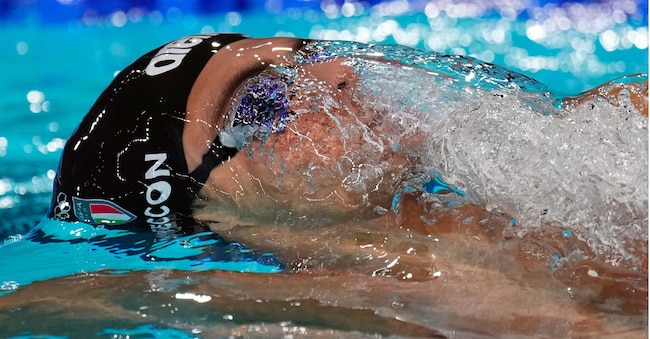
7' min read
7' min read
In the tank it is pure speed, outside it is crystal clear. He speaks without filters, with the transparency of water, his element. Thomas Ceccon, Olympic gold medallist in the 100-metre backstroke at Paris 2024, already has his sights set on these World Swimming Championships in Singapore when we meet him. He comes to it with a good dose of confidence and a baggage full of training, much of it on the other side of the world. "At the end of April I competed in Australia, where I had arrived in January. In Brisbane I found a good rhythm, I wanted to see where I was at. I'd say I'm fine, I've been training hard. In the 200-metre backstroke, in particular, I noticed clear improvements, but in general I can say that I have grown. From there he went to Florida, two weeks in May with his coach: "I didn't get on as well as in Australia. Once back home, I started training again with more serenity'. This period of travelling was not just a sporting stage, but a way to put some distance, to get away from tensions and the burden of expectations. "I needed a change of air, I couldn't take it at home any more, for a thousand reasons. The Olympic year is always special. There are those who, after winning, tend to relax and those, on the contrary, who, if they have not done well, want to redeem themselves. I, for now, am calm. With all the work done since the beginning of the year, I feel calmer than usual. I still want to compete and at the Worlds I go with the intention of giving my best. Of course the emotion is not the same as the first time. I've already won everything that could be won, so the hunger I had before... well, it's not the same. The goal of course is always to improve, looking at the 200 backstroke record set in 2009 by Aaron Peirsol - 1'51''92 -, backed up by a personal best, namely the Italian 200 backstroke record, 1'55"71, which Ceccon recently achieved at the Australian Open Swimming Championships in Brisbane. And then the 100 metres: here the world record is his, 51"60 at the World Championships in Budapest in 2022.
There are days when even champions feel like lying in bed, lazing around, not listening to the call of the pool. "Before Paris, even when I didn't feel like it, I used to jump into the water because the motivation was so high. Now I do it anyway, but with a different spirit. In Australia, the fun of a new environment was a good incentive. Back home, training practically alone, it's harder to find the enthusiasm every day. But you have determination and willpower - I just do it. I know there will come times when it will be harder than now, it always is. But I try not to think about it too much: I just go ahead, dive in, concentrate and swim.
The success of the Olympics leaves a mark that can change profoundly. "As an athlete, yes, it changed me. I became more aware of myself, of what I can do. As a person, however, no. I attend some events, some parades, people recognise me on the street, they ask me for a photo, a selfie together. It's all very nice, but I remain the same as always. My parents gave me values when I was a kid, and I hold on to those values.
At 24, Ceccon still considers it a luxury to be able to make a living from his sport. "It is the best thing that can happen to a person, to do what he loves. I travel the world thanks to swimming - although, to be honest, I don't see much of the places I'm in during races, apart from the pool! - but I have opportunities that 95 per cent of my peers don't have. And if I look at my earnings, they are not those of a footballer or a tennis player, but they are enough for me to do what I want. Sometimes I would like to skip a training session, then I think of those who wake up at dawn to go to the office, the factory or to study all day. How many people are lucky like me at this age?".
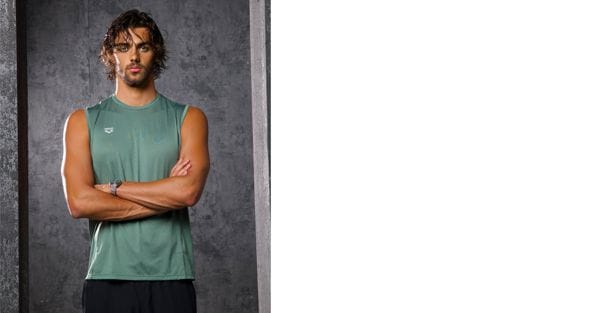
When he tries to tally up the medals won, he takes a few seconds, then shrugs. "I don't know the exact number, but between Europeans, Worlds and Olympics it will be about thirty." He says this with a disarming naturalness, the same he uses on economic matters. I ask him what has been his craziest purchase. 'I spend almost nothing on myself, I buy a new phone every three or four years. The biggest expense I made was a Louis Vuitton bag for my mother right after the Olympics. She didn't want it, but I insisted: I had never given her anything. It was something I can now afford, but in general I never give very expensive gifts, I get sick. I grew up with little and I know the value of money. Some people tell me that with the prizes and income I have earned, I should start spending more, but I just bought a house and I have to pay for that. I don't consider it an investment, because I live there. For the rest, it's my father who helps me manage some investments in stocks, ETFs and others, relying on professionals'.


