
Those jewels that make you immortal: divinity, myth and wealth according to Cartier
The magnificent exhibition at the Capitoline Museums in Rome investigates the maison's relationship with classical mythology, source of aesthetic inspiration and aspiration (also of customers) to eternity

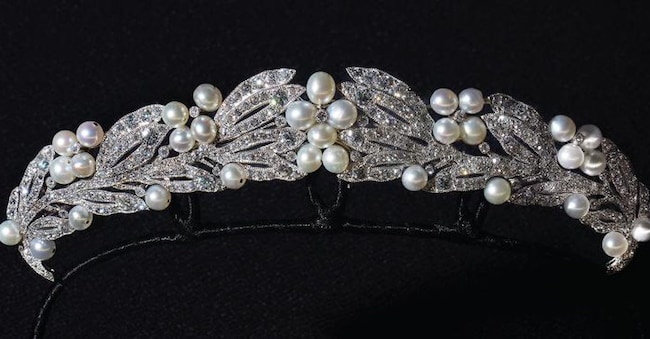
The same year, 1889, two capitals: in Rome, while digging along the banks of the Tiber to build the Umberto I bridge, the sarcophagus of Crepereia Tryphaena, a 2nd-century girl lying with her jewels, emerges; in Paris, at 13 rue de la Paix, under the Eiffel Tower built for the Expo, the Cartier family opens their magnificent new boutique, from which they will take flight to become the most famous brand in their category. The nostalgic penumbra of the past and the vital lights of the present are the same as those alternating in the rooms of the exhibition Cartier and the Myth, which in the New Palace of the Capitoline Museums evokes the relationship between the stories and forms of antiquity and the aesthetics (but also the business) of the famous maison.
A large part of the great Cartier collection, initiated with farsightedness in 1983 by Pierre Rainero, has arrived in Rome. Together with pieces from private collections and museums (such as the Marta, which in Taranto houses one of the most beautiful collections of antique gold on the planet), it is arranged under showcases - somewhat shop-like, but also obligatory for security - where the statues of gods, philosophers and emperors are reflected. The theme of the exhibition, the relationship with the dimension of myth, even if limited to the sphere of Greek and Roman antiquity, does not only involve aesthetics, but delves into the territories of anthropology, and is for this reason perhaps one of the most complex that Cartier has ever investigated in its 44 exhibitions organised around the world. The story by Bianca Cappello with Stéphane Verger and Claudio Parisi Presicce is expressed through evocation, suggestion, rather than didactic explanations.
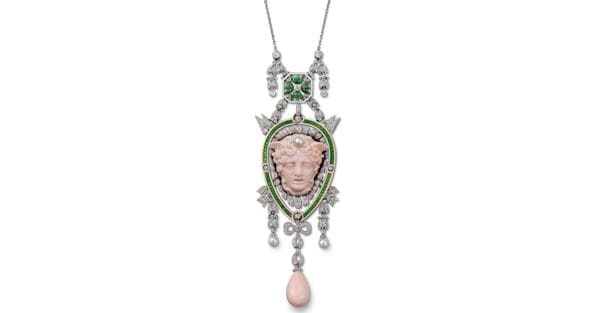
Of course, some references are more explicit (the clocks placed in the Hall of the Philosophers, the necklace as the torque of the dying Galata, the garlands of a 1st-century crater filmed on a sumptuous devant de corsage), but the emotion of the itinerary springs from the feeling that the myth and secret of the origins of humanity, cosmic spark and subterranean mystery at the same time, are hidden in the jewellery. As such, channels of expression of "time as the moving image of eternity" (Plato in the Timaeus), they are also instruments for pretending to be divinities: Livia Drusilla, as the first empress also the first deified woman of the Augustan era, in a bust that opens the exhibition wears a crown of spikes like Ceres, incredibly similar to the nearby tiara where the same inflorescences are made of platinum and diamonds. In 1907 Maria Bonaparte, a descendant of Napoleon, commissioned Cartier for her wedding to Prince George of Greece a tiara with olive leaves and pearls, the former a reference to Athena, the latter a symbol of nobility and purity.
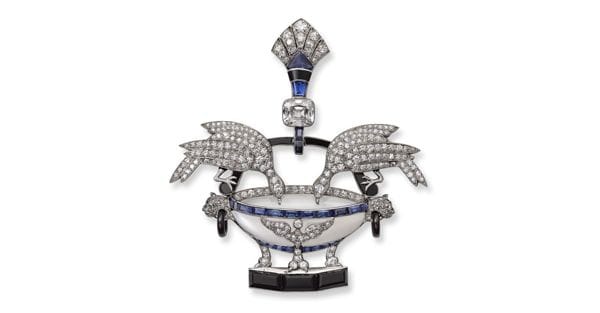
In the modern era, divinity became secular, conferred by wealth, as noted by Thorstein Veblen who identified the "ostentatious consumption" of the American money bourgeoisie, for whom reference to antiquity certified culture and good taste beyond fashion. The Cartier family well understood the value of these 'gnorismata', signs of recognition, and it is no coincidence that they also chose antique architectural motifs in their boutique-temples, while being clever enough to follow the evolution of reference to the classics: when Art Deco, for example, the predominance of ancestral myth gave way to harmony and classical geometry, customers rather than goddesses identified themselves as korai (Mariano and Henriette Fortuny's Delphos in the room where the statue of Empress Helena welcomes visitors is very appropriate).
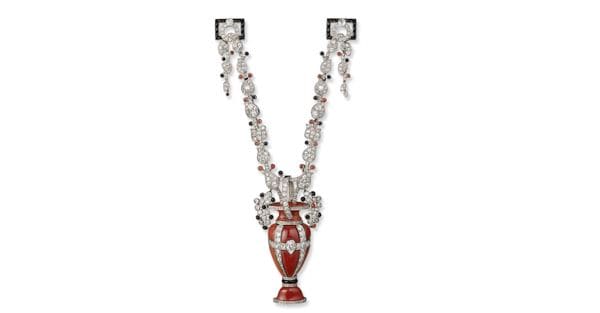
However, Symbolism loomed over this Apollonianism, once again appropriating the darkest and most powerful sense of the ancient: these were the years in which creative director Jeanne Toussaint invented the Cartier Panther, which Dionysus shared with the maison as a totemic animal, and in which snakes wrapped around the neck and arms as emblems of the goddess Tellus. In the second part of the exhibition, the interesting choice of highlighting the minerals of the earth lowers the lights and leads us - also olfactively, thanks to the diffusion of fragrances created by Mathilde Laurent - into the smoky and volcanic cavern of Hephaestus, the demi-god who transformed natural elements of banal atomic composition into magnificent and magical objects. Cartier's Love bracelet, a 1969 work by the never-to-be-remembered Aldo Cipullo, which grips the wrist of the lover tightly with a mini screwdriver, is the bronze net with which the jealous Hephaestus blocks Aphrodite. The 1972 necklace with seashells evokes the crown with the triumph of animals that the god created for Pandora; the 1909 diadem with a large diamond in the centre, the crown that Hephaestus modelled for Ariadne and which ended up in the sky to make up the constellation of the boreal crown. In its reflections, once again, the passage from rock to stars, from time to eternity.


